Anti-Fog and Anti-Condensation Coating Validation
Verify an anti-fog coating actually suppresses droplet-forming condensation, not just that it looks clear on day one, by measuring the near-zero contact angle its performance actually depends on.
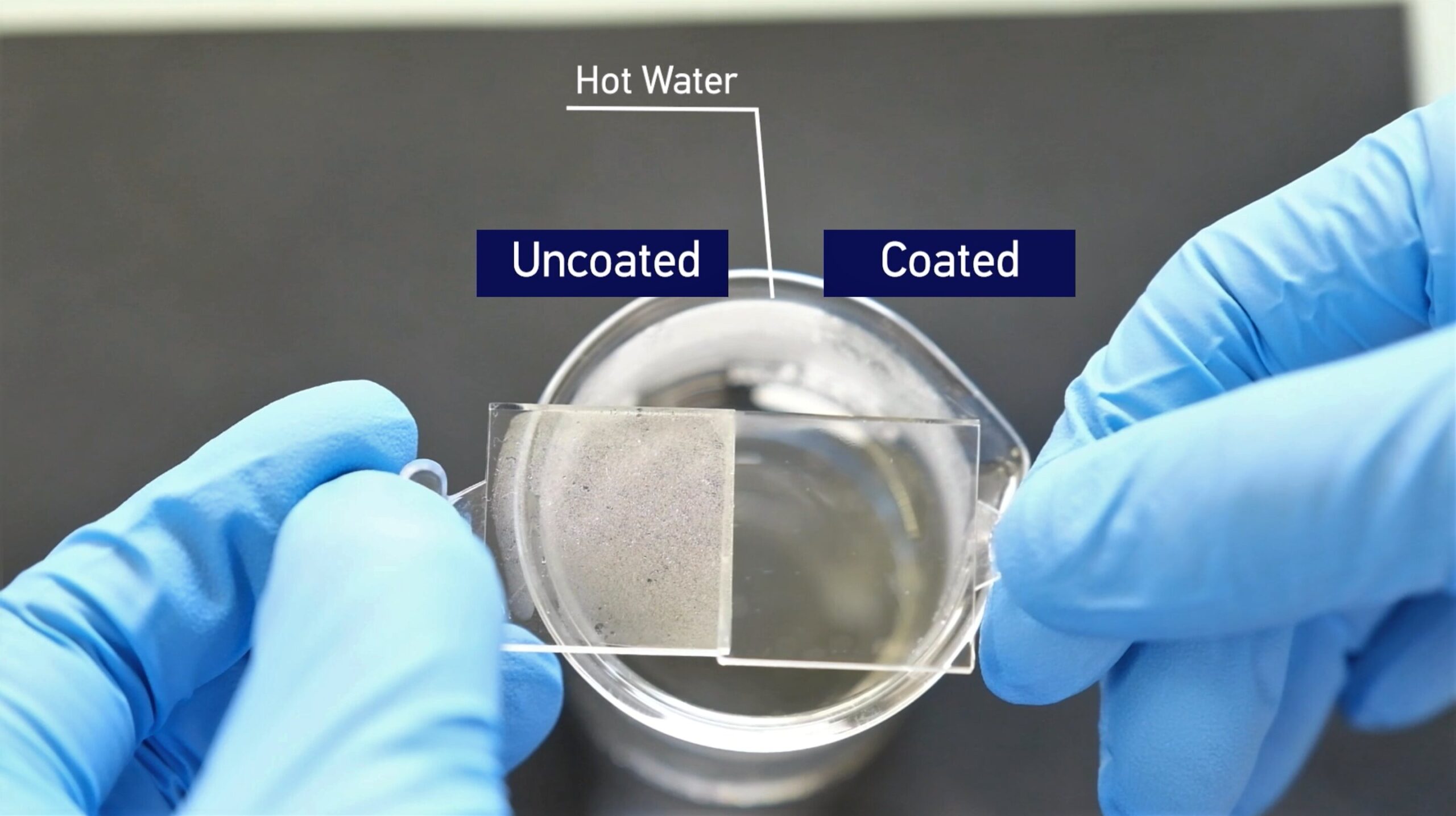
Who this is for: Coating R&D chemists formulating anti-fog treatments for eyewear, goggles, face shields, and medical optics; automotive, aviation, and architectural glazing manufacturers; food and medical packaging film producers; QA/QC teams verifying anti-fog coating performance before shipment.
Positioning: Dropometer does not replace accredited fog-chamber or humidity-chamber testing (for example, ASTM E2189-style fog resistance testing) or long-term field durability testing. It adds a fast, quantitative contact angle screen for the near-zero wetting behavior anti-fog performance actually depends on, catching a coating that won't suppress fogging before it ships.
Droplet Lab Team
Droplet Lab builds precision instruments and software for surface science measurement, specialising in contact angle analysis and surface tension characterisation. Used by researchers across materials science, pharmaceuticals, coatings, and advanced manufacturing, Droplet Lab's Dropometer has contributed to studies published in peer-reviewed journals including Advanced Functional Materials (Impact Factor 19). The team combines instrument engineering with deep domain knowledge in wettability science with a focus on practical accuracy.

The Cost Of Getting It Wrong
10×
higher hidden cost vs. visible scrap cost: rework, re-inspection, downtime, and warranty claims are rarely captured
Lean Six Sigma research consensus
$1 → $10
upstream prevention typically saves $10 in internal rework and up to $100 in external warranty and recall costs, for the specific failure modes an upstream screen actually catches
COPQ prevention-to-failure ratio
Sources: ASQ, Learn Lean Sigma, Fabrico COPQ Guide 2026. Figures are industry-wide benchmarks, not Droplet Lab claims. Anti-fog performance depends on the opposite contact-angle behavior from most hydrophobic coatings: a lower, near-zero angle indicates better performance, not a higher one. This screen verifies that wetting behavior directly, catching a coating that won't suppress fogging before it ships.
What this workflow does and what it does not
Quick technical reference for coating R&D and QA teams evaluating fit before reading further.
Evidence Box (QC-Ready)
An anti-fog coating can look clear and defect-free at inspection while failing to suppress condensation fogging in actual use, because anti-fog performance depends on a near-zero contact angle that a routine visual check can't detect.
A quantitative pre-shipment and R&D screening tool measuring the near-zero wetting behavior anti-fog performance depends on. Not a replacement for accredited fog-chamber or humidity-chamber testing, or optical haze and clarity testing.
Static water contact angle, with lower values indicating stronger anti-fog performance
Contact angle across a defined wear or cleaning-cycle interval, as a durability proxy
Spot variability and zone mapping across the coated surface
Surface energy trend across batches or candidate formulations
Correlate PASS/MONITOR/FAIL thresholds against your own fog-chamber or humidity-chamber test results, not a generic published contact-angle number, since the acceptable threshold varies by application and required fog-free duration.
DI water as the probe liquid
Fixed droplet volume and timepoint
Minimum 5 replicates per zone
Record time since coating application or last cleaning alongside every reading
Verifies wetting behavior, not actual fog resistance under real humidity and temperature swings, optical haze or clarity, or long-term wear durability directly.
What are you trying to solve?
The Dropometer serves four roles across an anti-fog coating validation program. Each has a different primary risk.
Coating R&D Chemist
Screening candidate anti-fog formulations for the wetting target their performance depends on, before committing to fog-chamber trials.
Production / QA Manager
Needing a numeric release gate on coated lenses, films, or glazing before shipment, rather than a visual clarity check alone.
Medical Device / PPE Manufacturer
Verifying anti-fog performance on reusable surgical goggles, face shields, and camera lenses, where fogging is a documented safety and usability problem, not just a cosmetic one.
Field / Reliability Engineer
Tracking anti-fog coating degradation across cleaning and wear cycles on reusable products in the field.
Is this the right screen for your process?
This is not a universal solution. Check the conditions below before investing further time.
Good fit if
Less relevant if
Anti-Fog Coatings Work Backwards From Almost Every Other Use-Case Else On This Site
Lower contact angle means better performance here, the opposite of most hydrophobic coating verification.
Fog forms when water vapor condenses into large numbers of discrete micro-droplets, each one small enough and curved enough to scatter light, which is what makes a foggy surface look hazy or opaque rather than clear. An anti-fog coating works by promoting a very low, near-zero contact angle, so condensing water spreads into a thin, continuous, transparent sheet instead of forming those light-scattering droplets in the first place. That's the dominant strategy in the peer-reviewed literature, and it's worth being explicit about it because it runs in the opposite direction from most of the hydrophobic and self-cleaning coatings covered elsewhere on this site: there, a rising contact angle usually signals better performance; here, it signals the coating is failing.
Durability is the other real, well-documented problem. Recent peer-reviewed work specifically targets "long-lasting and stable" anti-fog coatings because the more common failure mode isn't a coating that never worked, it's one that worked at first and lost its hydrophilic character after cleaning, handling, or extended wear. This shows up as a rising contact angle over time, exactly mirroring (in reverse direction) the hydrophobic-recovery decay problem documented on plasma-treated bonding surfaces elsewhere on this site.
This workflow measures contact angle and tracks it across a wear or cleaning-cycle interval, so a coating that's drifting away from its wetting target gets caught before it fails in the field, in a surgical suite, on a windshield, or in a packaging line. The honest limit: wetting behavior predicts fog-suppression tendency, it doesn't measure actual fog resistance under real humidity and temperature swings, optical haze, or long-term wear durability directly.
What Does an Anti-Fog Coating Failure Actually Look Like?
A coating that was applied and passed inspection still fogs in real use, loses its anti-fog performance faster than expected after cleaning, or performs inconsistently across a batch of coated lenses, films, or glazing, without a quantitative way to catch the gap before a field complaint.
Root Causes
Why:
- The coating's contact angle isn't low enough to promote a continuous water sheet, so condensation still nucleates as discrete, light-scattering droplets.
How to detect:
- Contact angle above your qualified wetting threshold immediately after coating application
Corrective action:
- Re-optimize the formulation or application process to hit the target wetting level
Why:
- Repeated cleaning, handling, or abrasion strips the hydrophilic surface layer over time, the mirror image of the hydrophobic-recovery problem seen on other coating types.
How to detect:
- Contact angle rises over a wear or cleaning-cycle interval relative to a fresh baseline
Corrective action:
- Reformulate for better mechanical and chemical durability, or set a re-treatment interval based on your measured decline rate
Why:
- Coating thickness or cure condition variation changes the achieved wetting level even when the underlying formulation is correct.
How to detect:
- Contact-angle variability across a production batch, or across zones on a single part
Corrective action:
- Recalibrate application and cure parameters against your qualified recipe
Why:
- Some anti-fog coatings are qualified for a specific humidity and temperature-swing range; a faster or larger real-world condensation event can overwhelm even a properly functioning coating.
How to detect:
- The coating passes at its qualified test condition but fails under faster or larger real-world humidity or temperature swings
Corrective action:
- Test and qualify against your application's actual environmental profile, not just a standard lab condition
Why:
- A coating with a correctly low contact angle can still produce unacceptable optical haze, discoloration, or substrate adhesion problems, none of which a wetting measurement captures.
How to detect:
- Contact angle is within baseline but optical haze, clarity, or adhesion testing still shows a problem
Corrective action:
- Route the investigation to optical haze and clarity measurement and adhesion or durability testing rather than continuing to iterate on wetting alone
Not sure which root cause applies to your process?
A surface science specialist can review your fogging or field-complaint history and help you identify whether a wetting screen would add a useful upstream gate.
Building a defensible anti-fog coating qualification record
Surface readiness measurement produces the type of numeric, traceable output that a subjective "looks clear" impression cannot. If your quality system requires documented evidence of process control for NCR responses, CAPA files, incoming inspection records, or customer audits, contact angle data provide that evidence in a format your QA documentation already requires.
Audit trail
Numeric contact angle values with replicate spread, timestamps, and coating batch or product identification; replacing subjective "looks clear" impressions with defensible numeric logs.
CAPA evidence
When a field fogging complaint triggers a Corrective and Preventive Action file, wetting data from before and after a formulation or process change provide quantitative evidence of the mechanism involved, not anecdotal description.
NCR documentation
Non-conformance reports that include numeric wetting data allow you to assign root cause to under-treatment, durability loss, or application drift with evidence, not inference.
Supplier qualification
Incoming coated lens, film, or glazing lot inspection using contact angle provides a numeric acceptance criterion for supplier qualification, independent of the supplier's own marketing claims.
Process control records
Contact angle trend logs by coating batch demonstrate statistical process control at the pre-shipment step; relevant to Six Sigma, SPC, and DMAIC programs targeting fogging-related field complaints.
Anti-fog qualification record
A pre-shipment or scheduled durability check gives QA a numeric basis for release or re-treatment, instead of finding out about a failed coating only after a field complaint.
What to Measure
Static water contact angle
Why it matters: The primary indicator of the sheeting wetting behavior anti-fog performance depends on.
How to interpret: Lower angle indicates stronger anti-fog performance, the opposite direction from most hydrophobic-coating pages, correlate against your own fog-chamber threshold.
When it is not enough: Doesn't directly measure optical haze, clarity, or fog resistance under real humidity and temperature swings.
Contact angle after a defined wear or cleaning-cycle interval
Why it matters: Anti-fog coatings commonly lose hydrophilic character with cleaning and handling over time.
How to interpret: Track the rise in contact angle against your own durability requirement, not a single-point pass/fail.
When it is not enough: Lab-scale cycling is a proxy for real use conditions, not a substitute for them.
Spot variability (zone mapping)
Why it matters: Detects uneven coating application across a lens, film, or glazing surface that a single-point reading would miss.
How to interpret: High variability flags an application-process issue worth investigating.
When it is not enough: Flags where a problem exists without confirming which specific cause is responsible.
Surface energy trend
Why it matters: Quantifies overall coating condition on a scale comparable across batches or candidate formulations.
How to interpret: Compare against your own qualified baseline rather than a generic published number.
When it is not enough: A performance metric only; doesn't directly measure fog resistance itself.
Validated Measurement Approach
Independent benchmarking and publication-based validation references.
Benchmark Validation
Our contact-angle and pendant-drop methods are benchmarked against KRUSS DSA100E reference measurements.
See peer-reviewed validationPublication Evidence
Our instruments are referenced in peer-reviewed journals, theses, and conference publications.
Browse citationsHow Dropometer Fits Your Workflow
Dropometer is best used to confirm your target wetting range fits this instrument's measurement capability, then build a baseline to gate pre-shipment release and durability tracking against.
Confirm your target wetting range
Identify the contact angle your anti-fog performance actually requires, and confirm it fits within this instrument's rated 10 to 175 degree measurement range: Some high-performance formulations target below 10 degrees, verify this before relying on this instrument alone for those cases
Establish a baseline
Measure contact angle on a freshly applied, known-good coating: This baseline is what every future batch or durability reading gets compared against
Track durability
Measure contact angle across a defined wear or cleaning-cycle series: This is where most anti-fog failures actually originate, catch it here, not in the field
Set a pre-shipment release gate
Verify production samples against your validated baseline before shipment: PASS: within baseline band → release MONITOR: borderline result → re-verify or hold FAIL: out of band → investigate formulation, application, or cure drift
We completed our gage R&R study on the unit and it performed very well.
Brandon Barbee
Corporate Quality Engineer - Zeus Industries - Polymer Manufacturing
Download the Anti-Fog Coating Verification SOP Template
An editable SOP template your team can adapt for your substrate, coating chemistry, and application process. Includes measurement protocol, durability-tracking guidance, gate-setting guidance, and a QC log format ready for your documentation system.
Sample Coating Verification: Fresh vs. Worn Anti-Fog Performance
Representative output format. Values are illustrative, not a universal specification. Lower contact angle indicates stronger performance throughout this table.
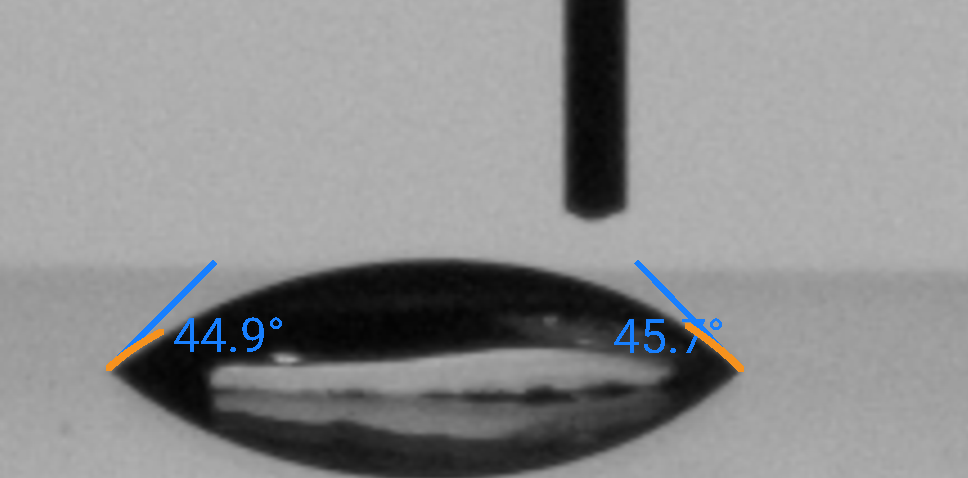
Dropometer contact angle measurement of DI water on coated glass. This is the type of output used to decide whether a batch releases or a durability concern needs investigation.
Sample Coating Verification: Fresh vs. Worn Anti-Fog Performance
| Sample | Contact Angle (°) | Cleaning Cycles | Status |
|---|---|---|---|
| Anti-fog coating, fresh application (baseline) | 8° | 0 | PASS |
| Anti-fog coating, same batch | 14° | 25 | PASS — continue tracking trend |
| Anti-fog coating, same batch | 31° | 75 | MONITOR — confirm against fog-chamber data before continued use |
| Anti-fog coating, same batch | 58° | 150 | FAIL — re-treat or replace |
The fresh application establishes the PASS baseline at a low, strongly wetting contact angle. After 25 cleaning cycles, the angle has risen modestly, still within a reasonable PASS range. By 75 cycles, the rise is substantial enough to warrant a MONITOR decision, worth confirming against actual fog-chamber performance before continued field use. By 150 cycles, the coating has largely reverted toward non-wetting behavior, a FAIL decision. Note the direction throughout this table: rising numbers indicate declining performance, the reverse of most other coating pages in this library. This output would be included in the anti-fog qualification record used to decide whether re-treatment is needed.
Anti-fog coating troubleshooting guide
Start condition: fogging is occurring despite a coating being applied, or performance seems to be declining. Use the signal pattern to identify the most likely cause.
Contact angle above your qualified threshold immediately after coating
Likely cause: Insufficient hydrophilic character from an under-treated formulation.
Action: Re-optimize the formulation or application process to hit the target wetting level.
Contact angle rises over a wear or cleaning-cycle interval
Likely cause: Coating wear and durability loss.
Action: Reformulate for better durability, or set a re-treatment interval based on your measured decline rate.
Contact-angle variability across a batch or across zones on a single part
Likely cause: Application or cure process drift.
Action: Recalibrate application and cure parameters against your qualified recipe.
Coating passes at qualified test conditions but fails in real-world use
Likely cause: Environmental mismatch between the coating's qualified range and actual field conditions.
Action: Test and qualify against your application's actual environmental profile.
Contact angle is within baseline but fogging or optical complaints persist
Likely cause: Optical haze, clarity, or substrate adhesion issue, not a wetting problem.
Action: Route the investigation to haze/clarity and adhesion testing.
Common questions before adoption
No, this is the opposite of most hydrophobic coating verification. Anti-fog performance depends on a low, near-zero contact angle that promotes a continuous water sheet instead of light-scattering droplets. A rising angle signals declining performance here.
No. It's a fast wetting screen for R&D and pre-shipment QC. Confirm final fog-resistance ratings with accredited fog-chamber or humidity-chamber testing.
Confirm your target range first. The Dropometer's rated sessile-drop range is 10 to 175 degrees; some high-performance anti-fog formulations target contact angles below that floor, verify where your coating's target actually falls before relying on this instrument alone for those cases.
Most commonly, durability loss, cleaning, handling, or abrasion strips the hydrophilic surface layer over time, which shows up as a rising contact angle well before the coating visibly fails.
Yes. Comparing contact angle across candidates at matched conditions, and tracking each across a cleaning-cycle series, is one of the more direct uses of this protocol.
It rules out wetting behavior as the cause, pointing toward optical haze, clarity, or substrate adhesion instead, none of which this instrument measures.
Yes. The Dropometer produces numeric contact angle data with replicate records, timestamps, and batch or product identification, usable in NCR responses, CAPA files, and supplier audit packages.
What Changes When You Verify Anti-Fog Performance Before Shipment, Not After a Field Complaint
Before and with Dropometer; operational outcomes
| Metric | Before Dropometer | With Dropometer | Indicative Benchmark |
|---|---|---|---|
| Failure discovery point | A field fogging complaint, after shipment or installation | Contact angle screening before shipment and on a durability schedule | "COPQ from late-discovered defects typically 15–20% of revenue for manufacturers without upstream gates" |
| Durability tracking | Assumed durability with no measured decline curve | Contact angle tracked across a cleaning or wear-cycle series | "Catches a durability gap before it reaches a field failure" |
| Candidate formulation screening | Full fog-chamber trials across each candidate chemistry | Wetting-data comparison narrows candidates before a fog-chamber trial | "Catches a durability gap before it reaches a field failure" |
| Batch-to-batch consistency | Unmeasured variability across coating batches | Tracked per batch against a qualified wetting baseline | "Replicate spread detects drift before it reaches a shipped product" |
| Audit documentation | Subjective "looks clear" check; not defensible under audit | Numeric wetting logs with timestamps and batch/product ID | "Applicable to NCR, CAPA, incoming inspection, and supplier qualification records" |
Instant ROI Snapshot
Anti-Fog Coating ROI Snapshot
Estimate avoided recoat and reject cost from anti-fog coating failures.
Result
Monthly savings = preventable rework cost + preventable scrap cost + other monthly savings.
What Wetting Measurement Cannot Tell You About Anti-Fog Performance
Knowing the limits of any measurement tool is part of using it responsibly.
Use this page to improve candidate screening and durability tracking, not to replace accredited fog-resistance testing. The Dropometer is one layer in a quality system, not a substitute for one.
Similar surface readiness workflows
Self-Cleaning and Anti-Soiling Coating Validation, Including Solar PV
A related coating-verification workflow that also depends on getting the correct contact-angle direction right, hydrophobic or hydrophilic, before setting a threshold.
Plasma Treatment Verification for Reliable Adhesive Bonding
A related coating-durability workflow, sharing the same time-based degradation tracking logic applied here to anti-fog wear.
Surface Cleanliness Verification
The general contamination-screening methodology relevant to distinguishing a genuine coating failure from a surface contamination issue.
How this page was created
Editorial and technical transparency notes for this page.
Drafting assistance
Initial draft created with AI assistance (Claude Opus 4.8), then rewritten for technical clarity.
Technical review
Reviewed and edited for technical accuracy by a surface-science specialist.
Verification steps
Identifiers, units, thresholds, and key claims checked against cited sources before publication.
Updates
Reviewed every 12 months or when the underlying standard changes.
Report a correction
Spotted an issue in this summary? Send a correction request and our team will review it.
Correction Request
We work hard to keep this standards summary accurate and up to date. If you spot an error (wrong revision/year, missing requirement, incorrect interpretation, or broken link), tell us and we'll review it.
Contact us to report a correction