Skip to content
Product
Dropometer
Educational
Use Cases
Learn
Surface Science Hub
Scientific Validation
Client Citations
Case Studies
Industry Standards
Product Knowledge Base
Blog
Resources
Buying Guides
Company
About Us
Contact Us
Product
Dropometer
Educational
Use Cases
Learn
Surface Science Hub
Scientific Validation
Client Citations
Case Studies
Industry Standards
Product Knowledge Base
Blog
Resources
Buying Guides
Company
About Us
Contact Us
Droplet Lab Blog
Latest research, trends, and best practices across surface science.
All
Additive Manufacturing
Agriculture Spray, Leaf Wetting and Drift
Battery Wetting and Electrolyte Spreading
Bonding and Adhesion Reliability
Cleanliness, Residue and Contamination Verification
Coating and Paint Defects Troubleshooting
Functional Hydrophobicity, Self-Cleaning and Anti-Soiling
Functional, Medical and Electronic Coatings
Hard-to-Measure Parts, Liquids and Sites
Material Wettability, Wicking and Microfluidics
Printing Wetting, Ink Adhesion and Film Performance
Surfactants, CMC, Emulsions and Foams
Uncategorized
Remove Filters
Exploring the Science Behind Water’s High Surface Tension
Abhimanyu Bhandankar
-
Published: October 14, 2026
Why water's surface tension is about 72.8 mN/m at 20 °C, how hydrogen bonds cause it, and what raises or lowers it.
Read More
How Surface Tension Lets Insects Walk on Water
Abhimanyu Bhandankar
-
Published: October 14, 2026
How water striders use surface tension and superhydrophobic legs to stand and move on water, and why soap makes them sink.
Read More
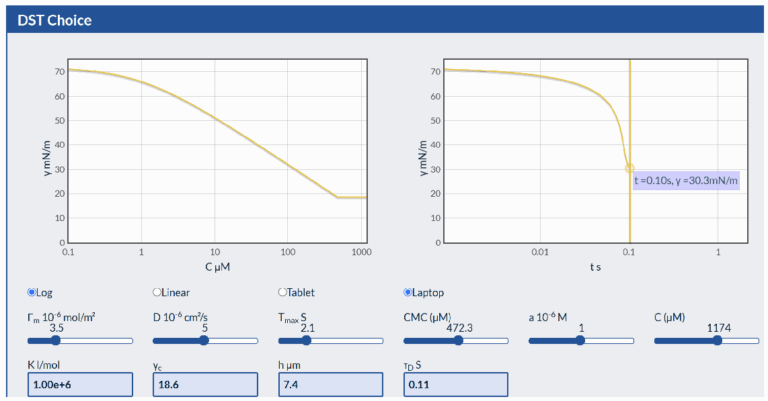
Why You Need Dynamic Surface Tension
Abhimanyu Bhandankar
-
Published: August 29, 2026
Static surface tension is rarely the value that controls spraying, coating or cleaning. The real question is how quickly the surface tension changes at process timescales.
Read More
Beyond 38 Dynes: What Surface Energy Really Tells You About Adhesion
Abhimanyu Bhandankar
-
Published: August 29, 2026
Why dyne readings are valuable process signals—but do not directly explain adhesion—and which contact angle matters when coatings begin to dewet.
Read More
Load More