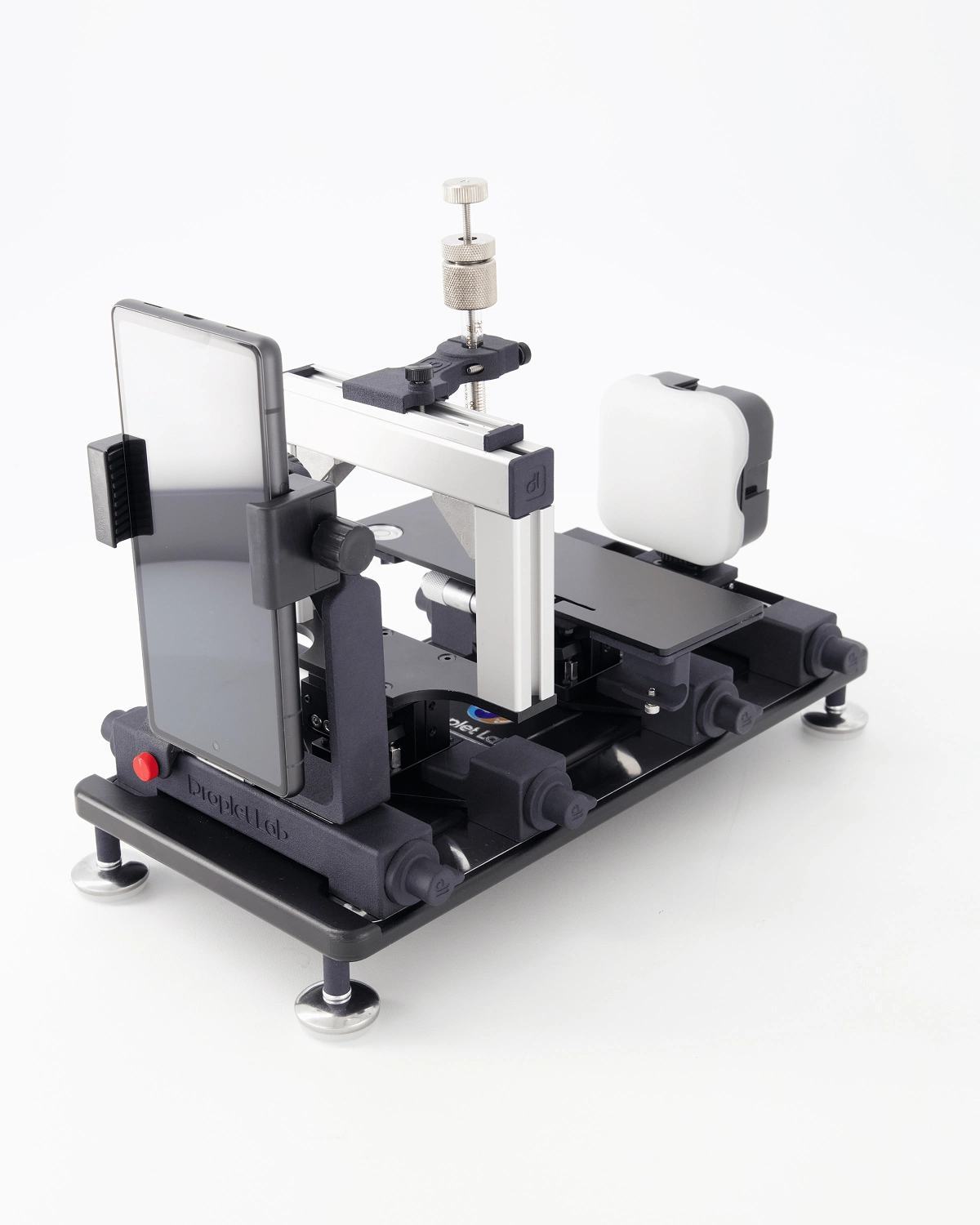
Dropometer
From US $5,000

Product comparison
Both can turn a photo of a drop into a contact angle. The difference is everything around that measurement. "DIY ImageJ" means free, open-source software plus a rig you build and validate yourself: camera, lens, backlight, levelling stage and syringe. The Dropometer is an integrated instrument that fixes the capture geometry, automates dosing and fitting, and adds dynamic angles, sliding angle, surface energy and pendant-drop surface tension out of the box. The real question isn't "can ImageJ measure a contact angle", it can but it's how much of your time, consistency and scope you're willing to trade for a $0 licence.
From US $5,000
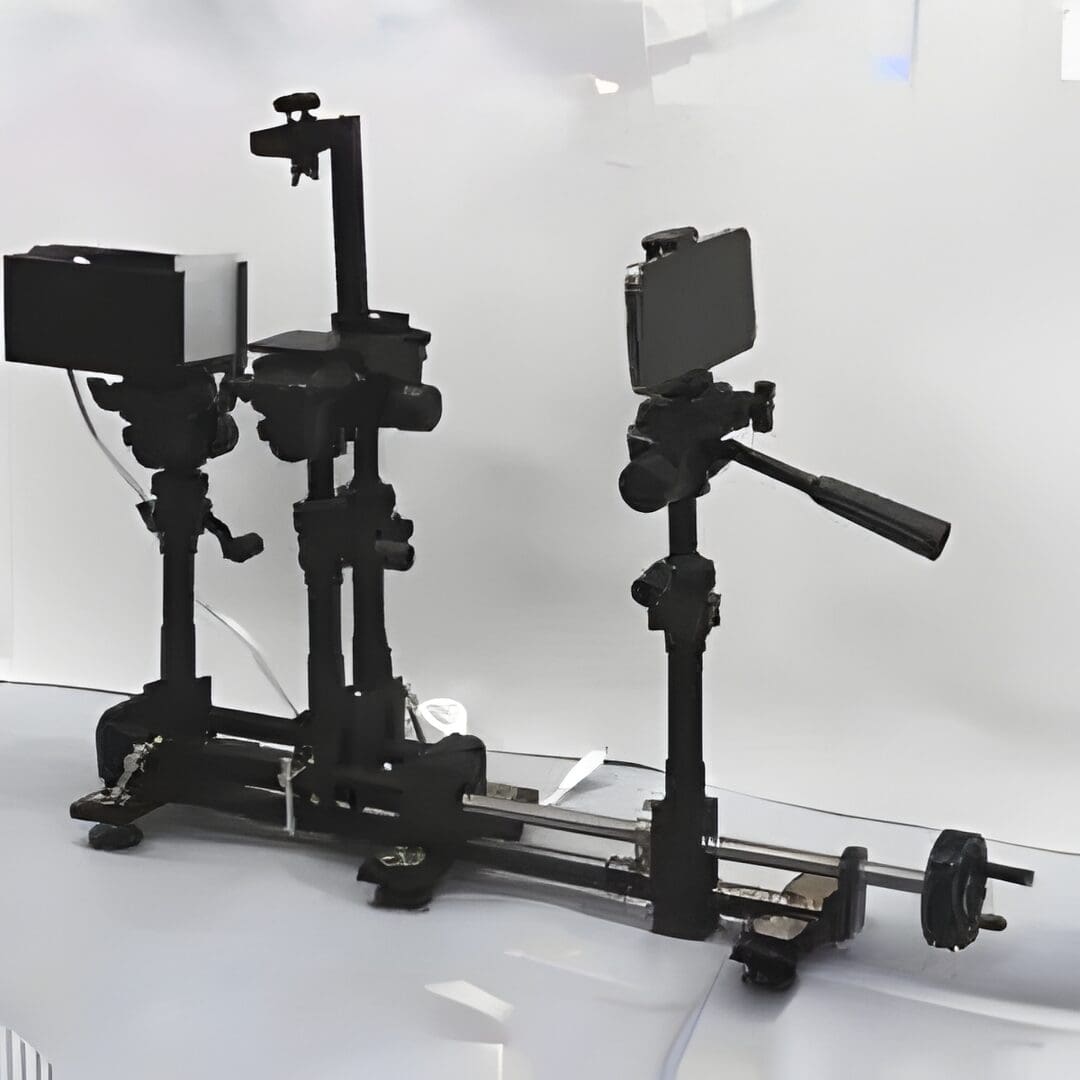
$0 software + ~$150–$300 rig (assuming you already own a camera)

Droplet Lab builds precision instruments and software for surface science measurement, specialising in contact angle analysis and surface tension characterisation. Used by researchers across materials science, pharmaceuticals, coatings, and advanced manufacturing, Droplet Lab's Dropometer has contributed to studies published in peer-reviewed journals including Advanced Functional Materials (Impact Factor 19). The team combines instrument engineering with deep domain knowledge in wettability science with a focus on practical accuracy.
ImageJ is free, legitimate, and everywhere in academia; DropSnake and LB-ADSA are peer-reviewed methods, not toys. If you have a camera, some time, and only need the occasional static contact angle, the DIY route genuinely works for $150–$300 and you should use it. The Dropometer earns its price when "free" software stops being free: when the hours spent building, levelling, lighting and validating a rig, the operator-to-operator scatter, and the missing dynamic/sliding/tension capabilities start costing more than the instrument. Below that threshold, DIY wins on cost. Above it, the Dropometer wins on everything that isn't the sticker price.
DIY ImageJ and the Dropometer both produce contact angles from drop images, but they are not the same class of tool. ImageJ is analysis software; the Dropometer is a measurement system: hardware, dosing, capture geometry, fitting and reporting integrated so the result doesn't depend on how well you built the rig or how steady your hand is that day.
Static contact angle on flat samples, using drop-shape fitting.
Surface tension is possible on both via LB-ADSA in ImageJ, and via the pendant-drop method on the Dropometer.
Both rest on established drop-shape physics (Young-Laplace / axisymmetric drop shape).
ImageJ is $0 software you attach to a rig you assemble; the Dropometer is a $5,000 integrated instrument. Everything below follows from that.
A fixed capture geometry and AI-guided fitting give the Dropometer ±0.7° measured repeatability against DIY's ±1.6°, and results that don't shift when you change lighting or camera.
Dynamic angle, sliding angle and surface energy are built in on the Dropometer; in ImageJ each requires extra hardware and a manual, multi-step procedure.
~1.1 vs ~3.4 minutes per sample, plus built-in calibration and audit logs the DIY route doesn't have; decisive for QC and regulated environments.
The ImageJ licence is $0; the measurement is not. A DIY rig that returns trustworthy numbers needs a camera, a macro lens, an even backlight, a levelled stage and a dosing syringe; then the real cost begins: the hours to build it, calibrate it, and validate it against something you trust, followed by ~3-4 minutes of manual work on every sample thereafter. For a course or an occasional measurement, that's a fine trade. For a lab measuring routinely, the labor and rework quietly exceed the price of an instrument. "Free" describes the software, not the workflow.
In side-by-side testing across five surfaces (n=10), DIY ImageJ static repeatability was ±1.6° (SD) against the Dropometer's ±0.7°, and between-operator variance fell 38% with the Dropometer in a two-user crossover. The reason is structural: in a DIY workflow the operator sets the lighting, the angle of view, the drop volume and the fitting by hand, so the measurement inherits all of that variability. Fixing the capture geometry and automating the fit removes the largest sources of scatter; which is also why careful DIY technique can reach ~±1° on a good day but rarely holds it across operators and sessions.
Where DIY ImageJ is the better choice, we'll say so. It is free and open; you can inspect and cite the exact fitting algorithm, which matters for method transparency and teaching. LB-ADSA and DropSnake are peer-reviewed and widely used; there is no vendor lock-in; it runs on any computer and has a large support community. If your need is genuinely a few static angles, or you're teaching the fundamentals, buying an instrument would be overkill.
The economics invert with volume. At low throughput, DIY's $150–$300 beats $5,000 easily. As measurements per week rise, the per-sample time gap (3.4 vs 1.1 min) and the cost of rebuilding confidence in a hand-made rig compound, while the instrument's cost is fixed and its output consistent. The break-even isn't a fixed number — it's the point where your time plus your tolerance for scatter is worth more than the software savings.
| Criterion | DIY ImageJ | Dropometer |
|---|---|---|
| Type | Free software + rig you build | Integrated instrument |
| Cost | $0 software; ~$150–$300 rig (existing camera) | ~$5,000 US base |
| Static contact angle | Manual (plugins) | Automated AI fitting |
| CA accuracy (careful technique) | ~±1° | ±0.35° (spec) |
| Measured repeatability (SD) | ±1.6° | ±0.7° |
| Dynamic CA (advancing/receding) | Possible — needs video + frame-by-frame analysis | Automated protocol |
| Sliding / tilt angle | Requires a home-built tilt stage + manual analysis | 0–60° tilt stage |
| Surface free energy | Manual — multi-liquid, compute yourself | Built-in models |
| Surface tension | LB-ADSA estimate (manual, calibration-dependent) | Pendant drop, up to 75 mN/m |
| Dosing | Your own syringe, manual | Manual + automatic; min 0.05 µL |
| Capture geometry | You build/level/light it; varies by setup | Fixed, standardized |
| Fitting method | DropSnake, LB-ADSA, Contact Angle plugin (manual) | AI-guided, automated |
| Time per sample (static CA) | ~3.4 min | ~1.1 min |
| Operator variance | High; shifts with lighting & camera | 38% lower vs DIY (crossover) |
| Calibration / audit logs | None built-in | Built-in |
| Platform | Desktop (ImageJ / Fiji), tethered to your rig | Android & iOS; cloud sharing |
| Portability / offline | Depends on rig; generally benchtop | 1 kg, battery up to 8 h |
| Support / warranty | Community forums only | 5-year warranty + 5 yr free software |
| Validation | Method peer-reviewed; your rig unvalidated | Instrument validated, peer-reviewed |
DIY repeatability, timing and cost figures reflect Droplet Lab side-by-side testing; ImageJ and plugin capabilities are per EPFL Biomedical Imaging Group and imagej.net documentation and may change — verify current details before relying on them.
This comparison rests on measured data, not a spec-sheet read-off. Droplet Lab ran side-by-side tests of a DIY ImageJ workflow against the Dropometer across five surfaces (n=10), giving the repeatability (±1.6° vs ±0.7°), timing (3.4 vs 1.1 min per sample) and operator-variance (−38%) figures cited above. The Dropometer's underlying method is further validated in peer-reviewed journals, including Review of Scientific Instruments, with Dropometer data contributing to studies in journals such as Advanced Functional Materials (Impact Factor 19). ImageJ plugin capabilities are drawn from the EPFL Biomedical Imaging Group's Drop Analysis documentation (DropSnake, LB-ADSA) and imagej.net. Where the DIY route is the better choice; cost, teaching, open-source transparency — we say so plainly.
DIY ImageJ is, at its core, a place-a-drop, photograph-it, read-a-number workflow — exactly the value the observations below caution against. A static angle measured from one image hides what a dynamic measurement reveals, and it inherits every bit of variability in how that image was captured.
"Repeatable numbers don't come from dropping a droplet and reading it. They come from advancing and receding slowly enough that you are measuring thermodynamics, not fluid dynamics."
"The gap between the advancing and receding angle — the hysteresis — is where a surface reveals its roughness, its heterogeneity, and whether something is reacting."
The implication for this comparison: the measurement that actually protects your data — dynamic, hysteresis-aware, captured under fixed conditions is difficult and slow to do well in a hand-built ImageJ setup, and automated on the Dropometer.
DIY ImageJ. For a few static contact angles on flat samples, $150–$300 and careful technique is the rational choice.
DIY ImageJ. The transparency of DropSnake / LB-ADSA is a feature, not a limitation, in a classroom.
Dropometer. Fixed geometry and automated fitting cut scatter (±0.7° vs ±1.6°) and operator variance (−38%), and calibration/audit logs make results defensible.
Dropometer. These are built in; in ImageJ each is an extra rig plus a manual procedure.
Dropometer. A DIY rig is a benchtop assembly; the Dropometer is a 1 kg portable.
DIY ImageJ is the right call when budget is the binding constraint and the job is a few static angles or a teaching demonstration — the software is free, the methods are peer-reviewed, and the transparency is genuine. The Dropometer is the right call the moment "free" stops paying for itself: when consistency across operators, speed, dynamic and sliding angles, surface energy, surface tension, traceability, or portability matter more than avoiding a $5,000 line item. Match the tool to your throughput and your tolerance for scatter, not just to the licence cost.
For static contact angle on flat samples with careful, consistent technique, yes — DropSnake and LB-ADSA are peer-reviewed methods that reach ~±1°. The limits are consistency across operators and sessions, scope (dynamic/sliding/tension need extra work), and the absence of built-in calibration and audit trails.
Yes, via LB-ADSA (low-bond axisymmetric drop shape analysis) from a drop image, but it's manual and depends on image quality and calibration. The Dropometer automates pendant-drop surface tension.
Only if your time is free. At ~3.4 minutes per sample and higher operator variance, the DIY route's real cost is labour and rework. The break-even depends on how many measurements you run and how much scatter you can tolerate.
See how the Dropometer stacks up against other goniometers, tensiometers and screening tools.
Independent benchmarking and publication-based validation references.
Dropometer contact angle and pendant-drop surface tension methods have been benchmarked against KRÜSS DSA100E reference measurements.
Our instruments are referenced in peer-reviewed journals, theses, and conference publications.