Contents
Functional Hydrophobicity, Self-Cleaning and Anti-Soiling

Silicone Sealant Application QC: Apply Silicone Sealant Like a Pro with Quantitative Beading & Waterproof Verification (Step-by-Step Guide)

Stop inconsistent sealant performance, early hydrophobicity loss, and anti-soiling failures by adding fast, quantitative wetting gates to your sealant application workflow.

Who this is for: Process engineers, QA/QC teams, applicators, and manufacturing leads responsible for silicone sealant, sealant application, and long-term waterproof durability in construction projects and industrial environments.

Written by
Droplet Lab Surface Science Team
Reviewed by
Applications Engineering (Surface & Interfaces)
Last updated
2026-02-09
Written by
zoya
No biography added yet.
Read More
droplet lab logo
Technical Review by
Droplet Lab Team
Droplet Lab builds precision instruments and software for surface science measurement, specialising in contact angle analysis and surface tension characterisation. Used by researchers across materials science, pharmaceuticals, coatings, and advanced manufacturing, Droplet Lab's Dropometer has contributed to studies published in peer-reviewed journals including Advanced Functional Materials (Impact Factor 19). The team combines instrument engineering with deep domain knowledge in wettability science with a focus on practical accuracy.

Read More
Written By

No biography added yet.

droplet lab logo
Reviewed By

Droplet Lab Team

Droplet Lab builds precision instruments and software for surface science measurement, specialising in contact angle analysis and surface tension characterisation. Used by researchers across materials science, pharmaceuticals, coatings, and advanced manufacturing, Droplet Lab's Dropometer has contributed to studies published in peer-reviewed journals including Advanced Functional Materials (Impact Factor 19). The team combines instrument engineering with deep domain knowledge in wettability science with a focus on practical accuracy.


Evidence Box (QC-Ready)

Problem this solves

Even when you carefully apply silicone sealant, results can vary. A silicone sealant bead may look perfect visually but still fail in real-world waterproof performance—leading to leaks, streaking, or poor sealant adhesion. These failures often come from inconsistent application technique, contamination, or incomplete cure.

Dropometer role in workflow

A fast, quantitative step to validate sealant performance:

Post-cure sealant bead verification (beading + uniformity)
Troubleshooting inconsistent sealant application
Durability checks after cleaning, UV, or abrasion

Primary outputs

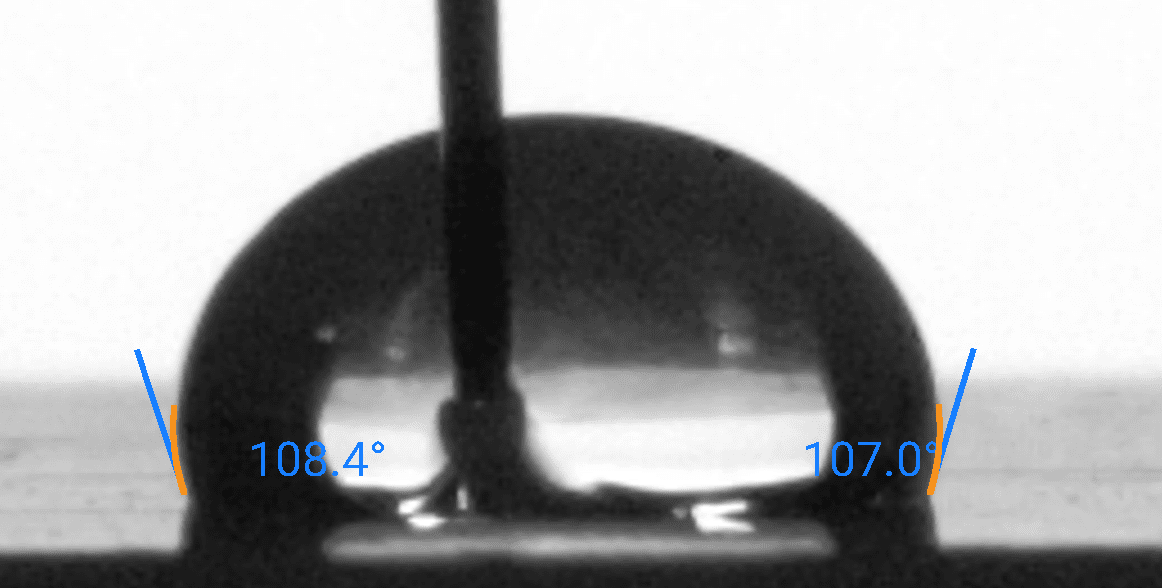
Contact angle (10°–175°, high precision) for hydrophobicity
Tilt behavior (0°–60°) for droplet movement / pinning
Surface energy estimation (mN/m)
Optional liquid surface tension for formulation QC

Calibration requirement

Define PASS / MONITOR / FAIL gates by correlating wetting metrics to:

Leak tests
Field complaints
Rework rates
Durability outcomes

Protocol defaults (starting point)

Probe liquid: DI water
Fixed droplet volume (consistent dosing)
Fixed capture time
≥5 replicates per zone
Re-run unstable droplets

Known limitations

Wetting ≠ guaranteed waterproofing or adhesion
Rough/soft surfaces increase variability
Tilt limited to 60°
Camera dynamics limit fast events

How this page was created 4 checklist items
01

Transparency Note

Drafting assistance: Initial draft created with AI assistance (Claude 4.8 Opus Pro), then rewritten for technical clarity by Droplet Lab Staff

02

Transparency Note

Technical review and editing by a surface-science specialist for accuracy

03

Transparency Note

Identifiers, units, thresholds, and key claims checked against cited sources before publication

04

Transparency Note

Reviewed every 12 months or when underlying standards or instrument specifications change

Executive Summary

A perfect sealant job is not just about how you apply the sealant—it’s about whether the surface maintains water-resistant behavior over time. Most teams rely on visual inspection after they apply silicone, but this misses early-stage variability that leads to failure.

This step-by-step guide introduces a data-driven method to:

  1. Validate sealant bead quality immediately after cure
  2. Track durability of silicone sealant under real-world stress

Outcome:

  • Consistent sealant application like a pro
  • Reduced callbacks and rework
  • Measurable, auditable QC

The Problem in Sealant Application

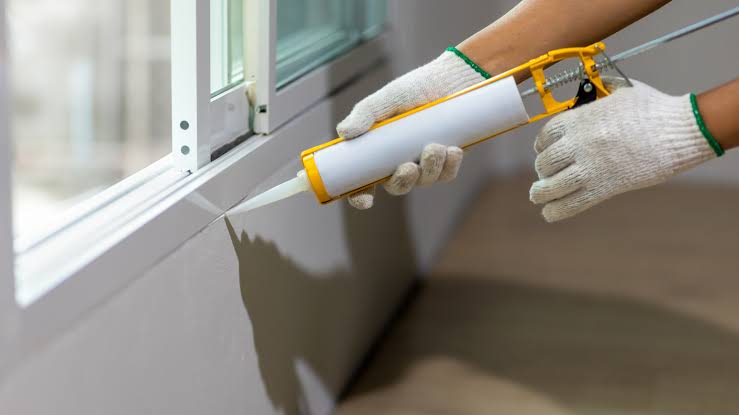
Teams often apply silicone sealant correctly using a caulking gun, cut the nozzle at a 45-degree angle, and create a visually clean seal—yet the sealant still fails in service. The issue is not just how you apply sealant, but whether the surface achieves consistent hydrophobic performance.

  • Inconsistent sealant bead formation across jobs
  • Water sheeting instead of beading
  • Loss of hydrophobicity after cleaning
  • Streaking along edges or sealant lines
  • Frequent need to reapply or remove old sealant
  • Disputes based on visual inspection instead of data

Why It Happens

Why:

  • Improper temperature and humidity or insufficient time prevents full sealant cures

How to detect:

  • Lower contact angle, unstable droplets

Corrective action:

  • Standardize cure time; ensure surfaces dry completely

Why:

  • Oils, dust, or solvent residues prevent the sealant from adhering properly

How to detect:

  • High variability across spots

Corrective action:

  • Clean the surface, use gloves, avoid touching fresh sealant

Why:

  • Uneven pressure on the trigger, stopping and starting, or incorrect application speed

How to detect:

  • Mixed wetting behavior along the sealant bead

Corrective action:

  • Hold the caulking gun steady, maintain consistent pressure

Why:

  • Using the wrong type of silicone sealant for surfaces like glass and metal

How to detect:

  • Poor adhesion of the new sealant

Corrective action:

  • Focus on choosing the right sealant for the substrate

Why:

  • UV, cleaning chemicals, abrasion

How to detect:

  • Increased droplet pinning after exposure

Corrective action:

  • Improve formulation or cleaning protocols

What to Measure

Water Contact Angle

Why it matters: Indicates waterproof beading quality

How to interpret: Higher angle = better hydrophobicity

Variability (IQR/SD)

Why it matters: Detects inconsistent sealant application

How to interpret: High spread = uneven coverage

Advancing/Receding Angles

Why it matters: Indicates droplet stickiness

How to interpret: Important for anti-soiling

Tilt Behavior

Why it matters: Confirms if water rolls off

How to interpret: Detects pinning even when surface looks fine

Surface Energy

Why it matters: Tracks contamination or formulation changes

How Dropometer Fits Your Workflow

How to Apply Silicone Sealant Like a Pro (Workflow + QC Integration)

1

Prepare the surface

  • Remove old sealant using a sealant remover
  • Clean and dry surfaces completely
  • Apply masking tape along edges to create a clean line
2

Prepare the sealant cartridge

  • Cut the nozzle at a 45-degree angle
  • Load into caulking gun
  • Ensure smooth flow
3

Apply the sealant

  • Hold the gun at a 45-degree angle
  • Start applying the sealant with steady pressure
  • Create an even bead of sealant without air bubbles
4

Tool the sealant bead

  • Use a tool or finger (with soapy water to prevent sticking)
  • Shape the sealant and remove any excess sealant
  • Remove the tape before the sealant starts curing
5

Post-application QC (Dropometer)

  • Measure contact angle at fixed time
  • Map bead zones (edges, center)
  • Validate uniformity

Validated measurement approach

Independent benchmarking and publication-based validation references.

Benchmark Validation

Our Contact angle and pendant‑drop surface tension methods have been benchmarked against KRÜSS DSA100E reference measurements.

See peer‑reviewed validation

Publication Evidence

Our instruments are referenced in peer‑reviewed journals, theses, and conference publications

Browse the full citations list

Baseline + gates (calibration first)

Define acceptance criteria for sealant application

Outputs you should lock

  • Droplet size
  • Capture time
  • Probe liquid
  • Replicate count

QC-Ready Quick Protocol (SOP Card)

Sample Handling

  • Avoid disturbing the sealant
  • Record cure conditions

Setup

  • Stable environment (no airflow)
  • Include control sample

Measurement

  • Deposit droplet
  • Measure ≥5 spots
  • Record median + variability

Release Rules

  • Use consistent probe liquid
  • Avoid excessive application during testing

Decision Tree (Triage)

Start condition: Poor beading or waterproof failure

Low contact angle

Action: Check cure verify material quarantine

High variability

Action: Inspect contamination improve technique

Post-exposure failure

Action: Adjust cleaning or formulation

Pitfalls + Limits

  • Beading ≠ full waterproof seal
  • Texture can mislead results
  • Environmental conditions affect data
  • Respect instrument limits

Report a correction

Spotted an issue in this summary? Send a correction request and our team will review it.

Correction Request

We work hard to keep this standards summary accurate and up to date. If you spot an error (wrong revision/year, missing requirement, incorrect interpretation, or broken link), tell us and we'll review it.

Contact us to report a correction