Contents
Printing Wetting, Ink Adhesion and Film Performance

Corona Treatment Monitoring for Print Quality: Surface Readiness Gate for Ink Adhesion on Plastic Films

Turn corona treatment into a measurable, repeatable surface readiness gate to control print wetting, ink adhesion, and coating performance on plastic film substrates.

Who this is for: Process engineers, QA/QC teams, press operators, and manufacturing leads responsible for corona treatment, print quality, and adhesion performance in film converting, digital printing, and lamination workflows.

Positioning: Move beyond subjective dyne testing—quantify corona surface treatment performance using contact angle and surface energy data to optimize your treatment process and eliminate print defects at the source.

Last updated
February 9, 2026

Evidence Box (QC-Ready)

Problem this solves

Inconsistent corona treatment leads to unstable surface energies, poor wettability, weak ink adhesion, and downstream print defects like mottle, bleed, and coating failure.

Dropometer role in workflow

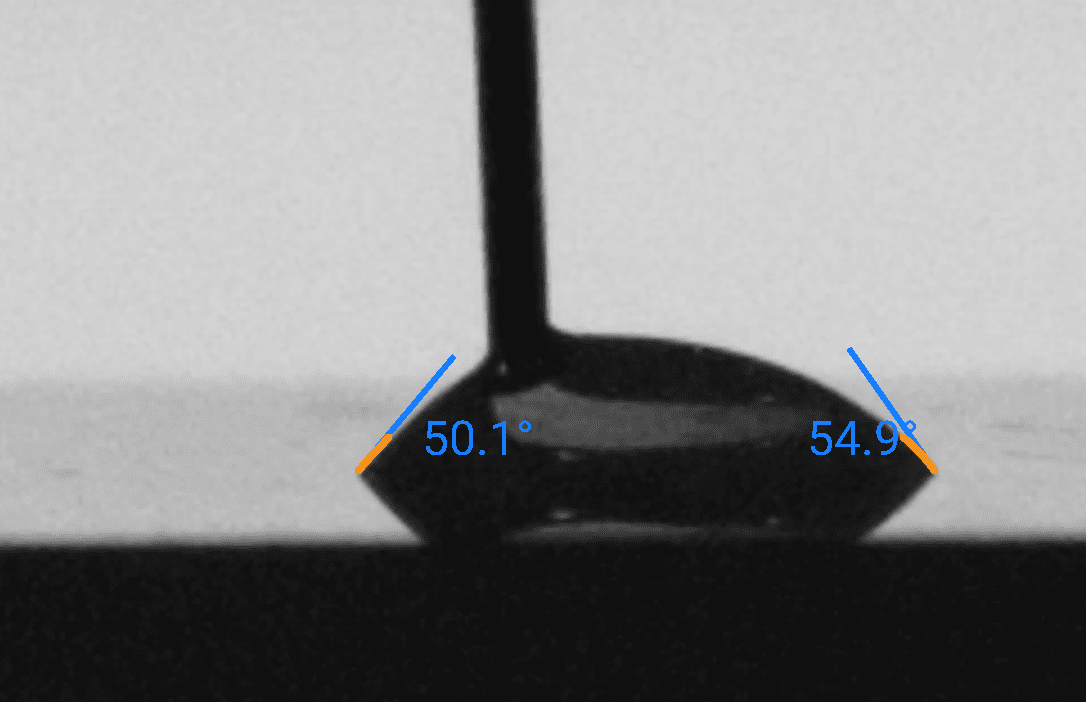
Quantifies corona surface treatment effectiveness by measuring contact angle, variability, and surface energy—enabling real-time monitoring and process control.

Primary outputs

Contact angle (10°–175°, 0.01° resolution, 0.35° accuracy)
Surface energy (up to 100 mN/m via Fowkes, Equation of State, van Oss & Good)
Surface tension of inks (pendant drop, up to 75 mN/m)

Calibration requirement

Establish PASS / MONITOR / FAIL gates by correlating surface metrics to print quality, adhesion tests, and defect rates.

Protocol defaults

Probe liquid: DI water
Droplet volume: fixed (≥0.05 µL supported)
Replicates: ≥5 per zone
Fixed capture time

Known limitations

Contact angle indicates wettability, not guaranteed adhesion
Corona treatment may decay over time
Over-treatment can reduce bond strength via weak boundary layers

How this page was created 4 checklist items
01

Transparency Note

Drafting assistance: Initial draft created with AI assistance (ChatGPT 5.2 Pro), then rewritten for technical clarity.

02

Transparency Note

Technical review: Reviewed and edited for technical accuracy by a surface-science specialist.

03

Transparency Note

Verification steps: Identifiers, units, thresholds, and key claims checked against cited sources before publication.

04

Transparency Note

Updates: Reviewed every 12 months or when the underlying standard changes.

Executive Summary

Corona treatment is a widely used surface treatment process to increase surface energy on plastic films such as polypropylene and polyethylene, enabling better ink wetting, coating, and adhesion. However, the effectiveness of the corona treatment process depends on consistent energy delivery, proper handling, and time-to-print conditions.

In real production environments, corona discharge systems can drift due to voltage variation, treater condition, or process instability. As a result, the treated surface may not maintain the required surface free energy, leading to print defects, poor adhesion, and increased scrap.

This use case shows how to implement corona treatment monitoring using Dropometer to:

  • Measure and control surface energies before printing
  • Detect non-uniform corona surface treatment across the web
  • Optimize the corona treatment process for stable print performance

The outcome is a controlled, data-driven surface treatment workflow that improves print quality, minimizes defects, and strengthens adhesion reliability.

The Problem

Your corona treated film does not consistently perform during printing. Despite using a corona treater, variations in surface energy lead to inconsistent ink wetting, weak adhesion, and coating defects.

  • Print mottle and uneven solids
  • Ink bleed and poor edge definition
  • Weak ink adhesion on plastic film
  • Pinholes, crawling, or coating defects
  • Frequent re-treatment before printing

Why It Happens

Why:

  • Insufficient corona discharge energy fails to increase the surface energy of the substrate.

How to detect:

  • High contact angle, low surface energies

Corrective action:

  • Adjust treater power, speed, or gap

Why:

  • Uneven voltage distribution or web handling issues create inconsistent treatment across the film surface.

How to detect:

  • High variability across zones

Corrective action:

  • Inspect treater station, align web, correct mechanical issues

Why:

  • Corona treated surfaces lose energy due to environmental exposure and handling.

How to detect:

  • Increasing contact angle over time

Corrective action:

  • Define time-to-print window or re-treat

Why:

  • Oils, dust, or additives block surface activation.

How to detect:

  • Localized wetting failure

Corrective action:

  • Improve cleaning and handling protocols

Why:

  • Excessive corona treatment creates weak boundary layers.

How to detect:

  • Good wettability but poor adhesion

Corrective action:

  • Optimize—not maximize—treatment energy

Why:

  • Ink surface tension lower than required for bonding

How to detect:

  • Stable film metrics but poor print results

Corrective action:

  • Control ink formulation and surface tension

Surface Metrics for Corona Treatment Monitoring

Water Contact Angle

Why it matters: Direct measure of wettability

How to interpret: Lower angle = better wetting

When it is not enough: Does not fully predict adhesion

Surface Energy

Why it matters: Quantifies bonding potential

How to interpret: Higher surface energy improves adhesion

When it is not enough: Requires calibration to process

Variability (Uniformity)

Why it matters: Detects uneven corona treatment

How to interpret: High variation = unstable process

When it is not enough: Does not identify contamination source

Ink Surface Tension

Why it matters: Ensures compatibility with treated surface

How to interpret: Must be lower than substrate surface energy

When it is not enough: Does not reflect viscosity or curing behavior

How Dropometer Fits Your Workflow

1

Pre-print surface readiness gate

Measure contact angle across zones before printing to confirm corona treated surface meets requirements.

2

In-process monitoring

Track corona treatment performance during production to detect drift.

3

Optimization loop

Run DOE to optimize corona treatment process parameters for best adhesion and print quality.

4

Troubleshooting

Use surface measurements to isolate root causes quickly.

Validated measurement approach

Independent benchmarking and publication-based validation references.

Benchmark Validation

Our Contact angle and pendant‑drop surface tension methods have been benchmarked against KRÜSS DSA100E reference measurements.

See peer‑reviewed validation

Publication Evidence

Our instruments are referenced in peer‑reviewed journals, theses, and conference publications

Browse the full citations list

Baseline + gates (calibration first)

Define thresholds for:

  • PASS: Stable corona treatment and low variability
  • MONITOR: Slight drift in surface energy
  • FAIL: Poor wettability or non-uniform treatment

Recommended calibration study

  • Multiple film types
  • Different corona treatment settings
  • Time-based decay analysis

QC-Ready Quick Protocol (SOP Card)

Sample Handling

  • Avoid contamination; track film history

Setup

  • Standardize droplet size and measurement conditions

Measurement

  • ≥5 spots per zone
  • Fixed-time contact angle

Release Rules

  • Ensure traceability and repeatability

Decision Tree (Triage)

Start condition: Print defects or adhesion failure

High contact angle

Likely signals: Under-treatment or decay

High variability

Likely signals: Non-uniform corona surface

Stable metrics

Likely signals: Check ink or process conditions

ROI Formula

ROI = (Savings − Cost) / Cost × 100

Instant ROI Snapshot

Calculate your savings in real time.

Result

≈0
hrs/month saved
≈$0
/month ROI

Where do these numbers come from? i You enter your current total time per test (dispense + record + analyze + save). The calculator assumes that our Dropometer reduces that workflow to ~1.1 minutes per test (dispense + capture + automated fit + export). Time saved per test = max(0, your time − 1.1 min). Monthly hours saved = (monthly tests × minutes saved per test) ÷ 60, and monthly savings = hours saved × labor rate.

Pitfalls + Limits

  • No universal surface energy threshold
  • Corona treatment effectiveness varies by substrate
  • Wettability ≠ adhesion performance
  • Surface treatment may degrade over time

Report a correction

Spotted an issue in this summary? Send a correction request and our team will review it.

Correction Request

We work hard to keep this standards summary accurate and up to date. If you spot an error (wrong revision/year, missing requirement, incorrect interpretation, or broken link), tell us and we'll review it.

Contact us to report a correction