Contents
Additive Manufacturing

Powder Bed Fusion Additive Manufacturing: Powder Spreading and Bed Formation Stability Diagnostics

Stop powder bed defects before they disrupt your additive manufacturing process

Who this is for: Engineers and QA/QC teams working in powder bed fusion additive manufacturing (including laser powder bed fusion, electron beam powder bed fusion, and polymer systems) who need reliable powder spreading process control and improved powder bed quality.

Written by
Droplet Lab Technical Writing Team
Reviewed by
Surface Science Specialist
Last updated
February 10, 2026
Written by
zoya
No biography added yet.
Read More
Written By

No biography added yet.

Evidence Box (QC-Ready)

Problem this solves

Powder spreading instability in powder beds—leading to streaks, voids, inconsistent powder layer thickness, and poor powder bed density—often caused by subtle changes in powder surface condition rather than obvious process parameter shifts.

Dropometer role in workflow

Provides rapid wetting and surface energy diagnostics to detect powder condition drift (moisture, oxidation, contamination) before it affects powder bed fusion process stability.

Primary outputs

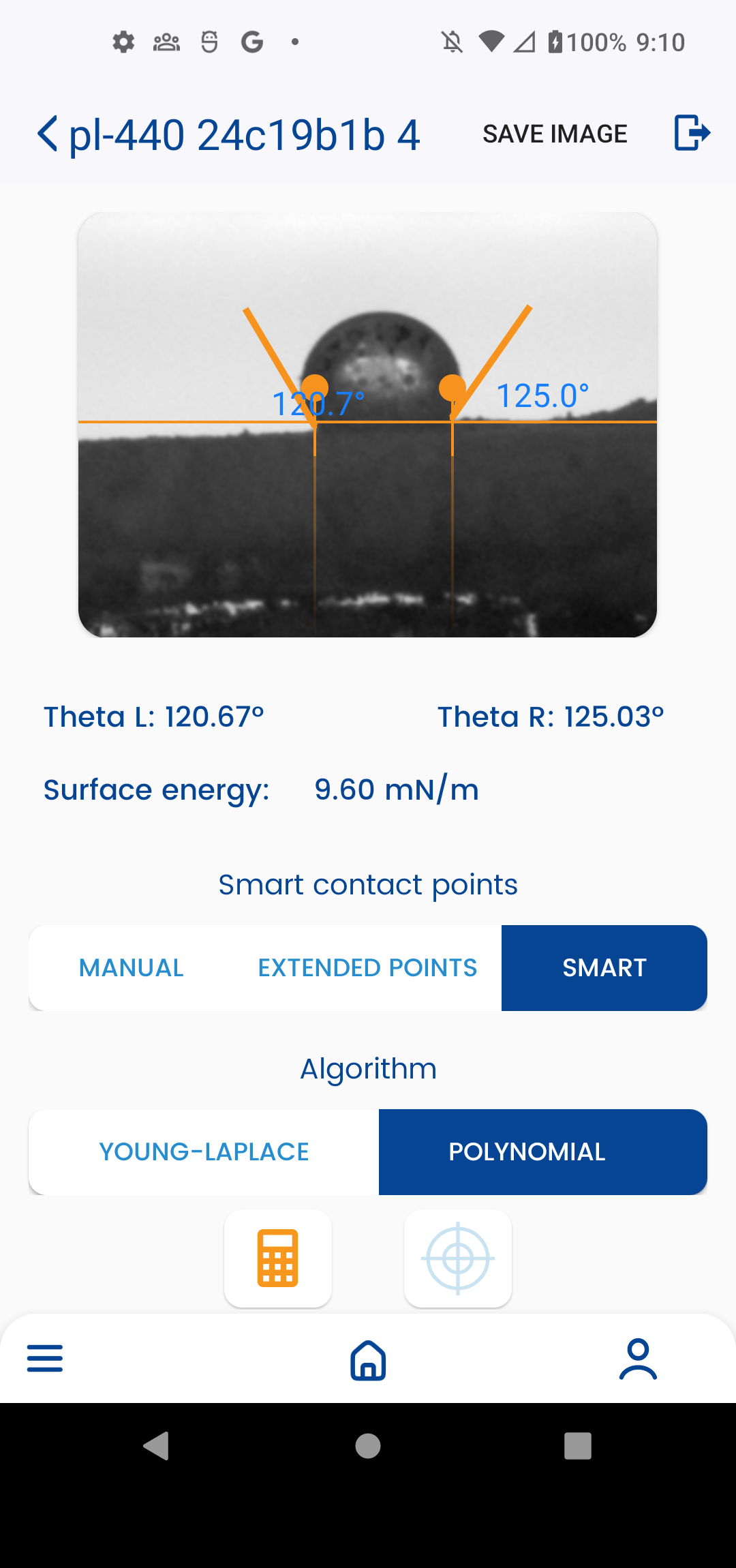
Contact angle (static/advancing/receding) for powder wetting trends
Surface energy (trend-based via Equation of State, Fowkes, Oss & Good)
Tilting plate droplet behavior (0°–60°)
Optional pendant-drop surface tension measurements

Calibration requirement

PASS / MONITOR / FAIL thresholds must be calibrated to your powder bed quality outcomes (e.g., density of the powder bed, defect rates, spreading quality).

Protocol defaults

Probe liquid: DI water
Fixed droplet volume (down to 0.05 µL supported)
Fixed capture time
Replicate-based statistics (median + IQR)

Known limitations

Apparent contact angle on powder beds is influenced by roughness and imbibition
Wetting is not a direct proxy for powder spreading quality
Requires correlation to real powder bed characteristics

How this page was created 4 checklist items
01

Transparency Note

Drafting assistance: Initial draft created with AI assistance (Claude 4.8 Opus Pro), then rewritten for technical clarity by Droplet Lab Staff

02

Transparency Note

Technical review and editing by a surface-science specialist for accuracy

03

Transparency Note

Identifiers, units, thresholds, and key claims checked against cited sources before publication

04

Transparency Note

Reviewed every 12 months or when underlying standards or instrument specifications change

Executive Summary

In powder bed fusion additive manufacturing, stable powder beds are essential for consistent part quality. However, powder spreading process instability often appears “random” due to subtle shifts in powder material condition—moisture adsorption, oxidation, or contamination.

These shifts affect powder flow behavior, particle cohesion, and ultimately the uniformity of the powder bed layer. Even when powder size distribution, PSD, or chemistry appears within specification, the powder spreading mechanism can degrade.

This use case introduces a fast diagnostic layer using Dropometer to:

  • Detect early powder condition drift
  • Improve powder spreading quality before build failure
  • Enable defensible gating for powder bed fusion process inputs
  • Reduce variability in laser powder bed fusion additive workflows

The Problem

<p data-start="3181" data-end="3465">In powder bed fusion technologies, each powder layer must be uniformly spread to ensure consistent melting and solidification. When the powder spreading process fails, the resulting powder beds exhibit poor packing density, uneven height of the powder, and reduced powder bed quality.</p> <p data-start="3467" data-end="3489">This directly impacts:</p> <ul data-start="3490" data-end="3609"> <li data-section-id="h8wn08" data-start="3490" data-end="3519">Density of the powder bed</li> <li data-section-id="hlw3aa" data-start="3520" data-end="3552">Melting of the spread powder</li> <li data-section-id="1s41e10" data-start="3553" data-end="3609">Final part integrity in metal additive manufacturing</li> </ul>

  • Recoater streaks and ripples
  • Bare spots in powder beds
  • Variability in powder layer thickness
  • Increased defects in parts fabricated by laser powder bed
  • Sensitivity to humidity and storage conditions
  • Inconsistent powder spreading velocities

Why It Happens

Why:

  • Moisture increases cohesion between powder particles via capillary forces.

How to detect:

  • Shift in contact angle vs dry baseline
  • Increased variability in powder spreading process

Corrective action:

  • Dry powder feedstock
  • Control storage humidity

Why:

  • Reused metal powder develops oxide layers affecting wetting and powder flow.

How to detect:

  • Surface energy trend shifts
  • Increased variability across powder beds

Corrective action:

  • Track reuse cycles
  • Separate powder by exposure history

Why:

  • Oils or residues alter surface energy and wetting behavior.

How to detect:

  • Elevated contact angle
  • Localized variability (hotspots)

Corrective action:

  • Improve handling protocols
  • Clean powder-contact surfaces

Why:

  • Changes in powder size or fines content affect powder packing and spreading.

How to detect:

  • PSD analysis
  • Increased variability in powder bed density

Corrective action:

  • Standardize sieving
  • Control powder size distribution

Why:

  • Changes in spreading speed, blade condition, or roller spreading process affect powder bed formation.

How to detect:

  • Stable wetting but degraded powder bed quality

Corrective action:

  • Adjust spreading parameters
  • Inspect recoater system

What to Measure

Contact Angle at Fixed Time

Why it matters: Indicates wetting behavior of powder material

How to interpret: Compare against baseline

When it is not enough: Requires controlled powder presentation

Variability (IQR/SD)

Why it matters: Detects non-uniform powder condition

How to interpret: High variability = unstable powder beds

When it is not enough: Needs complementary diagnostics

Tilting Plate Behavior

Why it matters: Indicates droplet adhesion/pinning

How to interpret: Comparative trends across powder beds

When it is not enough: Sensitive to roughness

Surface Energy Trends

Why it matters: Reflects changes in powder surface state

How to interpret: Trend vs baseline

When it is not enough: Not a direct predictor of powder spreading quality

How Dropometer Fits Your Workflow

1

Establish Baselines

Define “known-good” powder bed characteristics for each powder material.

2

Add Screening Gate

Screen powder feedstock before use in the powder bed fusion process.

3

Troubleshoot Powder Spreading

Identify whether defects are due to powder condition or process parameter changes.

4

Correlate to Outcomes

Link wetting data to:

  • Powder bed density
  • Powder spreading quality
  • Build success rates

Validated measurement approach

Independent benchmarking and publication-based validation references.

Benchmark Validation

Our Contact angle and pendant‑drop surface tension methods have been benchmarked against KRÜSS DSA100E reference measurements.

See peer‑reviewed validation

Publication Evidence

Our instruments are referenced in peer‑reviewed journals, theses, and conference publications

Browse the full citations list

Baseline + gates (calibration first)

Build defensible PASS / MONITOR / FAIL gates for bed formation stability that hold up across operators, shifts, and reuse cycles.

Recommended calibration study

  • 10–20 samples spanning good and bad spreading outcomes (include humidity-exposed and dried/conditioned variants)
  • ≥2 operators to verify repeatability
  • A “golden control” condition measured every run

Outputs you should lock

  • droplet volume (automatic dosing supports down to 0.05 µL)
  • capture time
  • probe fluid(s) and handling/storage rules
  • replicate cations
  • summary stats (median + IQR)

QC-Ready Quick Protocol (SOP Card)

Sample Handling

  • Use sealed containers
  • Track powder history

Setup

  • Standardize powder presentation
  • Use reference control

Measurement

  • Fixed droplet size
  • ≥5 replicates
  • Report median + IQR

Release Rules

  • Control powder bed preparation method
  • Ensure consistent environmental conditions

Decision Tree (Triage)

Start condition: Powder bed defects increasing

Contact angle shifts

Likely signals: Moisture/contamination

Action: Dry or recondition

High variability

Likely signals: Non-uniform powder

Action: Improve handling

Stable wetting

Likely signals: Process issue

Action: Adjust spreading parameters

Pitfalls + Limits

  • Powder spreading and powder bed quality literature
  • Moisture effects on powder flow behavior
  • Standards for powder bed fusion additive manufacturing
  • Dropometer datasheet specifications

Report a correction

Spotted an issue in this summary? Send a correction request and our team will review it.

Correction Request

We work hard to keep this standards summary accurate and up to date. If you spot an error (wrong revision/year, missing requirement, incorrect interpretation, or broken link), tell us and we'll review it.

Contact us to report a correction