



Contents
Case Study

A coating for fresh tomatoes has to spread on the skin. A research team in Nepal measured every formulation the same way before moving its project to the next phase.

Last Updated
October 18, 2026
Industry
Food and agricultural research
Location
Kathmandu Valley, Nepal
Customer since
2020
Organisation
Non governmental research institute
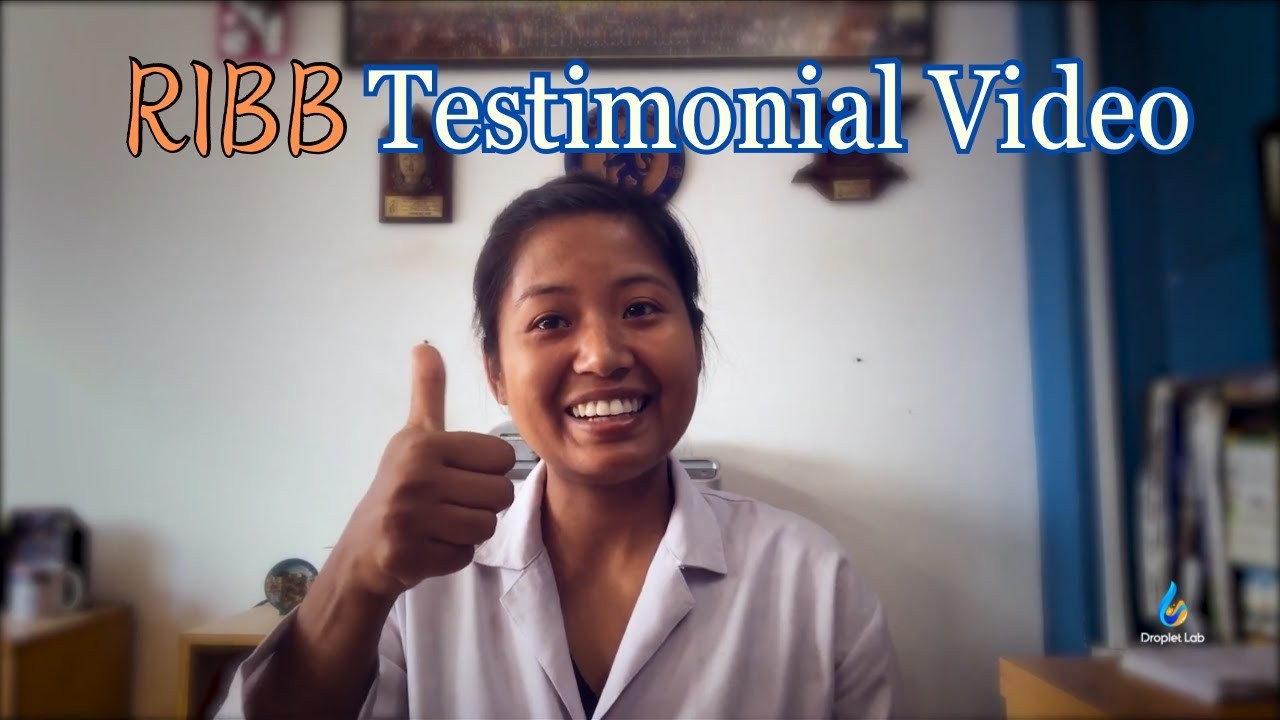
Testimonial video from the research team Contact angle and pendant drop methods validated against a KRÜSS DSA100E in 2 peer reviewed papers Published accuracy of 0.35° in peer review

The natural products and green chemistry team at the Research Institute for Bioscience and Biotechnology (RIBB), a non governmental research institute in Nepal, develops edible coatings for tomatoes. For a grant funded project, the team bought a Dropometer in 2020 to measure surface tension, contact angle and surface free energy on tomato skin. Training and support came remotely from Droplet Lab in Canada.

Rojlina Manandhar, co-investigator at the Research Institute for Bioscience and Biotechnology (RIBB) in Nepal, in a still from her Dropometer testimonial video
Abhimanyu Photo
Written by
Abhimanyu Bhandankar
Holds an MBA from Schulich School of Business and a BE in IT. He joined Droplet Lab in July 2019 and now leads sales and marketing.
CEO at Droplet Lab
Read More
Gurdeep-Saini-Photo
Technical Review by
Gurdeep Singh Saini
Holds a BASc in Mechanical Engineering from Ryerson University (now Toronto Metropolitan University) and an MASc from York University. He develops the automatic edge and baseline detection behind the Dropometer's analysis.
COO at Droplet Lab
Read More
Abhimanyu Photo
Written By

Abhimanyu Bhandankar

CEO at Droplet Lab

Holds an MBA from Schulich School of Business and a BE in IT. He joined Droplet Lab in July 2019 and now leads sales and marketing.

Gurdeep-Saini-Photo
Reviewed By

Gurdeep Singh Saini

COO at Droplet Lab

Holds a BASc in Mechanical Engineering from Ryerson University (now Toronto Metropolitan University) and an MASc from York University. He develops the automatic edge and baseline detection behind the Dropometer's analysis.

Executive Summary

Who

The Research Institute for Bioscience and Biotechnology (RIBB), a non governmental research institute in Lalitpur, Nepal. Its natural products and green chemistry department develops natural formulations, including edible coatings for fresh produce such as tomatoes.

Problem

An edible coating protects a fruit only if it wets and spreads evenly on the skin. The team had several candidate formulations for tomatoes and needed measured values, not judgement by eye, to compare them before the next phase of a grant funded project.

Solution

A manual Dropometer with the contact angle, surface tension and surface energy apps, bought directly from Droplet Lab after a US based collaborator recommended it. Dr Alidad Amirfazli, Co-founder and Scientific Advisor, advised on probe liquids for surface free energy. Training and support were delivered remotely.

Time to Value

May 2020: introduction and quote. August 2020: purchase order placed. November 2020: instrument delivered to Nepal. April 2022: first project phase complete. September 2022: testimonial recorded. December 2022: manuscript in preparation. October 2023: Droplet Lab visited RIBB.

Results

The team measured the surface tension of each formulation and contact angles on tomato skin. In Rojlina Manandhar's words, they could compare all the formulations and get the best data, which let the project move to its next phase. By December 2022 the team was writing a manuscript.

Highlights

3

Measurements on one instrument

Nov 2020

Instrument delivered to Nepal

Phase 2

Project moved to its next phase

2020

Customer since

Quote teaser

I think a Dropometer has been a great help for us.

RIBB, at a glance

Research focus

Natural products and green chemistry, including edible coatings for fresh produce.

Products / applications

Edible coating formulations for tomatoes.

Measurement stage

Formulation screening in a grant funded research project.

Users

Rojlina Manandhar and colleagues in the natural products and green chemistry department.

Materials and surfaces tested

Coating formulations and tomato skin, with probe liquids for surface free energy.

Key constraints

Grant budget, distance from the supplier, and parts that take weeks to ship.

The challenge: choosing a tomato coating by its numbers

An edible coating has to wet the fruit's waxy skin evenly, and small changes in a formulation change how it spreads.

Why coatings need to wet the fruit

An edible coating forms a thin film on the fruit's skin. If the liquid does not wet the waxy surface well, it beads up and leaves gaps. That makes the wettability of each formulation on the skin as important as what is in it. Our use case page on edible coatings on fresh produce explains the measurements behind this.

Why numbers were needed

The team had several candidate formulations. To choose one for the next phase of a grant funded project, it needed to compare them on the same measured properties rather than by eye. Our food and beverages guide covers where these measurements fit in food research.

The insight: measure the liquid and the skin, then compare every formulation the same way

What Was Deployed

Delivered configuration (2020): a manual Dropometer contact angle and surface tension kit with the contact angle, surface tension and surface energy apps. The automatic dispenser was left out to fit the project budget. The team measures the surface tension of each coating formulation by pendant drop, and the contact angle of probe liquids on tomato skin to calculate its surface free energy. Dr Alidad Amirfazli, Co-founder and Scientific Advisor, advised that any surface of interest can be used, with probe liquids that form contact angles ideally above 30 degrees. Calibrating every drop image the same way supports reproducible contact angle measurement.
The Origin

From a collaborator's recommendation to a lab in Kathmandu

In May 2020 a research collaborator based in the United States, who had seen the Dropometer at an ACS colloids conference, asked Droplet Lab for specifications for colleagues in Kathmandu. He talked through the planned measurements with Dr Alidad Amirfazli in June 2020. The team chose the manual version to fit its grant budget, and RIBB sent its purchase order in August 2020. The instrument reached Nepal in November 2020. Droplet Lab supported the team remotely by email and video call. When parts broke, it posted replacements and shared 3D print files so RIBB could print the syringe holder and sample stage locally. In the words of co-investigator Rojlina Manandhar: “We had a one-to-one discussion with the guys from Droplet Lab and they were really helpful in solving all of our problem we related with the device and of course with our experiment as well.” In 2022 she recorded a short testimonial about the work. In October 2023 Droplet Lab visited the team at RIBB. Watch Rojlina’s testimonial video (about 1.5 minutes)

Before vs After

Metric Before After
Comparing coating formulations Several candidate formulations, no shared measured basis Each formulation measured for surface tension and contact angle, then compared on the same values
Surface free energy of tomato skin Not measured in house Measured on the Dropometer with probe liquids chosen on Droplet Lab's advice
Replacement parts in Nepal Parts shipped from Canada, taking weeks Replacement parts posted, plus 3D print files so parts can be printed locally
Internet connection Needed once, for licence activation Measurements then run without a connection

Rollout timeline

Timeline (high level)

May to August 2020: Introduction and order

  • Specifications and quote sent to a US based collaborator in May
  • Measurements discussed with Dr Alidad Amirfazli in June
  • Manual version chosen; purchase order received in August

October to December 2020: Delivery and setup

  • Advice on probe liquids for surface free energy in October
  • Instrument received in Nepal in November, with a setup video and measurement guides
  • Replacement sample stage and phone holder posted in December

2021: Support and replacement parts

  • Video call with Droplet Lab's engineer in March on calibration and parts
  • Replacement parts, a new syringe and an activation card posted during the year

2022: First phase complete

  • First project phase complete by April
  • 3D print files shared so the syringe holder and sample stage can be printed in Nepal
  • Testimonial recorded in September; manuscript in preparation by December

October 2023: Visit

Droplet Lab visited the team at RIBB

Proof and validation: what this case shows, and what it does not

Test method

Pendant drop surface tension of edible coating formulations, and contact angles of probe liquids on tomato skin to calculate surface free energy, measured on a manual Dropometer.

Sample size and operators

Measured by Rojlina Manandhar and colleagues in RIBB's natural products and green chemistry department, supported remotely by Droplet Lab. RIBB has not shared sample counts.

Repeatability / reproducibility

RIBB has not shared its measurement data. The Dropometer's contact angle and pendant drop methods are validated against a KRUSS DSA100E in peer review.

Notes / assumptions

The coating formulations and results are RIBB's own and are not reported here. The testimonial was recorded in 2022; Droplet Lab thanked RIBB with a small gift card for taking part.

Outcomes to date

Measured Outcomes

3

Measurements on one instrument

Surface tension of formulations, contact angle, and surface free energy of tomato skin.

Phase 2

Project moved to its next phase

In Rojlina Manandhar's words, the team could compare all the formulations and get the best data, so the project could move to its next phase.

2020

In use since

The Dropometer reached RIBB in November 2020 and supported the first project phase, completed in 2022, and the manuscript that followed.

Operational Outcomes

Fast experiments

In the team's words, it is less time consuming, so many sets of experiments fit in a short period of time.

Portable

The whole setup moves from place to place in the lab as needed.

Works offline

After licence activation, results come from a single tap on the phone without an internet connection.

In the client's words

By using the Dropometer we could get the exact values of surface tension and contact angle values for our formulation and we could really compare all the formulations and got the best data, so then only we could move to the next phase of our project.
Rojlina Manandhar - Co-investigator, Natural Products and Green Chemistry, Research Institute for Bioscience and Biotechnology (RIBB), Nepal

What's next

Delivered

Manual Dropometer with contact angle, surface tension and surface energy apps (2020)
First phase of the edible coating project completed (2022)
3D print files for the syringe holder and sample stage, so parts can be printed in Nepal (2022)
Droplet Lab visit to the team at RIBB (October 2023)

In Pilot

Second phase of the edible coating project, started in 2022

Planned

Publication of the edible coating work, which was being written up in December 2022

Frequently asked questions

How do you compare edible coatings for fruit?

The team measures the surface tension of each coating formulation by pendant drop, and the contact angle of probe liquids on tomato skin to calculate the skin's surface free energy. Comparing the two shows which coatings should wet the fruit best.

Which probe liquids work for surface free energy?

Dr Alidad Amirfazli, Co-founder and Scientific Advisor, advised that any surface of interest can be used, with probe liquids that form contact angles ideally above 30 degrees.

Does the Dropometer need an internet connection?

Only once, for licence activation. After that the team in Nepal runs measurements without a connection. Droplet Lab also shared 3D print files so the team could print the syringe holder and sample stage locally.

Next Step

Developing a coating, spray or formulation for fruit, leaves or seeds?

The Dropometer measures the surface tension of your formulations, and contact angle and surface energy on real plant surfaces. Measurements run without an internet connection once the licence is activated. Its methods are validated against a KRÜSS DSA100E in peer review. Book a 15 minute demo and bring a sample.