



Contents
Case Study

A sensor ink at 70 mN/m was not printable. A University of Bologna lab added surfactant, measured about 30 mN/m on the Dropometer, and printed it.

Last Updated
October 18, 2026
Industry
Printed electrochemical sensors research
Location
Bologna, Italy
Customer since
October 2024
Published with the Dropometer
Electrochimica Acta, 2026
Configuration
Contact angle, surface tension, surface energy, automatic dropper
Named in the methods of a 2026 Electrochimica Acta paper Drop shape method validated against a KRÜSS DSA100E in peer review 2 peer reviewed validation papers

Prof. Andreas Lesch's group in the Department of Industrial Chemistry "Toso Montanari" inkjet prints electrochemical sensors. With a Dropometer bought through Prof. Giovanni Valenti's Horizon Europe SENSOPAD project, the lab measured its poly(N isopropylacrylamide) ink by pendant drop before and after adding 2.4 µL of Triton X. The printable ink became a sensor published in Electrochimica Acta in 2026.

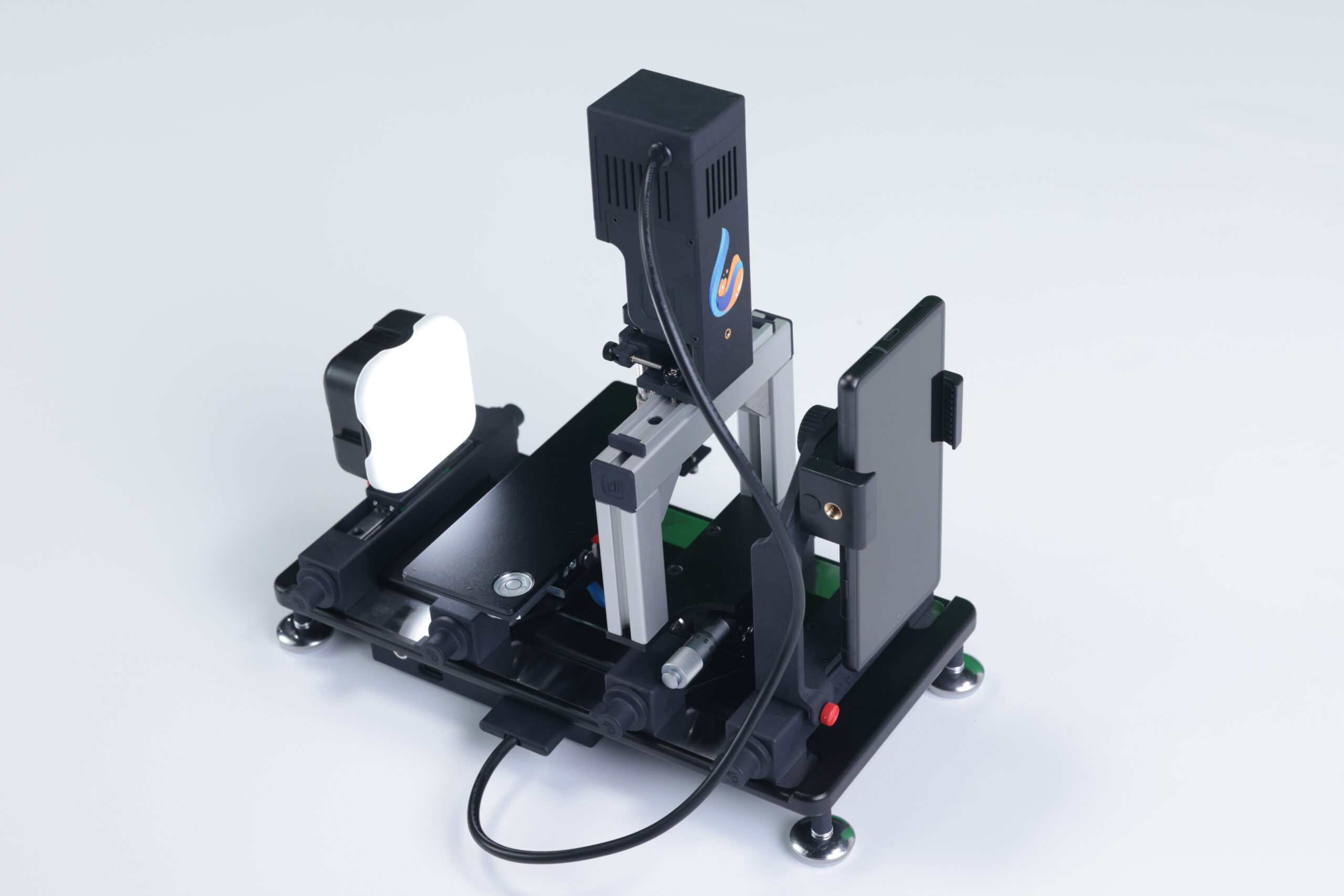
Product photo of a Droplet Lab Dropometer with the automatic dropper, the option the University of Bologna lab ordered for pendant drop surface tension and sessile drop contact angle
Abhimanyu Photo
Written by
Abhimanyu Bhandankar
Holds an MBA from Schulich School of Business and a BE in IT. He joined Droplet Lab in July 2019 and now leads sales and marketing.
CEO at Droplet Lab
Read More
Gurdeep-Saini-Photo
Technical Review by
Gurdeep Singh Saini
Holds a BASc in Mechanical Engineering from Ryerson University (now Toronto Metropolitan University) and an MASc from York University. He develops the automatic edge and baseline detection behind the Dropometer's analysis.
COO at Droplet Lab
Read More
Abhimanyu Photo
Written By

Abhimanyu Bhandankar

CEO at Droplet Lab

Holds an MBA from Schulich School of Business and a BE in IT. He joined Droplet Lab in July 2019 and now leads sales and marketing.

Gurdeep-Saini-Photo
Reviewed By

Gurdeep Singh Saini

COO at Droplet Lab

Holds a BASc in Mechanical Engineering from Ryerson University (now Toronto Metropolitan University) and an MASc from York University. He develops the automatic edge and baseline detection behind the Dropometer's analysis.

Primary outcome: the ink reached a printable surface tension

PNIPAAm ink surface tension, before and after adding surfactant

Pendant drop measurements on the Dropometer, as reported in Scotti and Lesch, Electrochimica Acta 576 (2026) 149649

Before: pre polymerised PNIPAAm ink 70 mN/m, not printable
After: with 2.4 µL Triton X About 30 mN/m, printable

The pre polymerised PNIPAAm ink measured 70 mN/m, which the authors report as not printable. Adding 2.4 µL of Triton X brought it to about 30 mN/m, and the ink was printed on a Dimatix DMP 2831. Separately, a limited pre polymerisation raised viscosity from 0.9 to about 1.8 mPa s, measured on a viscometer, not the Dropometer. The paper does not report drop counts or spread for these values.

70 to about 30 mN/m

PNIPAAm ink surface tension before and after adding surfactant, measured by pendant drop on the Dropometer.

2.4 µL Triton X

The surfactant addition that brought the ink into the printable range.

2 modes

Pendant drop for inks and sessile drop for substrates, the two needs the lab described in 2023.

1 day to assemble

Delivered on 19 November 2024 and assembled in the lab on 20 November.

Executive Summary

Who

Two research groups at the University of Bologna, Italy. Prof. Andreas Lesch's group in the Department of Industrial Chemistry "Toso Montanari" inkjet prints electrochemical devices and sensors. Prof. Giovanni Valenti's group in the Department of Chemistry "Giacomo Ciamician" bought the instrument under the Horizon Europe SENSOPAD project.

Problem

Inkjet printing only works when an ink's surface tension and viscosity sit in a narrow window. The lab needed pendant drop surface tension for its inks and sessile drop contact angle and surface free energy for its substrates, and had wanted a reliable tool for both since before 2023.

Solution

A Dropometer with contact angle, surface tension, surface energy and the automatic dropper, delivered in November 2024, assembled in the lab the next day and set up over a remote onboarding call a week later.

Time to Value

November 2019: first contact. February 2023: need described by email. June 2024: quote request. 15 October 2024: purchase order. 19 November 2024: delivered. 20 November: assembled in the lab. 27 November: remote onboarding. 3 December: first results reported. 2026: paper published.

Results

The lab measured a poly(N isopropylacrylamide) (PNIPAAm) ink at 70 mN/m, which was not printable. After adding 2.4 µL of Triton X it measured about 30 mN/m and printed. The ink became part of a fully inkjet printed graphene sensor with pH switchable selectivity, published in Electrochimica Acta in 2026, which names the Dropometer in its methods.

Highlights

70 to about 30 mN/m

PNIPAAm ink surface tension

1 day

From delivery to assembly

1

Paper naming the Dropometer

2024

Customer since

Quote teaser

...results are very good and coherent. I've also performed some contact angle measurements, and it seems to behave right.

University of Bologna, at a glance

Research focus

Fully inkjet printed electrochemical devices and sensors, including graphene electrodes with responsive polymer coatings.

Products / applications

Printed electroanalytical sensors with pH switchable selectivity.

Measurement stage

Ink formulation and printability checks before printing, alongside viscosity.

Users

PhD researchers in the Department of Industrial Chemistry "Toso Montanari", with the purchasing group in the Department of Chemistry "Giacomo Ciamician".

Materials and surfaces tested

A PNIPAAm polymer sensor ink for inkjet printing, measured by pendant drop. Substrate contact angles are not yet reported.

Key constraints

A narrow printable window for surface tension and viscosity; an instrument bought by one department and used by a group in another.

The challenge: an ink that will not jet cannot become a sensor

Every printed layer depends on an ink with the right surface tension, and a substrate that wets the right way.

The ink that would not print

The lab's pre polymerised poly(N isopropylacrylamide) (PNIPAAm) ink measured 70 mN/m and was not printable, as reported in Scotti and Lesch, Electrochimica Acta 576 (2026) 149649. Its viscosity of 0.9 mPa s was also too low. For scale, pure water sits near 72 mN/m at room temperature; see our experiment on the surface tension of water and temperature.

Two measurements, one instrument

The lab needed pendant drop surface tension for its inks and sessile drop contact angle and surface free energy for its substrates. In February 2023 Prof. Lesch described both needs, and "a big interest in having a reliable tensiometry measurement tool". For what makes repeat readings agree, see our guide to reproducible surface tension measurement.

What success would require

An instrument in the lab that measures ink surface tension by pendant drop before and after each formulation change, and substrate wetting by sessile drop. Jetting also depends on dynamic surface tension, which ASTM D3825 measures with a fast bubble method and a time resolved pendant drop follows as a fresh surface ages. The paper does not report dynamic values. Our article on why dynamic surface tension matters and our buying guide to tensiometers for dynamic surface tension explain when they do.

The insight: measure the ink, adjust it, measure again

What Was Deployed

Delivered configuration (purchase order 15 October 2024, delivered 19 November 2024): the Dropometer contact angle and surface tension kit with surface tension, contact angle and surface energy, and the automatic dropper. The automatic sliding stage for sliding angle was not part of the order. In the published work, ink surface tension was measured with the Dropometer in pendant drop mode and viscosity with a separate viscometer. A measured addition of 2.4 µL of Triton X brought the PNIPAAm ink into the printable range, and the sensor layers were printed drop on demand on a Dimatix DMP 2831. Droplet Lab is also preparing an open reference dataset of Dropometer measurements.
The Origin

"We need tensiometry therefore for both hanging (pendant) droplet mode ... and sessile droplet mode"

Prof. Andreas Lesch first contacted Droplet Lab in November 2019. In February 2023 he wrote back: "Yes, we still have a big interest in having a reliable tensiometry measurement tool. In our research we print electrochemical devices and sensors using inkjet printing. We need tensiometry therefore for both hanging (pendant) droplet mode (to determine the surface tension of our inkjet inks) and sessile droplet mode (to determine the contact angle and surface free energy of our substrates)."

In June 2024 he asked for a quote with the automatic dropper, surface tension, contact angle and surface energy. The purchase went through Prof. Giovanni Valenti's group in the Department of Chemistry "Giacomo Ciamician" under the Horizon Europe SENSOPAD project. After supplier registration in September 2024, the purchase order followed on 15 October 2024, and the instrument reached Bologna on 19 November 2024.

Before vs After

Metric Before After
PNIPAAm ink surface tension 70 mN/m, not printable About 30 mN/m, printable
Surfactant in the ink None 2.4 µL Triton X
Ink viscosity (separate viscometer) 0.9 mPa s, not printable About 1.8 mPa s, printable
Surface tension and contact angle in the lab “A big interest in having a reliable tensiometry measurement tool” (2023) Dropometer with pendant and sessile drop modes from November 2024
Papers from the lab naming the Dropometer 0 1 (Electrochimica Acta, 2026)

Rollout timeline

Timeline (high level)

2019 to 2023: A long standing need

  • First contact in November 2019
  • February 2023: pendant and sessile drop needs described by email

June to October 2024: Quote to order

  • Quote request in June 2024, with the automatic dropper
  • Supplier registration on the university purchasing platform in September 2024
  • Purchase order on 15 October 2024 under the Horizon Europe SENSOPAD project

November 2024: Delivered and set up

  • Delivered on 19 November 2024
  • Assembled in the lab on 20 November; remote onboarding on 27 November

December 2024 to January 2025: First results

  • Surface tension and contact angle measurements under way by 3 December
  • "Results are very good and coherent"
  • Replacement needles and glass syringes bought locally, using the Hamilton syringe models Droplet Lab named

2026: Published

Fully inkjet printed PNIPAAm/graphene sensor in Electrochimica Acta, with the Dropometer named in the methods

Proof and validation: what the paper shows, and what it does not

Test method

Pendant drop surface tension of the pre polymerised PNIPAAm ink, before and after adding Triton X, on the Dropometer (Droplet Lab, Canada). Viscosity on an A&D SV 1A viscometer. Printing on a Dimatix DMP 2831.

Sample size and operators

Not reported in the paper. The work was carried out in Prof. Lesch's group; the first author is Samuele Scotti.

Repeatability / reproducibility

The paper reports the values in its text (70 mN/m and about 30 mN/m) and does not tabulate replicate measurements or error bars for them.

Notes / assumptions

Source: S. Scotti, A. Lesch, "Fully inkjet-printed poly(N-isopropylacrylamide)/graphene electrodes for electroanalytical sensing with pH switchable selectivity", Electrochimica Acta 576 (2026) 149649, doi:10.1016/j.electacta.2026.149649. The paper is open access under CC BY NC ND, so no figures are reproduced here. The viscosity values come from a separate viscometer, not the Dropometer. Substrate contact angle results are not reported in the paper.

Outcomes to date

Measured Outcomes

70 to about 30 mN/m

PNIPAAm ink surface tension

From not printable to printable after adding 2.4 µL of Triton X, measured by pendant drop on the Dropometer (Scotti and Lesch, Electrochimica Acta 576 (2026) 149649).

0.9 to ~1.8 mPa s

Ink viscosity

Raised into the printable range by a limited pre polymerisation, measured on a separate viscometer, not the Dropometer.

1

Peer reviewed paper

A fully inkjet printed sensor with pH switchable selectivity, naming the Dropometer in its methods.

Operational Outcomes

Fast setup

Assembled the day after delivery and onboarded remotely within a week.

Cross department purchase

Bought through the Department of Chemistry under the Horizon Europe SENSOPAD project and used by Prof. Lesch's group in Industrial Chemistry.

Both modes in use

Surface tension and contact angle results reported by the lab on 3 December 2024.

What the lab said

...results are very good and coherent. I've also performed some contact angle measurements, and it seems to behave right.
Dr. Stefano Gianvittorio - PhD researcher, University of Bologna

What's next

Delivered

Fully inkjet printed PNIPAAm/graphene electrodes with pH switchable selectivity (Electrochimica Acta, 2026)
Surface tension and contact angle measurements in the lab from December 2024

Frequently asked questions

How do you check if an inkjet ink is printable?

Measure its surface tension by pendant drop, alongside viscosity. Drop on demand printheads form clean drops only when both sit in a narrow range. The University of Bologna lab measured each ink before and after every formulation change.

What changed the sensor ink?

The PNIPAAm ink measured 70 mN/m and was not printable. After adding 2.4 µL of Triton X it measured about 30 mN/m and printed. The work was published in Electrochimica Acta in 2026, which names the Dropometer in its methods.

Can one instrument cover inks and substrates?

Yes. The lab's Dropometer has pendant drop surface tension for inks, and sessile drop contact angle and surface energy for substrates, with the automatic dropper. It was assembled the day after delivery in November 2024.

Next Step

Is your ink jetting the way it should?

The Dropometer measures ink surface tension by pendant drop, and substrate contact angle and surface energy by sessile drop, in one portable kit at your own bench. Its drop shape method is validated against a KRÜSS DSA100E in peer review. Book a 15 minute demo and bring an ink.