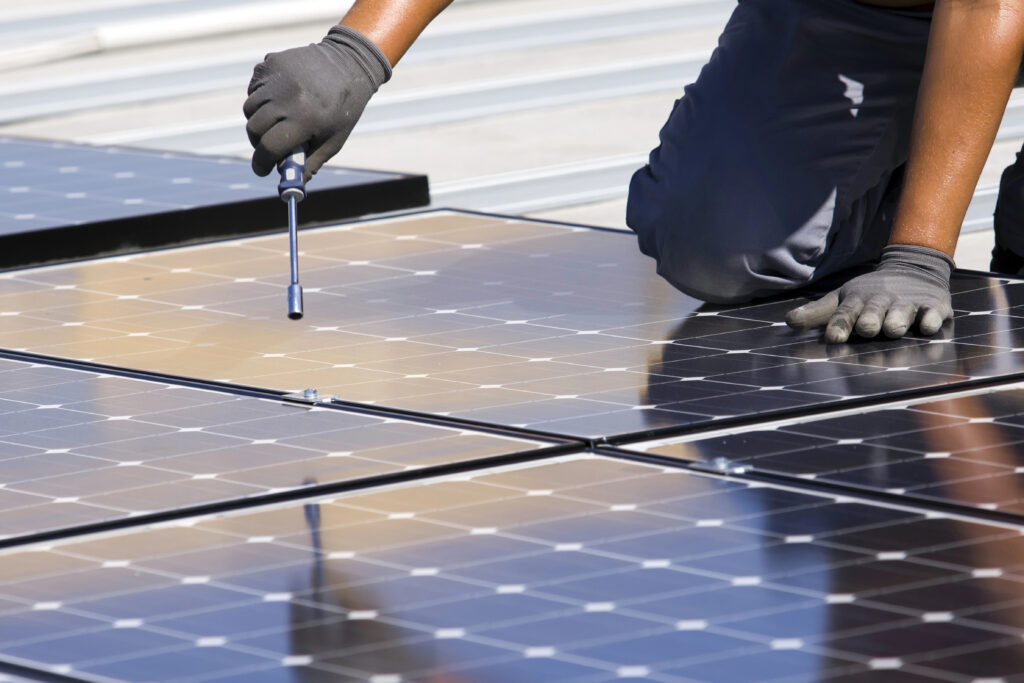
Use caseRead the use case
Self-cleaning & anti-soiling validation solar panels
Contact angle and sliding angle on coated solar module glass show whether an anti soiling coating still sheds water and dust before power output starts to drop.

Industry guide


This is a practical guide to surface science for teams working in the Utilities industry.
In this guide: the four measurements that matter, where they decide yield in Utilities, and the standards, use cases and studies behind them.
How power and water utilities use contact angle, interfacial tension and sliding angle on insulators, insulating oil, membranes and coatings. Each topic links to a use case, a standard or a published client study.
Silicone insulators work in wet, polluted conditions only while their surface repels water, and contact angle puts a number on that. Oil to water interfacial tension falls as insulating oil ages, so a pendant drop screen can flag samples for full lab analysis.
A numeric wetting check catches insulator, oil and membrane problems between scheduled lab tests. One portable kit covers contact angle, interfacial tension and sliding angle, so the same team can check samples in the lab or near the asset.
IEC TS 62073 describes three ways to assess insulator hydrophobicity: contact angle, surface tension and the spray method. ASTM D2285 covered oil to water interfacial tension by the drop weight method and was withdrawn in 2008. The Dropometer measures the same property by pendant drop, which is a different method.
Use contact angle to track insulator and membrane surfaces, and interfacial tension to trend insulating oil. Keep your reference lab methods for reported results, then book a 15-minute consult about running a screen on your own samples.
In utilities, many failures start at a surface that has stopped doing its job. A silicone insulator that no longer sheds water lets leakage current build up. Insulating oil that has aged lowers its interfacial tension long before a fault. A fouled membrane loses flux and needs more cleaning.
Self-cleaning & anti-soiling validation solar panels
Contact angle and sliding angle on coated solar module glass show whether an anti soiling coating still sheds water and dust before power output starts to drop.
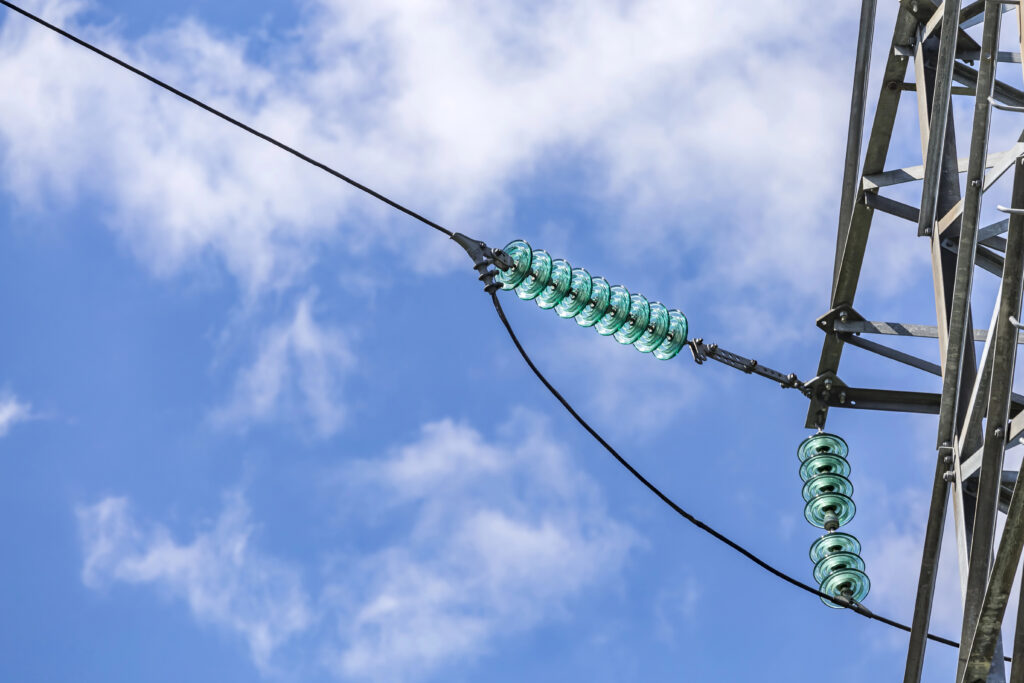
High Voltage Insulator Hydrophobicity
Static, advancing and receding water contact angles on silicone rubber housing samples show how much water repellency an insulator keeps after ageing, corona or pollution.
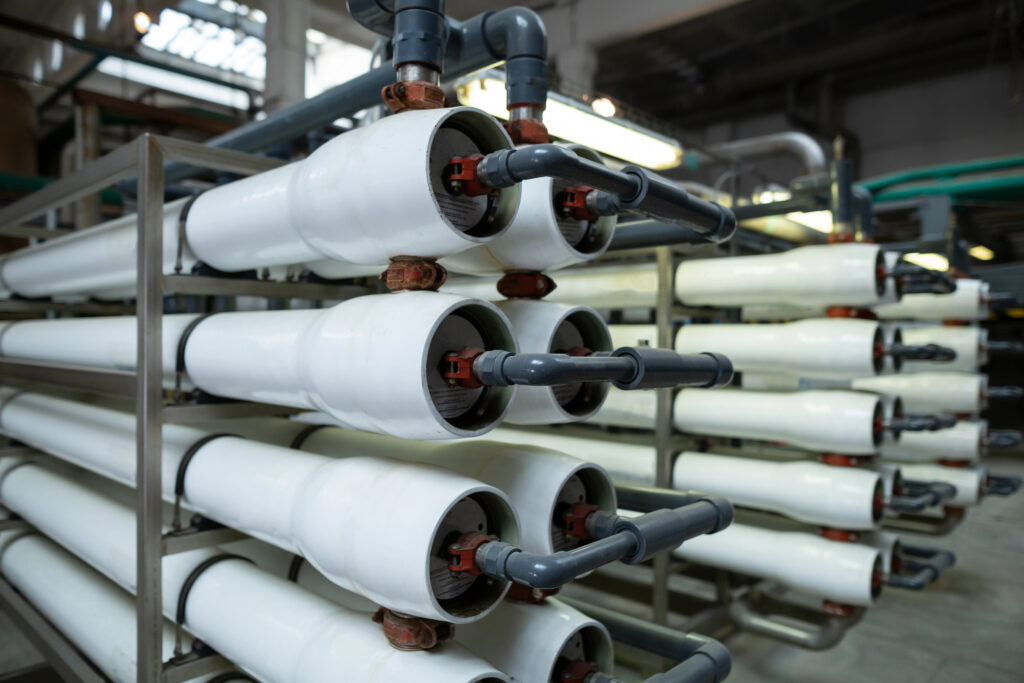
Membrane Surface and Fouling Characterization
Water contact angle on new, fouled and cleaned membrane coupons, by sessile drop or captive bubble, tracks surface change in RO, nanofiltration and bioreactor membranes.
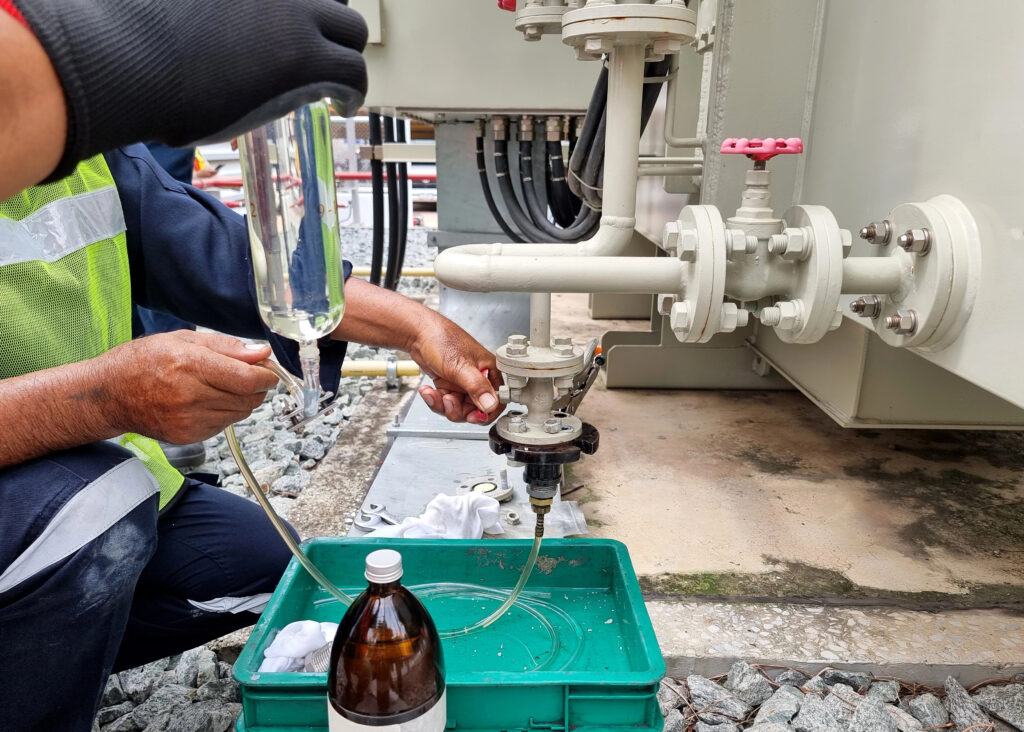
Transformer Oil Aging and Interfacial Tension Testing
A pendant drop screen of oil to water interfacial tension trends each transformer between lab tests and flags which oil samples need full ring method analysis.
Paper Microfluidic and Lateral Flow Wicking Control
Water contact angle on barriers and channels at fixed read times confirms that paper water test devices, such as hardness tests, hold the sample without leaking.
The Dropometer drop shape analysis kit measures contact angle, surface and interfacial tension, surface free energy and sliding angle with one portable setup. Its method was validated against a KRUSS DSA100E in two peer reviewed papers. If you are new to the terms, start with wettability.
A dot means the measurement is the main check for that problem.
| Problem | Contact angle | Surface and interfacial tension | Surface energy | Sliding angle |
|---|---|---|---|---|
| Self-cleaning & anti-soiling validation solar panels | ||||
| High Voltage Insulator Hydrophobicity | ||||
| Membrane Surface and Fouling Characterization | ||||
| Transformer Oil Aging and Interfacial Tension Testing | ||||
| Paper Microfluidic and Lateral Flow Wicking Control |
Not sure which test you need? Start with how to choose a wettability testing method.
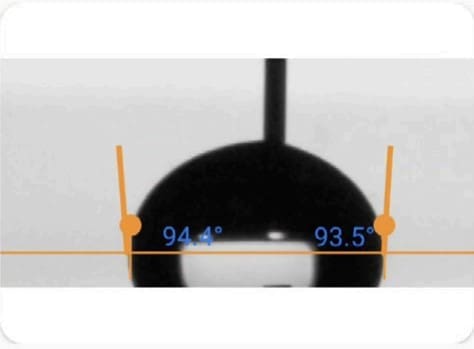
The angle a liquid drop makes where it meets a solid, in degrees. A low angle means the liquid spreads; a high angle means it beads. Use static angles for quick checks, and advancing and receding angles on real, rough or patchy surfaces, where one static value can mislead.
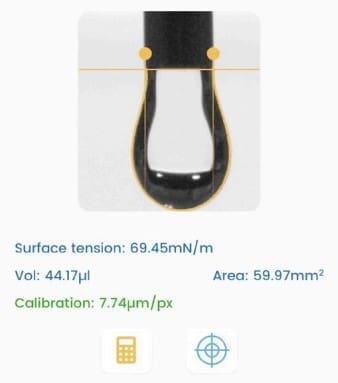
The force at a liquid surface that pulls it to the smallest area, in mN/m. The Dropometer measures it from the shape of a hanging (pendant) drop, and interfacial tension from a drop of one liquid inside another. Use static values for batch checks and dynamic values when interfaces form fast.
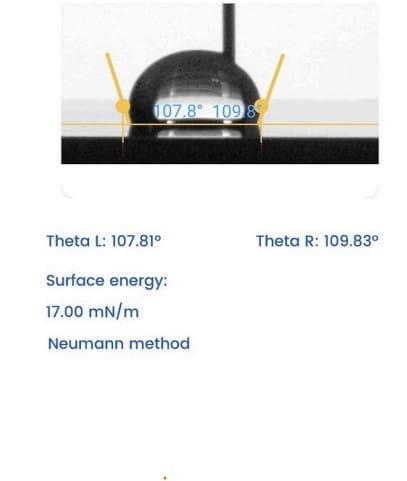
The energy needed to create new solid surface, in mJ/m². It is worked out from contact angles of two or more probe liquids. Use it before bonding, printing or coating to check that a surface is clean and treated enough.
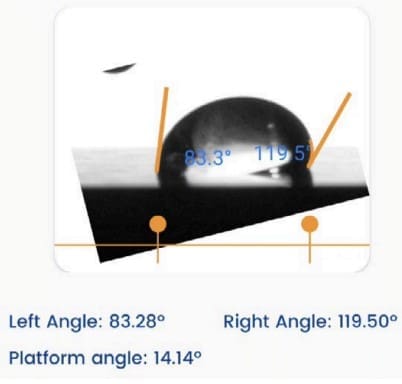
The tilt, in degrees, at which a drop starts to roll or slide off a surface. Use it for water and oil repellent surfaces, where a high contact angle alone does not show that drops will shed.
These reference measurements show how deionized water wets four standard substrates measured with the Droplet Lab Dropometer. Use them as visual and numerical benchmarks when you're checking your own sample preparation, treatments, and chemistry.
Full contact angle and surface energy datasets (including additional liquids and statistics) are available on our dataset hub.
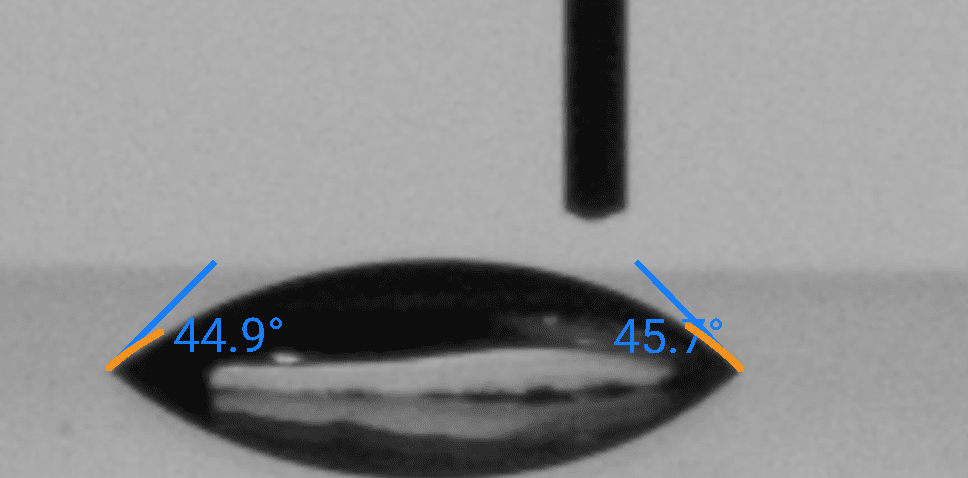
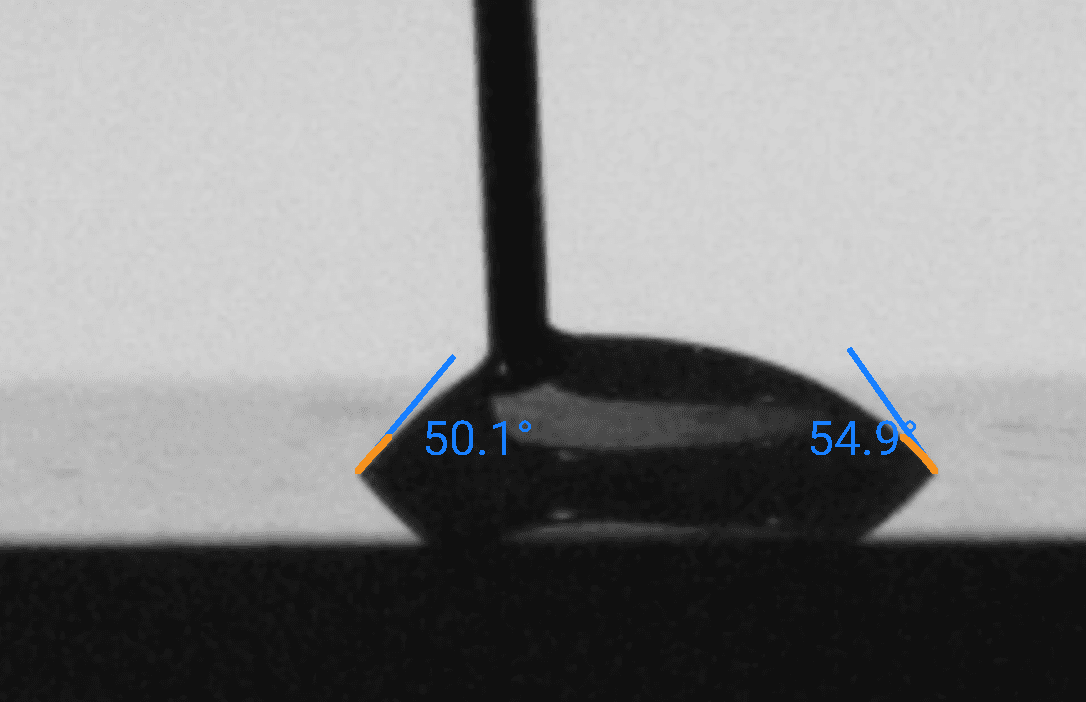
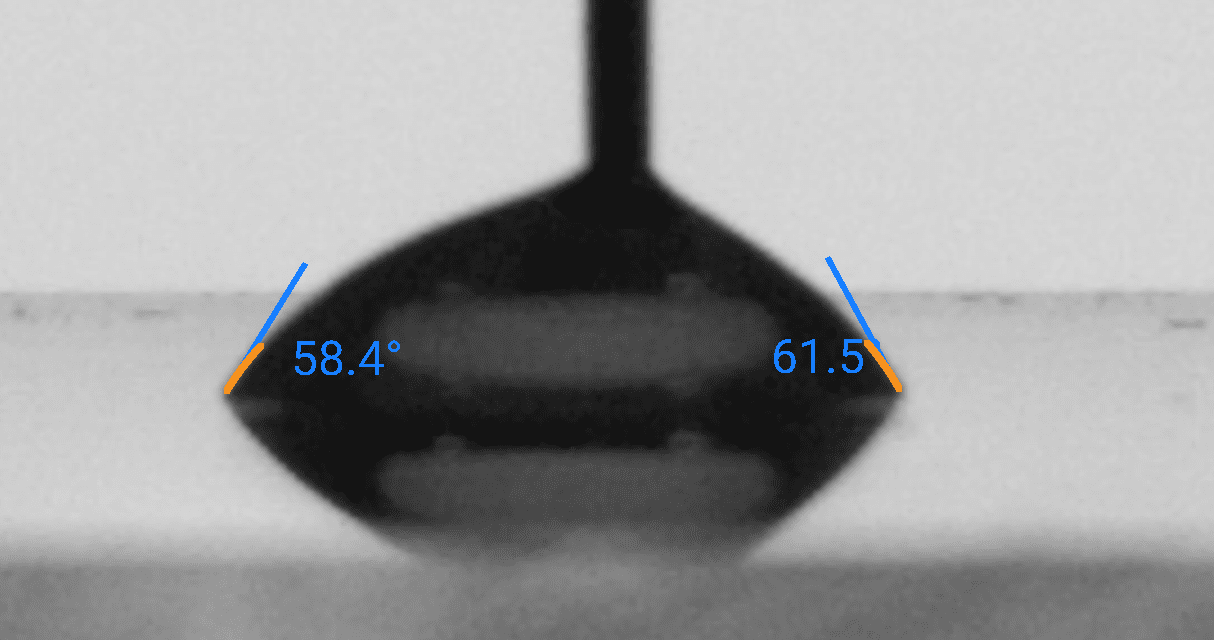
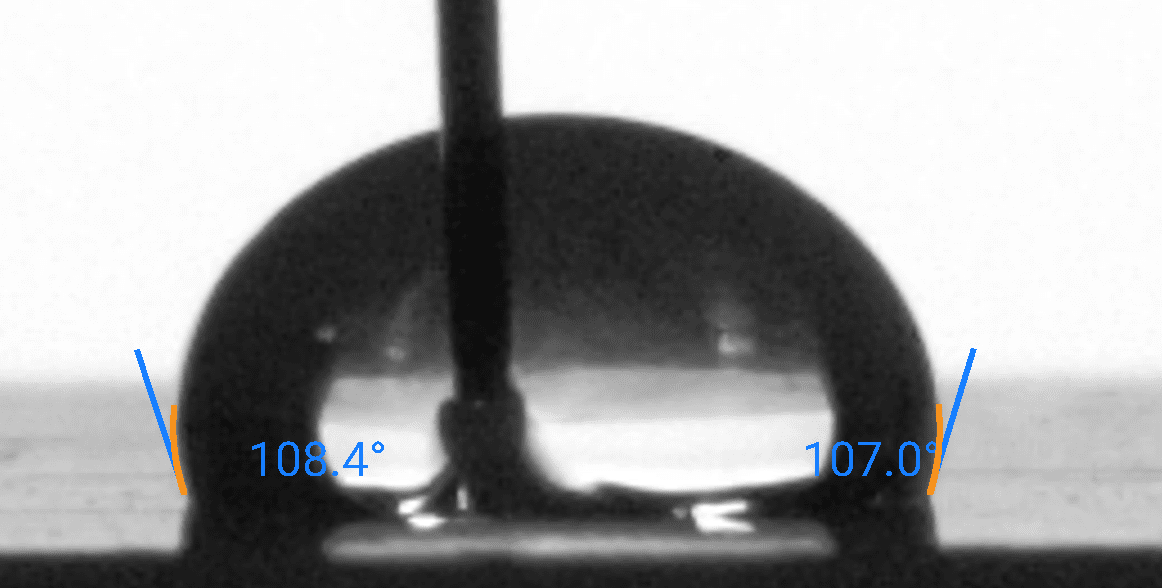
The droplet images above are taken from the same benchmark series as our open dataset. For each substrate and probe liquid we report:
Comparing your own droplet shapes and angles against these references is a fast way to spot contamination, treatment drift, or unexpected changes in wettability.
Measurements were performed with the Droplet Lab Dropometer under controlled laboratory conditions. Treat these values as sanity checks and starting points for your own process targets, not as product specifications.
Utilities teams using the Dropometer.
The lab uses water contact angle as a quality check on laser inscribed graphene electrodes, including coating screens for a creek water orthophosphate sensor.
The lab measured water contact angle on paper device barriers and channels, including a water hardness test, and paired it with SEM and FTIR to help explain weak signals.
A membrane research lab ordered the Dropometer with a tilting stage to check water contact angle on liquid repellent membranes, the surface property behind membrane wetting.
Prof. Liao's group added water contact angle on reactor sludge and PVDF membranes to its fouling tests on a bioreactor that turns pulp mill sludge into biogas.
Published studies that measured with the Dropometer. Our analysis explains what was measured and how; the original paper is linked beside it.
A dip-and-read capacitive electrochemical sensor for orthophosphate monitoring
Water contact angle on coated graphene sensor chips for creek water phosphate monitoring separated GO PDDA, above 120 degrees, from DADMAC, below 45 degrees.
Advanced separation and anaerobic digestion technologies for value-added bioproducts and biofuel from pulp and paper mill wastes
The thesis measured water contact angle on reactor sludge, which read 49.3 to 62.4 degrees at a 32 day retention time and 19.1 to 26.7 degrees at 55 days.
Development of a Dual-Modal Microfluidic Paper-Based Analytical Device for the Quantitative and Qualitative Detection of The Total Hardness of Water.
Water contact angles of four permanent marker barriers on filter paper, 144 to 158 degrees at 10 seconds, with leak tests picked the colours for a hardness test.
Dual-Modal Assay Kit for the Qualitative and Quantitative Determination of the Total Water Hardness Using a Permanent Marker Fabricated Microfluidic Paper-Based Analytical Device
The authors ranked marker barrier colours by water contact angle with the Dropometer, green highest, and leak tests confirmed green and blue for the hardness kit.
Effect of organic loading rates on the membrane performance of a thermophilic submerged anaerobic membrane bioreactor for primary sludge treatment from a pulp and paper mill
Water contact angle of reactor sludge, measured with a manual Dropometer, ranged from 24 to 64 degrees across three organic loading rates in a pulp mill sludge bioreactor.
Membrane performance evaluation and residual fouling characterization in a thermophilic submerged AnMBR treating pulp and paper primary sludge at varying solids retention times
Membrane water contact angle fell 20%, 24% and 39% against an unused membrane after bioreactor runs at 32, 45 and 55 day solids retention times.
Standards that describe these measurements for Utilities. Our page explains how the Dropometer fits each one; the standard itself is sold by its publisher.
ASTM D2285
This withdrawn field test used drop weight to measure insulating oil interfacial tension against water, which falls as oil ages; the Dropometer measures it by pendant drop instead.
ASTM D971 and IEC 62961
Sets out the ring method, the reference result for insulating oil interfacial tension against water, while a pendant drop screen can trend transformer oil ageing between lab tests.
IEC TR 62039
Guidance for choosing polymer housing materials for outdoor high voltage insulation, where water contact angle screens how well clean and polluted specimens keep and transfer hydrophobicity.
Start with the asset you are most worried about. Use water contact angle for silicone insulators, membranes and outdoor coatings. Use interfacial tension for insulating oil condition. Add sliding angle when you need to know whether drops run off, not just bead. Our contact angle guide and sliding angle guide explain each method.
IEC TS 62073 describes contact angle, surface tension and spray methods for insulator hydrophobicity, and sets no universal pass limits. IEC TR 62039 is guidance on polymer material selection, not a test method. For oil, ASTM D971 and IEC 62961 ring methods are the reference. The Dropometer uses the sessile drop and pendant drop methods, so check which method your specification names.
No. Pendant drop measures the same property, oil to water interfacial tension, by a different method. It works well as a fast screen to trend samples and decide which ones go for full analysis. Read every sample at the same drop age and use correct densities at the test temperature. Our oil ageing page explains how to set alert bands.
Measure water contact angle on new, fouled and cleaned membranes with the same method each time. At Lakehead University, Prof. Baoqiang Liao's group used a Dropometer on PVDF membranes from an anaerobic membrane bioreactor. Membrane contact angle fell 20%, 24% and 39% after runs at 32, 45 and 55 day solids retention times. See the Lakehead case study and the 2025 membrane paper.
In the Lakehead work, it did. A 2022 paper measured the contact angle of reactor sludge at three organic loading rates and found values between 24 and 64 degrees. See our analysis of the organic loading rate paper and the related PhD thesis, which tracked membrane and sludge contact angles across reactor conditions.
Yes. The McLamore lab at Clemson University uses contact angle as a quality check on laser inscribed graphene electrodes before electrochemical testing. In a coating screen for a creek water orthophosphate sensor, GO PDDA read above 120 degrees and DADMAC below 45 degrees. See the Clemson case study and our analysis of the dip and read orthophosphate sensor.
Yes. A Concordia University team used the Dropometer to compare permanent marker barriers on filter paper. At 10 seconds, green read 158 degrees and blue 151 degrees, and devices with those barriers did not leak. See the Chemosensors paper and the related thesis.
The drop shape method was validated against a KRUSS DSA100E in two peer reviewed papers, one in Review of Scientific Instruments and one in Colloids and Surfaces A. Contact angle accuracy is 0.35 degrees in the Dropometer product specification. Automatic edge and baseline detection gives the same reading from the same image. See our validation papers.
Book a 15 minute consult and we will show the Dropometer measuring the kind of surface or liquid your team works with.
Every page and paper referenced in this guide, grouped by type.