



Contents
Case Study

Twelve electrospinning recipes, one question: which fibres repel water best? A University of Calgary lab measured them all, from 130° to 143°.

Last Updated
October 18, 2026
Industry
Polymer and chemical engineering research
Location
Calgary, Alberta, Canada
Customer since
December 2020
Published with the instrument
Macromolecular Rapid Communications, 2024
Configuration
Contact angle, surface tension, surface energy, automatic dropper
Named in a 2024 Macromolecular Rapid Communications paper Drop shape method validated against a KRÜSS DSA100E in peer review 2 peer reviewed validation papers

Prof. Giovanni Natale's group in the Department of Chemical and Petroleum Engineering bought an automatic Dropometer in December 2020. The same instrument was later used by Prof. Uttandaraman Sundararaj's polymer group to measure the water contact angle of electrospun polystyrene fibre mats made with three solvent ratios at four voltages. Every mat was highly hydrophobic, and the results were published in Macromolecular Rapid Communications in 2024.

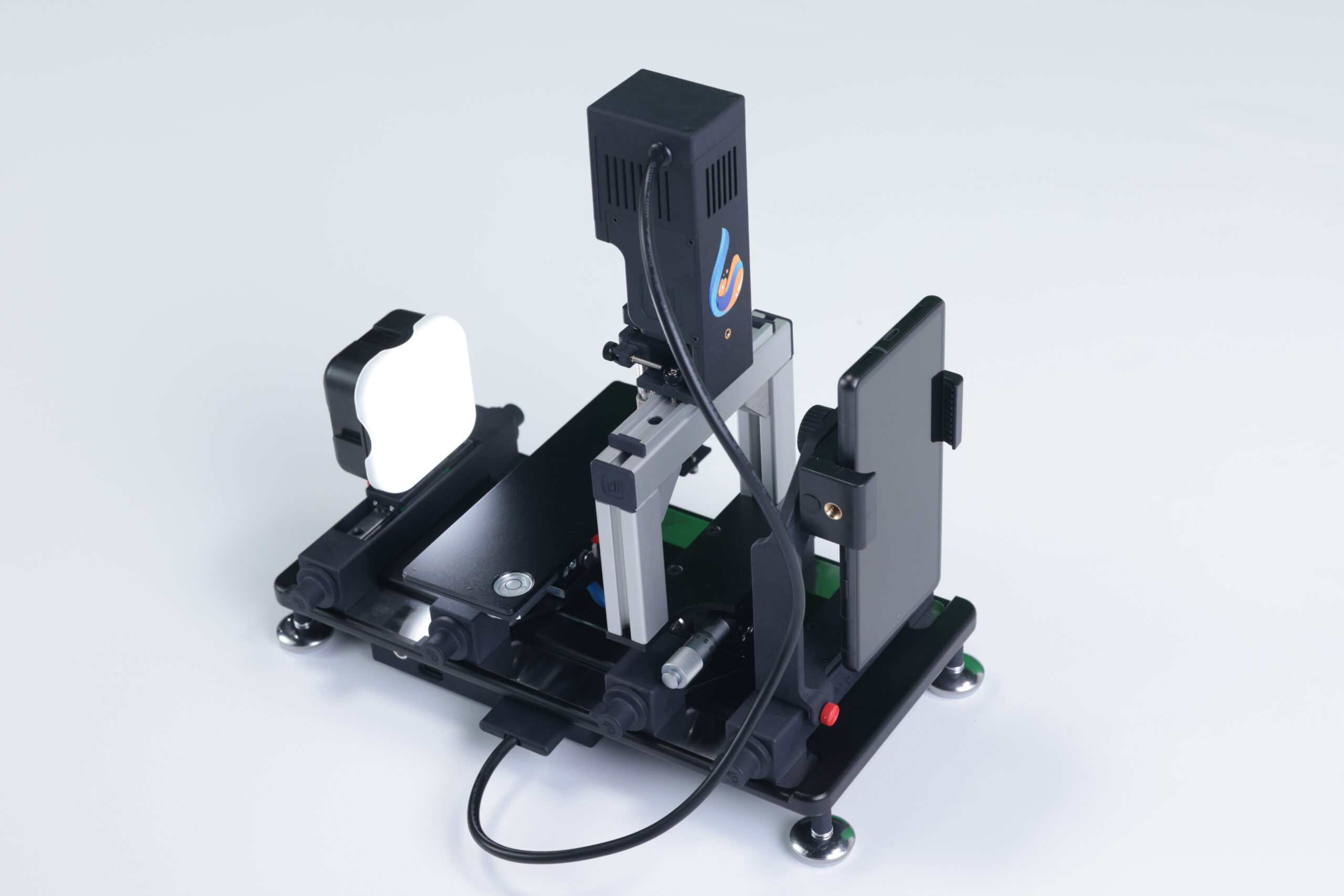
Product photo of a current Droplet Lab Dropometer with the automatic dropper, the configuration the University of Calgary department ordered in December 2020
Abhimanyu Photo
Written by
Abhimanyu Bhandankar
Holds an MBA from Schulich School of Business and a BE in IT. He joined Droplet Lab in July 2019 and now leads sales and marketing.
CEO at Droplet Lab
Read More
Gurdeep-Saini-Photo
Technical Review by
Gurdeep Singh Saini
Holds a BASc in Mechanical Engineering from Ryerson University (now Toronto Metropolitan University) and an MASc from York University. He develops the automatic edge and baseline detection behind the Dropometer's analysis.
COO at Droplet Lab
Read More
Abhimanyu Photo
Written By

Abhimanyu Bhandankar

CEO at Droplet Lab

Holds an MBA from Schulich School of Business and a BE in IT. He joined Droplet Lab in July 2019 and now leads sales and marketing.

Gurdeep-Saini-Photo
Reviewed By

Gurdeep Singh Saini

COO at Droplet Lab

Holds a BASc in Mechanical Engineering from Ryerson University (now Toronto Metropolitan University) and an MASc from York University. He develops the automatic edge and baseline detection behind the Dropometer's analysis.

Primary outcome: a clear map from process settings to water repellency

Water contact angle on electrospun polystyrene fibre mats

Lowest and highest of 12 conditions (mean ± SD), measured on the Dropometer, as reported in Melo and Sundararaj, Macromolecular Rapid Communications 45 (2024) 2400403

Lowest: 50:50 chloroform:DMF at 15 kV 130.1 ± 1.6°
Highest: 30:70 chloroform:DMF at 22.5 kV 143.2 ± 0.6°

The 50:50 chloroform:DMF mat spun at 15 kV read 130.1 ± 1.6° with water. The 30:70 mat spun at 22.5 kV read 143.2 ± 0.6°, the highest of all 12 conditions. The authors report that contact angle generally increased with voltage and link it to thinner fibres, beads and surface pores. From these angles they calculate, with the Cassie Baxter model, that air makes up 0.857 of the area under the drop on the most repellent mat. The paper does not state drop volume or drops per mat.

12 conditions

Three chloroform:DMF ratios, each spun at four voltages from 15.0 to 22.5 kV.

143.2 ± 0.6°

Highest water contact angle, on beaded fibres from the 30:70 mixture at 22.5 kV.

≤ 2.9° SD

Largest standard deviation across all 12 reported contact angles.

0.857 calculated air fraction

Calculated by the authors with the Cassie Baxter model, assuming water does not enter the mat; not a direct measurement.

Executive Summary

Who

The Department of Chemical and Petroleum Engineering at the University of Calgary, in the Schulich School of Engineering. Prof. Giovanni Natale's group bought the instrument, and Prof. Uttandaraman Sundararaj's polymer group used it for electrospinning research.

Problem

Electrospun fibre mats are candidates for textiles, filtration and biomedical uses, where water repellency matters. The group needed to know how the solvent mixture and the applied voltage change fibre shape, porosity and, in the end, how strongly the mat repels water.

Solution

An automatic Dropometer with contact angle, surface tension and surface energy, ordered in December 2020 and shipped in March 2021. A remote setup call with Droplet Lab followed in August 2021, and a free software update was sent in March 2023.

Time to Value

7 to 8 December 2020: supplier registration. 11 December 2020: purchase order. 24 March 2021: shipped. 12 August 2021: remote setup call. September 2021: replacement parts sent. March 2023: free software update sent. 26 September 2024: paper published online.

Results

Across three chloroform:DMF ratios and four voltages, every mat was highly hydrophobic, from 130.1 ± 1.6° to 143.2 ± 0.6° with water. The authors report that contact angle generally increased with voltage, and beaded fibres from the 30:70 mixture repelled water most. The work was published in Macromolecular Rapid Communications in September 2024.

Highlights

130.1 to 143.2°

Water contact angle range

12

Process conditions measured

2

Research groups using the instrument

2020

Customer since

University of Calgary, at a glance

Research focus

Surface tension work in Prof. Natale's group; electrospun polymer fibres in Prof. Sundararaj's group.

Products / applications

Porous electrospun polymer fibres for textiles, filtration and biomedical uses.

Measurement stage

Process development: relating solvent ratio and voltage to fibre shape and wetting.

Users

Researchers in two faculty groups in the same department.

Materials and surfaces tested

Electrospun polystyrene fibre mats with water; the instrument also covers pendant drop surface tension.

Key constraints

Rough, porous mats; many sample conditions; a shared instrument used by more than one group.

The challenge: tuning a process without knowing which setting drives water repellency

Electrospinning has many settings. Each one changes the fibre, and the fibre changes how the mat wets.

Why electrospun fibres are hard to predict

Electrospinning pulls a polymer solution into fibres under high voltage. The solvent mixture sets viscosity, conductivity and evaporation, and the voltage sets how hard the jet is stretched. Each setting changes fibre diameter, beads and pores at the same time. The authors see these porous mats as candidates for textiles, filtration and biomedical uses, the kind of materials covered in our guide to wetting measurements on fabrics.

Why wetting is the test that matters

For a fabric or filter, the question is how strongly the finished mat repels water. Fibre shape, beads and surface pores all add roughness, and roughness can trap air under a drop and raise the contact angle, as described in our glossary entry on the lotus effect. Finished textiles are often graded with drop tests, as in our textile and DWR water repellency testing use case. Oil repellency has its own drop test, AATCC TM118; this study measured water contact angle only.

Many conditions, one comparison

The study covered three chloroform:DMF ratios at four voltages, 12 mats in all. Every mat had to be measured the same way, so that changes between neighbouring conditions could be read against the spread. Our page on reproducible contact angle measurement covers why that matters. To interpret rough mats, the authors used the Cassie Baxter model, which our Wenzel vs Cassie Baxter roughness experiment explains.

The insight: measure every recipe the same way, then let the trend speak

What Was Deployed

Delivered configuration (ordered December 2020, shipped March 2021): an automatic Dropometer contact angle and surface tension kit with the automatic dropper, and the contact angle, surface tension and surface energy applications. No sliding angle stage. In the published study, polystyrene was dissolved at 0.15 g/mL in chloroform and DMF at 70:30, 50:50 and 30:70 by volume, and electrospun at 15.0, 17.5, 20.0 and 22.5 kV. The water contact angle of each of the 12 fibre mats was measured on the Droplet Lab instrument, alongside SEM, BET surface area, viscosity and conductivity. Our citation analysis of the Melo and Sundararaj electrospun polystyrene fibre paper sets out what the paper reports and what it leaves out. For contact angle data from other customer labs, see our Data in Brief dataset of client collected wetting measurements.
The Origin

One automatic instrument for a department's surface work

Prof. Giovanni Natale's group in the Department of Chemical and Petroleum Engineering ordered an automatic Dropometer in December 2020, with contact angle, surface tension and surface energy. Supplier registration ran from 7 to 8 December, and the purchase order followed on 11 December.

The instrument shipped on 24 March 2021. A remote setup call with Droplet Lab followed on 12 August 2021, and replacement parts were sent in September.

The instrument then served the department beyond the buying group. Prof. Uttandaraman Sundararaj's polymer group used it to measure the water repellency of electrospun polystyrene fibres, published in 2024.

Before vs After

Metric Before After
Water contact angle, 70:30 chloroform to DMF 135.4 ± 1.7° at 15 kV 140.8 ± 0.7° at 22.5 kV
Water contact angle, 50:50 chloroform to DMF 130.1 ± 1.6° at 15 kV 140.9 ± 2.3° at 22.5 kV
Water contact angle, 30:70 chloroform to DMF 137.9 ± 2.9° at 15 kV 143.2 ± 0.6° at 22.5 kV
Air fraction under the drop, calculated (Cassie Baxter) 0.745 to 0.815 at 15 kV 0.839 to 0.857 at 22.5 kV
Droplet Lab instrument in the department None before the December 2020 order One automatic Dropometer, also used by a second group

Rollout timeline

Timeline (high level)

December 2020: Ordered

  • Droplet Lab set up as a university supplier on 7 December
  • Purchase order on 11 December for an automatic Dropometer

March 2021: Shipped

  • Automatic Dropometer shipped on 24 March 2021
  • Contact angle, surface tension and surface energy applications included

August to September 2021: Set up

  • Remote call on 12 August solved the setup issues found on unpacking
  • Replacement syringe holder part and needles sent in September

March 2023: Software update

Free software update sent to the group

September 2024: Published

Electrospun polystyrene fibre study in Macromolecular Rapid Communications, with contact angles measured on the instrument

Proof and validation: what the paper shows, and what it does not

Test method

Water contact angle on electrospun polystyrene (Styron 666D) fibre mats made with chloroform:DMF ratios of 70:30, 50:50 and 30:70 at 15.0, 17.5, 20.0 and 22.5 kV, measured on "a tabletop goniometer from Droplet Lab". Spinning at 6 cm, 1.0 mL/h, 21 to 22 °C and 11 to 12% relative humidity.

Sample size and operators

12 conditions, each reported as a mean with standard deviation. The paper does not state the drop volume or the number of drops per condition.

Repeatability / reproducibility

Standard deviations range from 0.6° to 2.9° across the 12 conditions (Table 5 of the paper).

Notes / assumptions

Source: G. H. F. Melo, U. Sundararaj, "Influence of Mixed Solvent in the Morphology and Hydrophobicity of Electrospun Polystyrene Porous Fibers", Macromolecular Rapid Communications 45 (2024) 2400403, doi:10.1002/marc.202400403. The paper is open access under CC BY NC ND, so no figures are reproduced here. The paper names Droplet Lab but not the instrument model; the department has one Droplet Lab instrument, the Dropometer described on this page.

Outcomes to date

Measured Outcomes

143.2 ± 0.6°

Most water repellent mat

Beaded fibres from the 30:70 chloroform:DMF mixture spun at 22.5 kV (Melo and Sundararaj, Macromolecular Rapid Communications 45 (2024) 2400403).

+5.3 to +10.8°

Gain from 15 to 22.5 kV

Between 15 and 22.5 kV the mean water contact angle rose by 5.4° at 70:30, 10.8° at 50:50 and 5.3° at 30:70 (Table 5 of the paper).

0.6 to 2.9°

Standard deviation per mat

Spread reported for the 12 water contact angles. The paper does not state the drop volume or the number of drops per mat.

Operational Outcomes

Shared instrument

Bought by one group and used for published work by another in the same department.

Comparable data

All 12 conditions reported as a mean with standard deviation, from 0.6° to 2.9°.

Supported after delivery

A remote setup call, replacement parts and a free software update followed delivery.

What's next

Delivered

Electrospun polystyrene fibre hydrophobicity study (Macromolecular Rapid Communications, 2024)
Remote setup call and replacement parts (August to September 2021)
Free software update sent (March 2023)

Frequently asked questions

How do you compare water repellency across electrospinning recipes?

Measure every fibre mat the same way and report a mean and standard deviation. The group measured water contact angle on 12 polystyrene mats, three chloroform:DMF ratios at four voltages, and every mat read from 130.1 ± 1.6° to 143.2 ± 0.6°.

Why do electrospun mats repel water so strongly?

Fibre shape, beads and surface pores add roughness that can trap air under a drop and raise the contact angle. The authors used the Cassie Baxter model, with a calculated air fraction of 0.745 to 0.857 under the drop.

Which configuration does the department use?

An automatic Dropometer with contact angle, surface tension and surface energy, ordered in December 2020. It was bought by Prof. Giovanni Natale's group and used by a second polymer group in the same department.

Next Step

Tuning a fibre, coating or membrane for water repellency?

The Dropometer measures contact angle, surface tension and surface energy at your own bench, so every sample in a process study is measured the same way. Its drop shape method is validated against a KRÜSS DSA100E in peer review. Book a 15 minute demo and bring a sample.