
Contents
Agriculture Spray, Leaf Wetting and Drift

Soil Water Repellency: Assess Soil Hydrophobicity With the Water Drop Penetration Test, the Molarity of an Ethanol Droplet and Contact Angle

Water repellent soil sheds rain and irrigation instead of letting it soak in. The water drop penetration time and ethanol droplet tests give a class; a contact angle on the soil sample adds a measured angle, so wetting agents, clay and tillage treatments can be compared on the same scale.
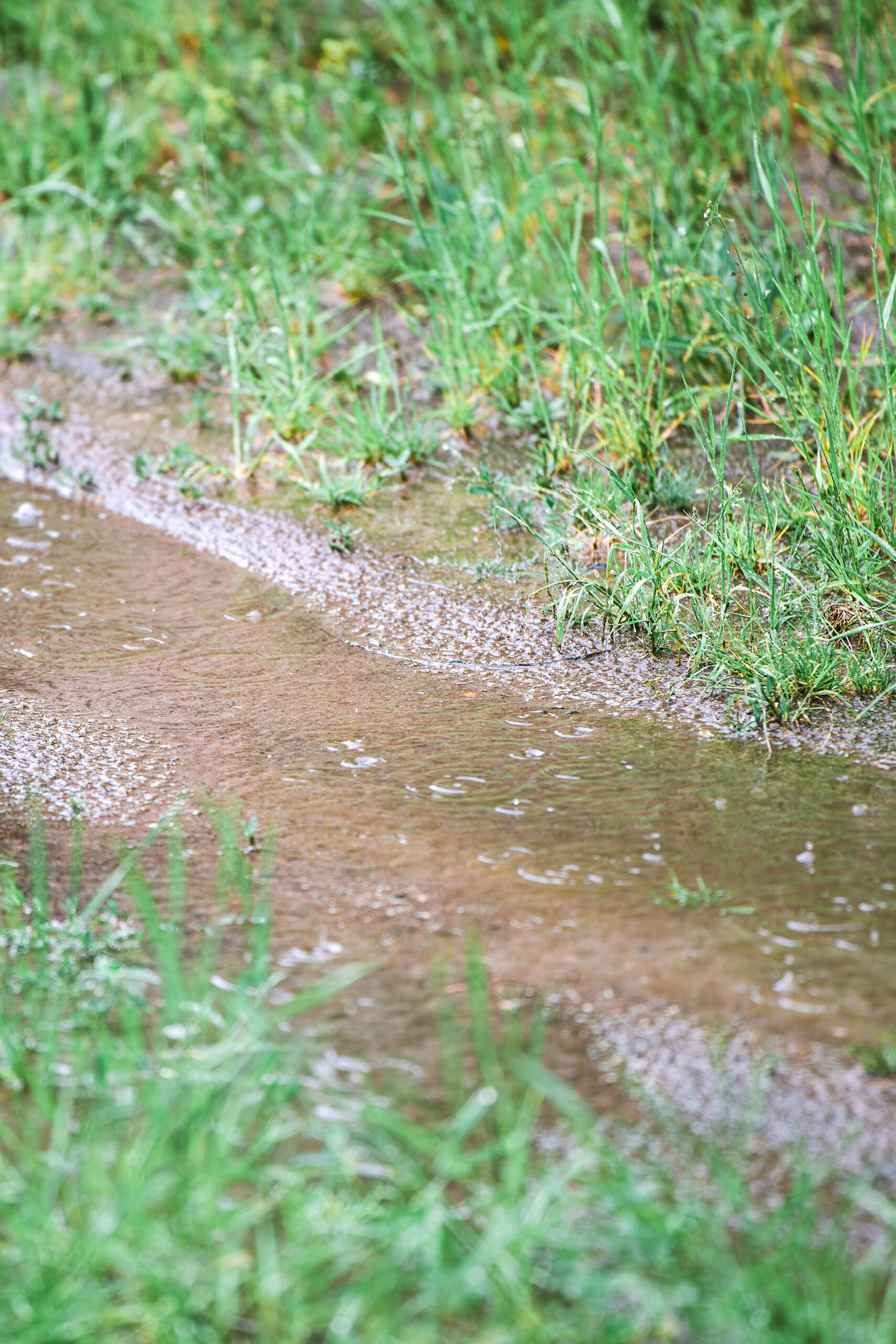
Who this is for: Soil scientists, agronomists, turf and forest soil researchers, and teams developing soil wetting agents and amendments.

Where it fits: Classifying soil hydrophobicity, comparing amendment and wetting agent treatments, and studying burned soil and changes in soil wettability over time.

What it does not do: It does not measure infiltration rate, soil hydraulic conductivity or crop yield in the field.

Method
Sessile drop water contact angle on soil particles fixed to tape, beside water drop penetration time and ethanol droplet tests
Standard
No ISO or ASTM standard found for soil repellency; follows published soil science methods
Setup
About 2 minutes
Why it matters

Why soil water repellency matters

More than 5 million ha

of agricultural land in southern and western Australia is affected by water repellency, with estimated crop and pasture losses above $100M.

CSIRO, water repellent soils

Below 40° and above 130°

average contact angles matched wettable soils (water drop penetration time under 5 s) and extremely water repellent soils (over 3600 s) in a 2018 study.

Papierowska et al., Geoderma 314:221, 2018

85° to 115°

was the only contact angle range in which the water drop penetration time test was sensitive, in a study of 24 soils.

Bachmann et al., Water Resources Research 39, 2003

Sources: CSIRO, Water repellent soils; Papierowska E. et al., Geoderma 314, 2018; Bachmann J. et al., Water Resources Research, 2003. Figures come from these sources, not from Droplet Lab measurements.

Quick reference

What this soil wettability check does and what it does not

A quick reference for soil and amendment teams checking fit before reading further.

Evidence Box

Problem this solves

Soil samples graded only by water drop penetration time classes, which miss differences between moderately repellent soils and between treatments.

Standards

No ISO or ASTM standard for soil water repellency was found. Methods follow published soil science practice for WDPT, MED and sessile drop.

Peer reviewed method

The Dropometer drop shape method was validated against a KRUSS DSA100E in two peer reviewed papers, in Review of Scientific Instruments and Colloids and Surfaces A.

Customer case study

A Murdoch University soil research group chose the Dropometer and learned to measure contact angles on rough, absorbing soil with a bent baseline.

Published research

No customer paper yet. Published work maps contact angle to WDPT classes, from below 40° for wettable soil to above 130° for extremely repellent soil.

Honest limit

A lab contact angle describes the soil sample, not field infiltration. Pair it with field tests.

Who this is for

What soil repellency question are you trying to answer?

Pick the card closest to your role. Each one points to the part of this page that answers it.

Soil scientist

You need to quantify the degree of soil water repellency across a soil profile, soil type or burned and unburned soil. Contact angle adds a continuous measure where WDPT and MED classes are coarse.

Record soil water content with every sample; repellency changes with moisture.

Amendment or wetting agent developer

You develop surfactant wetting agents, clay or organic amendments for water repellent sandy soil and turf. Contact angle on treated and untreated soil compares candidates before pot or field trials.

Compare at the same soil moisture content and time after treatment.

Agronomist or turf manager

You see dry patches, poor crop establishment or runoff and want to know how severe the problem is. WDPT gives a field class; lab contact angle and surface tension of the wetting agent help choose a treatment.

Field infiltration and yield remain the final test.
Fit check

Is this the right check for your soil work?

It measures how water meets soil particles. It does not measure water movement through the field.

Good fit if

You compare treated and untreated soil samples.
You need finer resolution than WDPT or MED classes.
You study changes in soil water repellency with moisture, fire or organic matter.
You screen wetting agents and amendments in the lab.
You report soil hydrophobicity in papers.

Less relevant if

You need infiltration rate or soil hydraulic conductivity.
You only need a quick field class; WDPT alone may do.
You need the soil water retention curve.
Your soil is too coarse or wet to fix particles to tape.
Summary

How contact angle helps assess soil water repellency

The answer in under a minute.

Classify the soil with the water drop penetration test or the molarity of an ethanol droplet test, then measure water contact angle on soil particles fixed to tape. The angle gives a continuous number that separates treatments within one class. Record soil water content, and confirm with field infiltration.

The Dropometer contact angle kit runs the measurement. Our contact angle measurement guide and wettability glossary entry explain the basics. A Murdoch University soil research group measures treated and untreated soil, and our farming and agriscience guide covers the wider sector.

Expert Quote

Expert perspective on wettability

“

A contact angle is a thermodynamic property: fix the liquid and the solid and the same angle appears whether the drop sits on a plate or climbs a capillary.

Dr. Alidad Amirfazli

Professor, Department of Mechanical Engineering, York University; Co-founder, Scientific Advisor, Droplet Lab

The problem

Why soil water repellency is hard to measure

Soil water repellency stops water infiltration into the soil. Rain and irrigation bead on the soil surface, run off or move down a few preferred paths, leaving dry patches, poor crop establishment and more soil erosion. Waxy organic compounds from soil organic matter, plants and soil microbial activity coat the soil particles and change soil surface chemistry; water repellency in soil is common in sandy soil, forest soil and burned soil, and its spatial variability in soil across a paddock is high. In south western Australia, government agencies put 3.3 million hectares at high risk and more than 5 million hectares as affected. The effect of soil moisture is large: many soils are water repellent only when dry, so the moisture content of the soil at sampling changes the result. The standard methods to assess soil water repellency are simple. The water drop penetration test times how long a drop placed on the soil surface takes to penetrate into the soil, and soil can be classified from wettable soil under 5 s to severely water-repellent soil at 600 to 3600 s and extremely repellent above that. The molarity of an ethanol droplet test finds the ethanol and water mix that soaks in within seconds. Both give classes, not a continuous measure, and WDPT is sensitive only over a narrow range of contact angles. Contact angle on soil particles measures soil wettability directly, so changes in soil water repellency from treatments and moisture can be compared, and the magnitude of soil water repellency can be tracked alongside soil hydraulic properties and soil physical quality.

Water beads and runs off the soil surface.
Dry patches persist after rain or irrigation.
Crops establish unevenly on sandy soil.
Treated and untreated plots fall in the same WDPT class.
Results change with soil moisture between sampling dates.
Troubleshooting

Why soil repellency results mislead and what to do

Why:

  • Repellency is often strongest in dry soil and can disappear above a critical soil water content, so the variability of soil water drives the response of soil to wetting.

How to detect:

  • The same site reads differently on different sampling dates.

Corrective action:

  • Air dry or condition samples to a set moisture content of the soil, and record it with every result.

Why:

  • WDPT and MED place soils in bands, so different treatments can fall in one class.

How to detect:

  • Treated and untreated soils share a class but behave differently.

Corrective action:

Add water contact angle on soil particles for a continuous measure. Our contact angle guide covers the method.

Why:

  • Wettable soil absorbs the drop within seconds, so the angle falls during the reading.

How to detect:

  • The angle drops steadily from the first frame.

Corrective action:

  • Use a small drop, read at a fixed early time, and record the time with the value.

Why:

  • Soil particles give a rough, cluttered baseline that standard analysis struggles with.

How to detect:

  • Analysis fails or left and right angles differ widely.

Corrective action:

Fix a single layer of particles to tape, crop tightly and fit a bent baseline, as the Murdoch group did.

Why:

  • Sieving, grinding or heating changes soil structure and the organic coatings on particles.

How to detect:

  • Prepared samples read differently from intact ones.

Corrective action:

  • Prepare every soil sample the same way and report the preparation.

Why:

Drop volume, timing and water purity change readings. Our guide to reproducible contact angle measurement covers fair comparisons.

How to detect:

  • A reference sample reads differently between sessions.

Corrective action:

  • Write the method down and keep a reference soil for each session.

Not sure how to measure your soil samples?

Send a few soil images or samples, and we will look at them with you on a call.

Lab records

What a soil water repellency record contains

Each sample produces a record you can file with your site and treatment data, so repellency can be traced across sites, depths and dates.

Site and sample

Site, soil type, depth in the soil profile, treatment and date the soil samples were collected.

Condition

Soil water content at sampling and at testing, and how the sample was dried or sieved.

Class tests

Water drop penetration time and molarity of an ethanol droplet results.

Contact angle

Angle at each spot, the median and spread, drop volume and read time.

Decision

Treatment ranking, repeat sampling, or field trial.

Drop images

Automatic edge and baseline detection gives the same reading from the same image, so a reviewer can recheck any result.

Measurements

What to measure on a soil sample

Persistence

Water drop penetration time

Why it matters: It shows how long repellency persists against a water drop; using the water drop penetration test, the droplet penetration time is recorded for each drop.

How to interpret: Classes run from wettable under 5 s to extremely water repellent above 3600 s (Alagna et al., 2019).

When it is not enough: It is sensitive only over a narrow range of contact angles.

Severity

Molarity of an ethanol droplet

Why it matters: It shows how strongly the soil repels water by the ethanol and water mix that soaks in.

How to interpret: Higher ethanol content needed means stronger repellency; it relates to a liquid surface tension.

When it is not enough: It gives classes, not a continuous value.

Angle

Water contact angle on soil particles

Why it matters: It gives a continuous measure of the water repellency of the soil, linking contact angle and water drop results.

How to interpret: One study matched under 40° to wettable soils and over 130° to extremely repellent ones (Papierowska et al., 2018).

When it is not enough: It describes the surface of the soil particles, not infiltration into the soil matrix.

Moisture

Soil water content

Why it matters: Repellency changes with moisture.

How to interpret: Compare samples at the same water content.

When it is not enough: It does not show the critical water content on its own.

Validation

Validated measurement approach for soil contact angle

How the Dropometer itself has been validated, and how a soil research group uses it.

Peer reviewed method

The Dropometer drop shape method is published in Review of Scientific Instruments and Colloids and Surfaces A. Contact angle was validated against a KRUSS DSA100E, with a published accuracy of 0.35°.

See the validation papers

Customer evidence on soil

A research group at Murdoch University's Centre for Sustainable Farming Systems needed water contact angle on treated and untreated soil, where uneven baselines and fast soaking defeated standard analysis. Our engineers showed that tight cropping and a bent baseline returned left and right angles of 37° and 35° on an image that had failed every point placement mode.

Read the case study
QC Protocol

How to measure soil water repellency

Six steps per soil sample. Repeat for each site, depth or treatment.

1

Condition the sample

Air dry or condition each soil sample to the set moisture content, and record it.

2

Run the class tests

Place water drops on the soil surface and time the water droplet penetration, then run the ethanol droplet series.

3

Prepare particles

Fix a single layer of soil particles to double sided tape and remove loose grains.

5

Compare treatments

Compare treated and untreated soil at the same moisture and time after treatment, and note the effect on the soil and water movement.

We completed our gage R&R study on the unit and it performed very well.

Brandon Barbee

Corporate Quality Engineer, Zeus Industries, Polymer Manufacturing

Download the soil water repellency SOP

A two page SOP you can adapt for your soils, with WDPT and MED steps, the contact angle method lock, moisture control, a troubleshooting table and a record sheet.

Contact angle measurement with the Dropometer

Example output

Example soil water repellency log for a wetting agent trial

Example data only. Your values will differ and must be confirmed with your own field results.

How to read this log

Both untreated and low dose samples fall in the strongly repellent WDPT class, but the contact angle shows the low dose already moved the soil. The high dose sample became wettable by all three tests. The infiltration column comes from a separate field test.

Example soil water repellency log

Sample Treatment WDPT (s) WDPT class Contact angle (°) Field infiltration
1 Untreated 1500 Severely repellent 118 Poor
2 Low dose wetting agent 420 Strongly repellent 101 Fair
3 Medium dose wetting agent 45 Slightly repellent 78 Good
4 High dose wetting agent 3 Wettable 34 Good
5 Clay amendment 38 Slightly repellent 72 Good

Example data, not customer data. Water repellent sandy soil, air dried; 2 µL drops on particles fixed to tape, read at 1 s, median of 5 spots.

Signal order

The order to check signals on soil samples

Check these in order. Each one rules out a cause before you look at the next.

1

Moisture and preparation

Rules out differences in soil condition.

2

Reference soil

Confirms the method reads as before.

3

WDPT and MED class

Places the soil on the standard scale.

4

Contact angle

Separates samples within a class.

FAQ

Common questions about soil water repellency

Questions soil scientists and amendment developers ask about WDPT, MED and contact angle.

How is soil water repellency classified by WDPT?

By how long a water drop takes to soak in. A widely used scale calls soil wettable at 5 s or less, slightly water repellent from 5 to 60 s, strongly water-repellent soil from 60 to 600 s, severely repellent from 600 to 3600 s, and extremely repellent beyond 3600 s. It measures the persistence of soil water repellency.

What does the ethanol droplet test measure?

Severity rather than persistence. The molarity of an ethanol droplet test finds the weakest ethanol and water mix that penetrates within seconds; stronger repellency needs more ethanol. Hermansen and colleagues give an equation, attributed to Roy and McGill, that links ethanol molarity to liquid surface tension, so each MED level corresponds to a test liquid surface tension.

Why add contact angle?

Because WDPT and MED give classes. Bachmann and colleagues found WDPT sensitive only between about 85° and 115°, and sub 90° differences cannot be seen by WDPT. Contact angle gives a continuous number for the water repellency of a soil, so treatments within one class can be ranked. Papierowska and colleagues found it agreed well with median WDPT.

How do you measure contact angle on soil?

Fix a single layer of soil particles to double sided tape, place a small drop, and read at a fixed early time before it soaks in. Rough baselines can be handled with a bent baseline and tight cropping, as the Murdoch University group found.

Does soil moisture change the result?

Yes. Many soils are repellent only when dry, so the soil water content at sampling and testing changes the result. Compare samples at the same moisture, and record it. Repellency studies often sample at several dates to capture the dynamics of soil water.

Does fire make soil water repellent?

It can. Heating can create or strengthen repellency at moderate temperatures and destroy it at higher ones; Doerr and colleagues found repellency in Australian eucalypt forest soil disappeared abruptly between 260 and 340 °C. Compare burned soil with nearby unburned soil measured the same way.

Can it compare wetting agents and amendments?

Yes, as a lab screen. A surfactant reduced water drop penetration times by on average 99% in a turf study, and spading removed repellence in Western Australian field trials. Contact angle and wetting agent surface tension help rank candidates before field trials.

Which instrument do we need?

One with small drops, fast image capture and flexible baseline fitting for rough samples. The Dropometer does this at the bench. Our page on edible coatings on fresh produce covers another agricultural wetting check.

Business impact

What changes when you measure soil wettability

Typical changes in how teams work. Benchmarks are given only where a published source exists.

Before and with soil contact angle measurement

Metric Before Dropometer With Dropometer Indicative Benchmark
Resolution WDPT and MED classes Continuous contact angle beside classes WDPT sensitive only between about 85° and 115° (Bachmann et al., 2003)
Treatment screening Field trials for every candidate Lab screen first, field trials on the shortlist Surfactant cut WDPT by on average 99% (Aamlid et al., 2009)
Scale of the problem Seen as poor establishment Measured by site and depth More than 5 million ha affected in Australia (CSIRO)
Comparability Results vary with moisture Moisture recorded and controlled No published benchmark; track on your own sites

See the measurement on your own soil

Send a few soil samples or images. We will show the comparison on a call.

Estimate saved screening work

Enter your own numbers. The result is an estimate, not a Droplet Lab claim.

Soil amendment screening estimate

Estimate saved soil treatment screening work.

Each Dropometer unit is US$5,000; the default models one unit.
Your own cost to run a pot or field trial on one candidate.
Sampling, WDPT, ethanol droplet and contact angle tests and analysis.
No published benchmark. Use your own estimate and start low if unsure.

Result

~0
Candidates saved per month
~0
Monthly savings
~0
Payback period
~0
First year net benefit

Monthly savings = materials saved + technician time saved from reduced iterations.

Limits

What contact angle cannot tell you about soil

Honest limits, so you know when to reach for another test.

Results depend on soil moisture; control it.
Wettable soil absorbs the drop quickly; read early.
Sample preparation changes the soil surface.
A lab angle does not predict field infiltration on its own.
Rough particles need careful baseline fitting.
No ISO or ASTM standard exists for this test.

Contact angle describes how water meets soil particles in the sample. Infiltration rate, the rate of water movement, soil hydraulic conductivity, soil structure, other soil properties and crop response need their own tests.

How this page was created

Editorial and technical transparency notes for this page.

Transparency Details 4 checklist items
01

Drafting assistance

Drafted with Claude Opus 5.5 (Anthropic) using web search for sources, then edited by the Droplet Lab team.

02

Technical review

Reviewed and edited for technical accuracy by the Droplet Lab Team.

03

Verification steps

Standard identifiers, units, thresholds and key procedural claims are checked against cited sources before publication.

04

Updates

Reviewed every 12 months or when the underlying method changes.

Report a correction

Spotted an issue in this summary? Send a correction request and our team will review it.

Correction Request

We work hard to keep this page accurate and up to date. If you spot an error (wrong revision/year, missing requirement, incorrect interpretation, or broken link), tell us and we'll review it.

Contact us to report a correction
Sources

References

2.
Department of Primary Industries and Regional Development, Western Australia. Soil water repellence overview, 2021. https://www.agric.wa.gov.au/water-repellence/soil-water-repellence-overview
3.
Alagna, V., Iovino, M., Bagarello, V., Mataix Solera, J., Lichner, L. Hydrological Processes 33(4):661 to 674, 2019. https://doi.org/10.1002/hyp.13352
4.
Papierowska, E. et al. Geoderma 314:221 to 231, 2018. https://doi.org/10.1016/j.geoderma.2017.11.012
5.
Bachmann, J. et al. Water Resources Research 39, 2003. https://doi.org/10.1029/2003WR002143
6.
Bachmann, J., Goebel, M.O., Woche, S.K. Journal of Hydrology and Hydromechanics 61(1):3 to 8, 2013. https://doi.org/10.2478/johh-2013-0002
7.
Leelamanie, D.A.L., Maeda, H. Journal of Hydrology and Hydromechanics 74(2):125 to 136, 2026. https://doi.org/10.2478/johh-2026-0010
8.
Roy, J.L., McGill, W.B. Soil Science 167(2):83 to 97, 2002. https://doi.org/10.1097/00010694-200202000-00001
9.
Hermansen, C. et al. Soil Science Society of America Journal 83:1616 to 1627, 2019. https://doi.org/10.2136/sssaj2019.03.0092
10.
King, P.M. Australian Journal of Soil Research 19(3):275 to 285, 1981. https://doi.org/10.1071/SR9810275
11.
Doerr, S.H. On standardizing the water drop penetration time and the molarity of an ethanol droplet techniques to classify soil hydrophobicity: a case study using medium textured soils. Earth Surface Processes and Landforms 23(7):663 to 668, 1998. https://doi.org/10.1002/(SICI)1096-9837(199807)23:7663::AID-ESP9093.0.CO;2-6
12.
Beatty, S.M., Smith, J.E. Journal of Hydrology 391(1 to 2):97 to 108, 2010. https://doi.org/10.1016/j.jhydrol.2010.07.007
13.
Doerr, S.H. et al. Heating effects on water repellency in Australian eucalypt forest soils. International Journal of Wildland Fire 13(2):157 to 163, 2004. https://researchers.mq.edu.au/en/publications/heating-effects-on-water-repellency-in-australian-eucalypt-forest/
14.
Aamlid, T.S., Larsbo, M., Jarvis, N. Biologia 64(3):419 to 423, 2009. https://doi.org/10.2478/s11756-009-0094-7
16.
Chen, X. et al. Contact angle measurement with a smartphone. Review of Scientific Instruments 89(3):035117, 2018. https://pubs.aip.org/aip/rsi/article-abstract/89/3/035117/368179/Contact-angle-measurement-with-a-smartphone
17.
Surface tension measurement with a smartphone using a pendant drop. Colloids and Surfaces A: Physicochemical and Engineering Aspects. https://www.sciencedirect.com/science/article/abs/pii/S0927775717307744