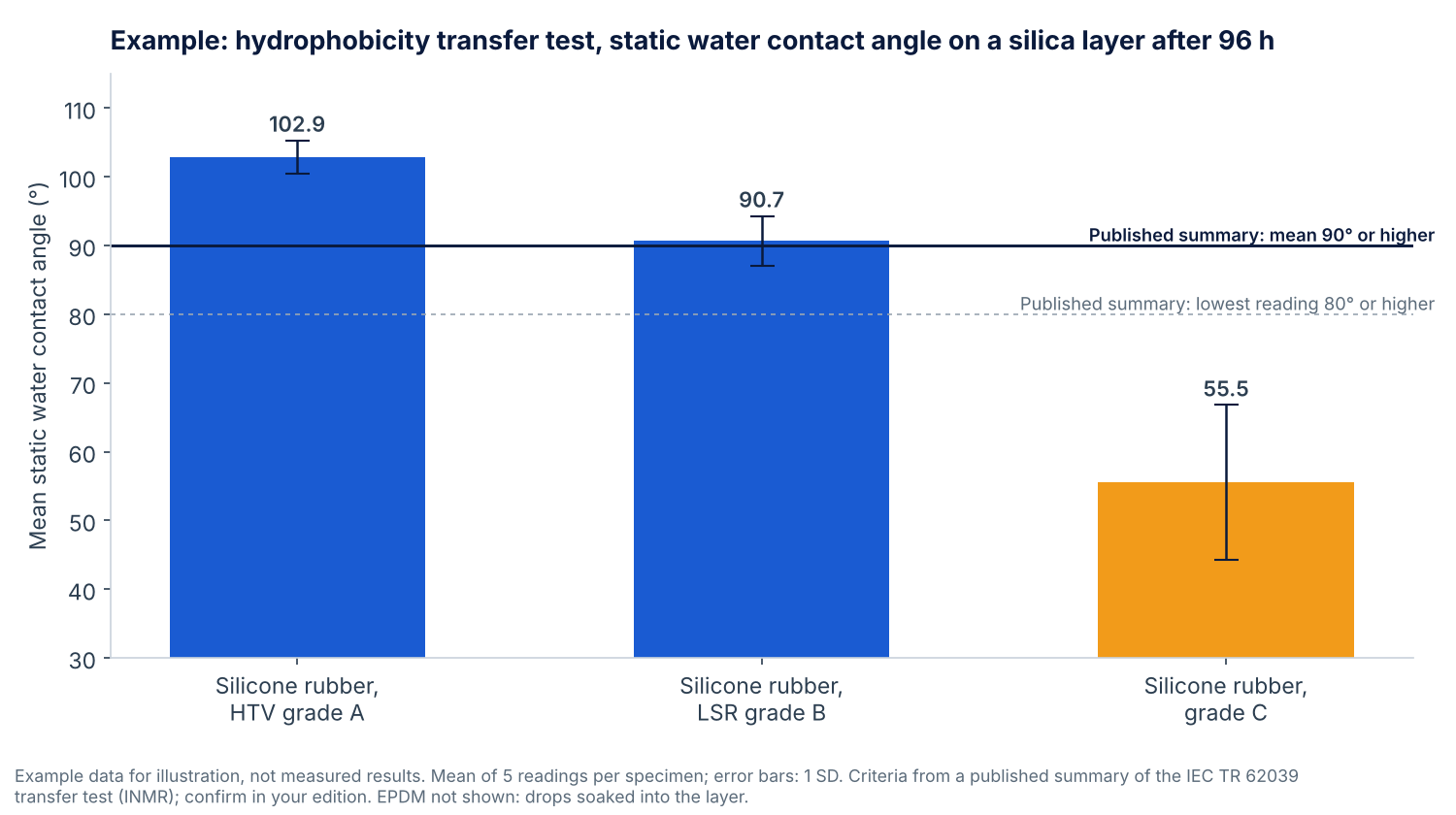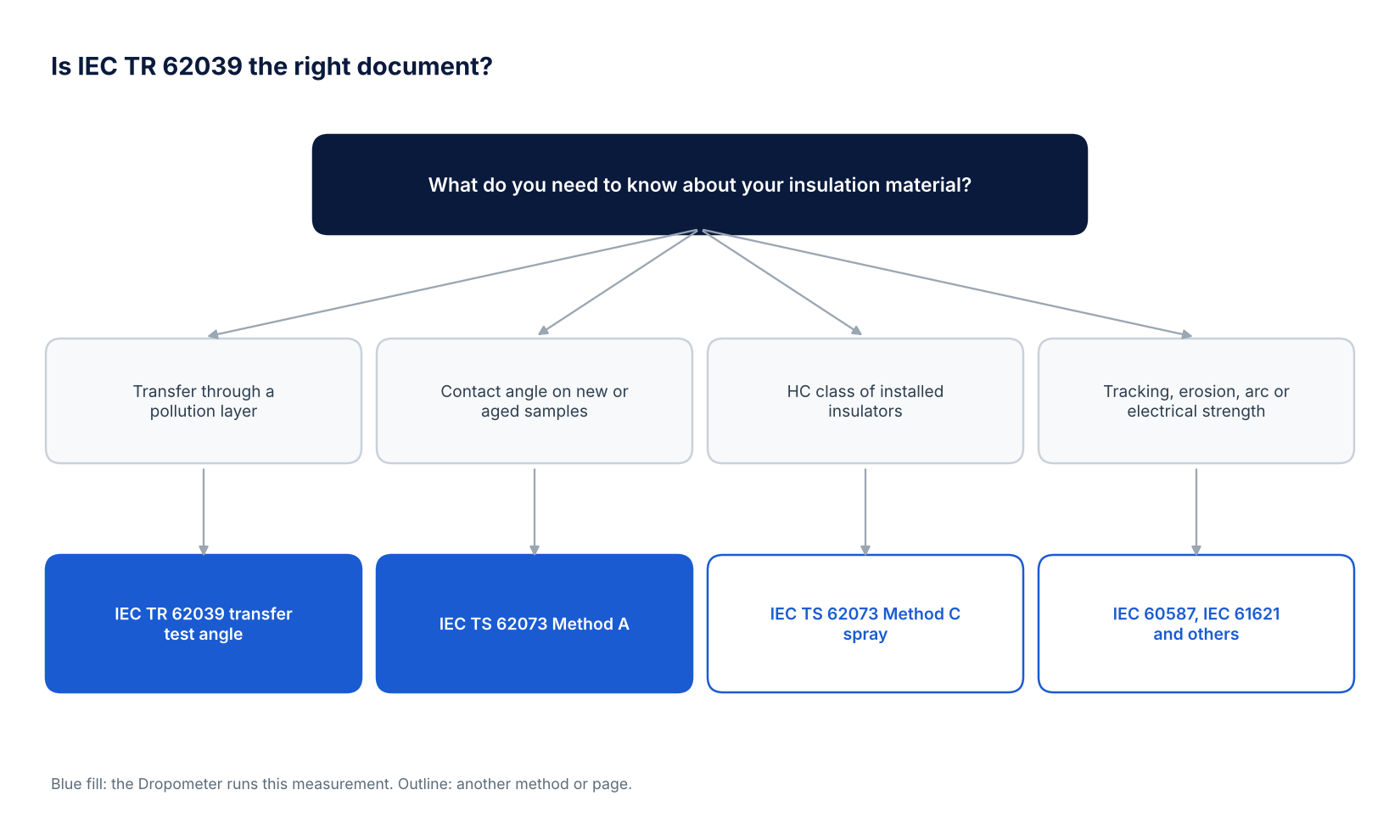

IEC TR 62039:2021, Selection guidelines for polymeric materials for outdoor use under HV stress, edition 2.0, from IEC TC 112. It replaces the 2007 first edition and adds hydrophobicity definitions, a hydrophobicity transfer test and a stress corrosion test.
Partially compliant. The Dropometer reads the static water contact angle used to judge hydrophobicity transfer. You make and store the pollution layer. Tracking and erosion, arc resistance, electrical strength, water diffusion, weathering and flammability need their own test sets.
Contact angle range 10° to 175°, accuracy ±0.35°, display resolution 0.01°, from the Dropometer product specification.
The drop shape method is validated against a KRUSS DSA100E in two peer reviewed papers. See our validation publications.
We have no published client paper or case study on insulation materials yet. A published student study used the Dropometer to measure water contact angle as a hydrophobicity check on ski glide waxes. Read our analysis.
A contact angle on a lab specimen does not measure leakage current, flashover voltage or tracking. IEC also notes that meeting the minimum requirements is a necessary condition but does not guarantee satisfactory performance when used outdoors.