
ASTM F21-20(2026), Standard Test Method for Hydrophobic Surface Films by the Atomizer Test, from ASTM Subcommittee E21.05. It is the 2020 edition, reapproved in 2026, and the active edition. Earlier editions include F21-14 and the original F21-65.
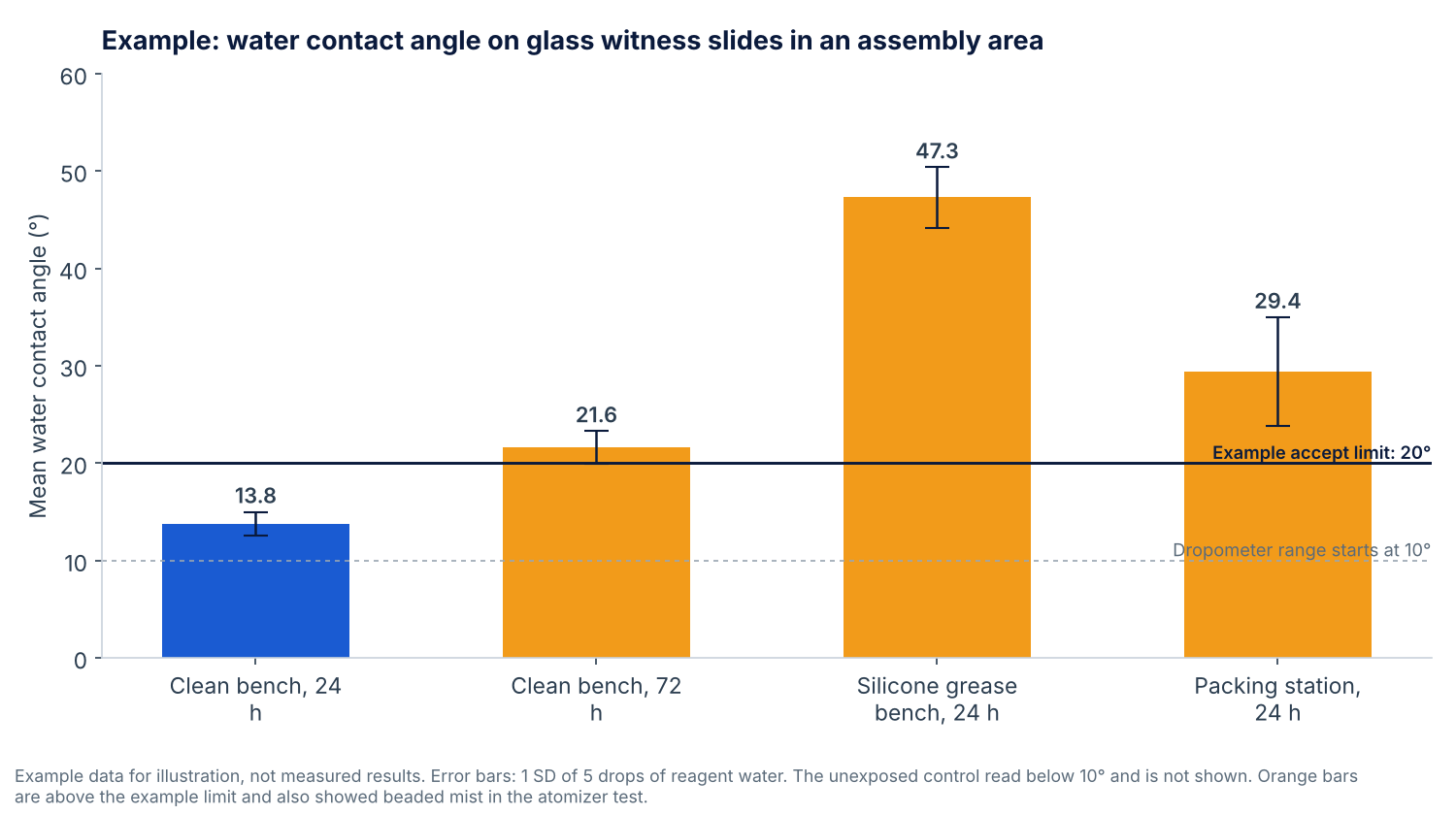
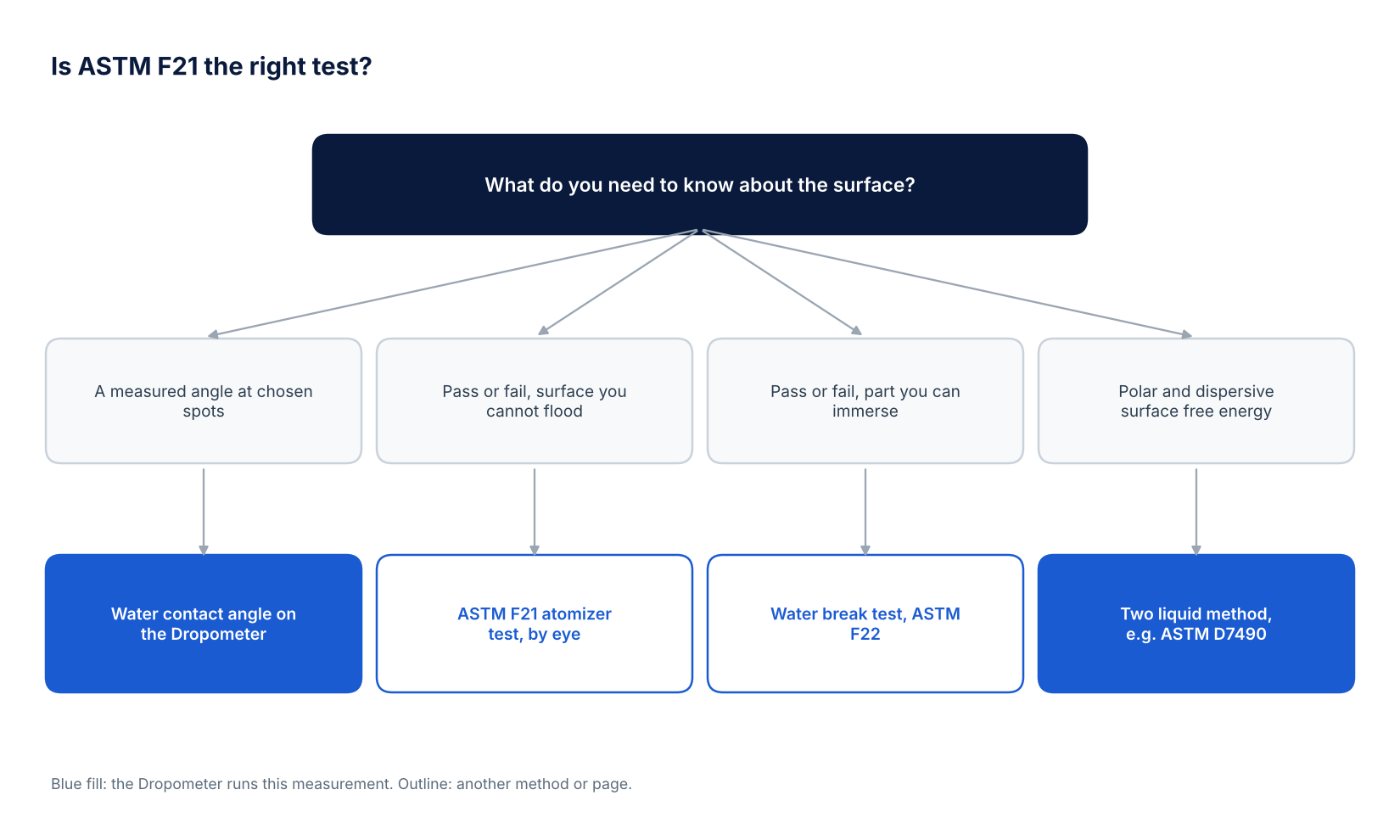
Partially compliant. The Dropometer detects the same end result, a hydrophobic film, by measuring the water contact angle at chosen spots. It does not run the visual atomizer test over the whole surface, and very clean surfaces can read below its 10° range. A sessile drop contact angle is an alternative method, not the atomizer test the standard specifies; if a contract or customer requires an ASTM F21 result, run a correlation study on your own samples first.
Contact angle range 10° to 175°, accuracy ±0.35°, display resolution 0.01°, from the Dropometer product specification.
The drop shape method is validated against a KRUSS DSA100E in two peer reviewed papers. See our validation publications.
We have no published client study run to ASTM F21 yet. A university shared facility uses the Dropometer for water contact angle on silicone elastomers and saline contact angle on titanium discs before and after plasma treatment. Read the case study. A 2023 Plant Science paper used it for static water contact angle on superhydrophobic aspen leaves. Read our analysis.
Beaded mist or a raised angle shows that a hydrophobic film is present. Neither identifies the contaminant. Use a chemical method such as FTIR or XPS when you need to know what it is.