



Contents
Case Study

After an on campus demo, the University of Toronto bought two Dropometers in 2019. A second campus added two more in 2020.

Last Updated
October 18, 2026
Industry
Materials science, chemical engineering and chemistry research
Location
Toronto, Ontario, Canada
Customer since
August 2019
Published with the Dropometer
1 peer reviewed paper and 1 thesis
Instrument
4 Dropometers, manual and automatic (current model shown)
Drop shape method validated against a KRÜSS DSA100E in peer review A second campus added two systems in 2020 2 peer reviewed validation papers

Prof. Uwe Erb's materials group on the St. George campus saw the Dropometer in person in 2019 and ordered a manual and an automatic system, each with all four measurements. They used them first in an undergraduate lab, then in research. Two more systems reached the Scarborough campus in September 2020. An aspen leaf paper and a mask thesis report Dropometer data, and a Scarborough coatings paper credits Droplet Smart Tech for its contact angle setup.

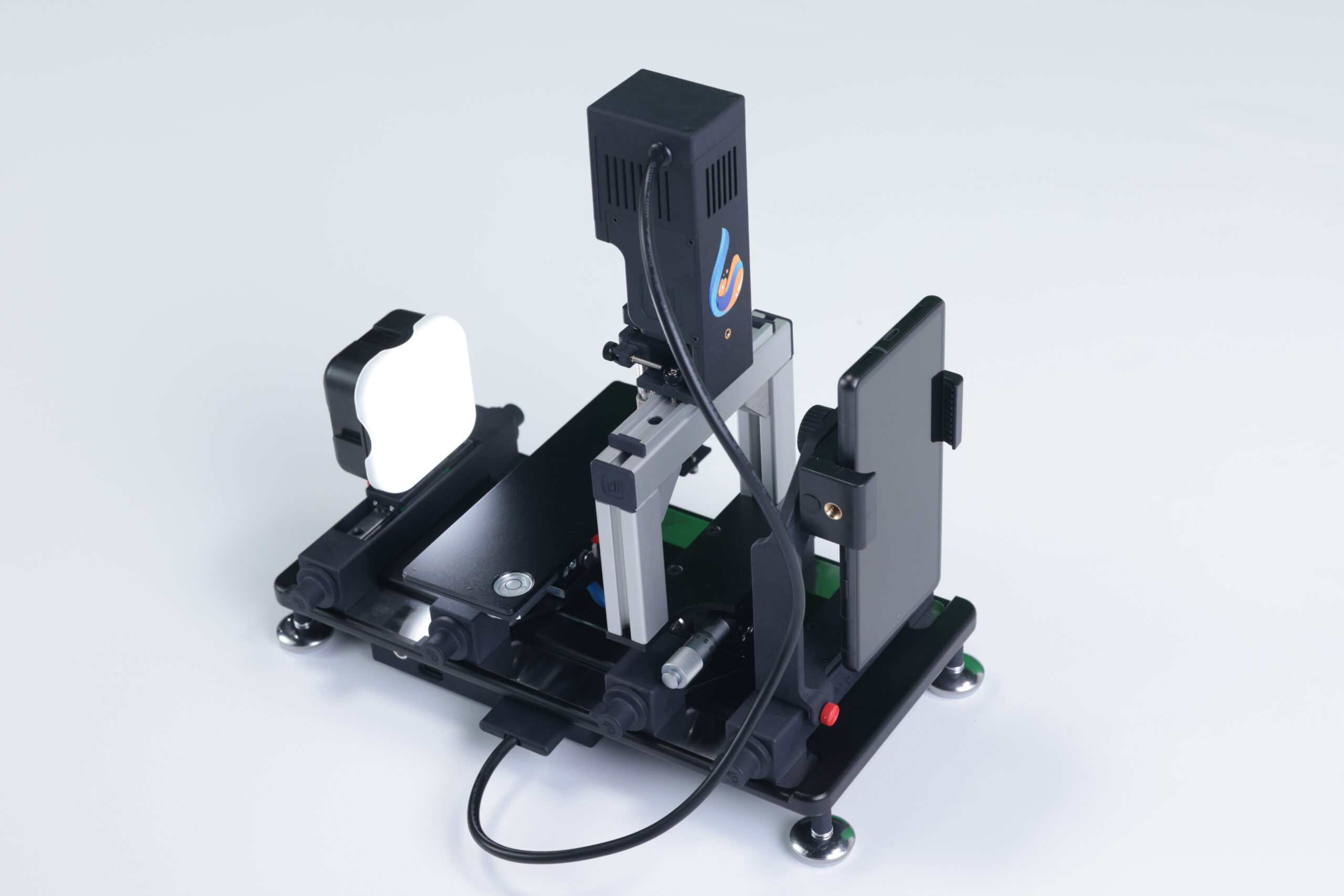
Current automatic Dropometer with the automatic dropper, a Droplet Lab product photo, not the University of Toronto setup
Abhimanyu Photo
Written by
Abhimanyu Bhandankar
Holds an MBA from Schulich School of Business and a BE in IT. He joined Droplet Lab in July 2019 and now leads sales and marketing.
CEO at Droplet Lab
Read More
Gurdeep-Saini-Photo
Technical Review by
Gurdeep Singh Saini
Holds a BASc in Mechanical Engineering from Ryerson University (now Toronto Metropolitan University) and an MASc from York University. He develops the automatic edge and baseline detection behind the Dropometer's analysis.
COO at Droplet Lab
Read More
Abhimanyu Photo
Written By

Abhimanyu Bhandankar

CEO at Droplet Lab

Holds an MBA from Schulich School of Business and a BE in IT. He joined Droplet Lab in July 2019 and now leads sales and marketing.

Gurdeep-Saini-Photo
Reviewed By

Gurdeep Singh Saini

COO at Droplet Lab

Holds a BASc in Mechanical Engineering from Ryerson University (now Toronto Metropolitan University) and an MASc from York University. He develops the automatic edge and baseline detection behind the Dropometer's analysis.

Primary outcome: regrown aspen leaves read highly water repellent within days of budbreak, measured drop by drop

Water contact angle on refoliated quaking aspen leaves

Mean ± SD of each collection date, 10 µL deionised water drops, at least nine measurements per sample, 18 July to 26 August 2021 (Sui et al., Plant Science 330, 2023, Table S2)

Lowest date average 139.7 ± 3.5°
Highest date average, 13 days after budbreak 150.1 ± 1.9°

LDD (spongy) moth caterpillars stripped a group of aspen trees bare in June 2021, and the trees grew a second set of leaves. Using the Dropometer, the Erb group measured average water contact angles from 139.7 ± 3.5° to 150.1 ± 1.9° on the new leaves, with the highest value 13 days after budbreak. Leaves collected 2 days after budbreak were already highly hydrophobic, while spring leaves in a 2012 study needed more than a week.

4 Dropometers

Two on the St. George campus (2019) and two at Scarborough (delivered 2020), manual and automatic, each with all four measurements.

150.1 ± 1.9° aspen leaf

Highest water contact angle on refoliated quaking aspen leaves, 13 days after budbreak (Plant Science, 2023).

~47 → ~61 mJ/m²

Glass surface energy before and after polyserotonin coating, from three probe liquids analysed with the authors' own program (Nanomaterials, 2022).

2 publications

A peer reviewed paper (2023) and an MASc thesis (2022) report Dropometer data.

Executive Summary

Who

The University of Toronto has Dropometers on two campuses. On St. George, Prof. Uwe Erb's Nanomaterials Research Group in Materials Science and Engineering bought two in 2019. At Scarborough, the Department of Physical and Environmental Sciences took delivery of two in September 2020.

Problem

The St. George group needed contact angle, sliding angle, surface tension and surface energy for both an undergraduate lab and research on natural and engineered surfaces. Students needed systems they could run themselves, and researchers needed numbers they could publish.

Solution

After an in person demo on campus in 2019, St. George ordered a manual and an automatic Dropometer, each with all four measurements. Scarborough's automatic and manual pair, also with all four measurements, shipped in September 2020. Droplet Lab supported both campuses with repairs and software updates.

Time to Value

2019: in person demo at St. George. 22 August 2019: order confirmed. 23 September 2019: two systems invoiced. Fall 2019: undergraduate lab. September 2020: Scarborough's two systems shipped, invoiced 28 September 2020. 2022: MASc thesis. 13 June 2022: Nanomaterials paper. 20 February 2023: Plant Science paper online.

Results

Two publications report Dropometer data: aspen leaves reaching 150.1 ± 1.9° (Plant Science, 2023) and face mask layers from 78 ± 13° to 120 ± 5° (MASc thesis, 2022). A Scarborough paper on polyserotonin films (Nanomaterials, 2022) credits Droplet Smart Tech for its contact angle setup and analysed the drop images with its own program.

Highlights

4

Dropometers on two campuses

150.1°

Highest aspen leaf contact angle

2

Publications with Dropometer data

4

Measurements on every system

Quote teaser

I tried the new software and did some measurements, and it works well.

University of Toronto, at a glance

Research focus

Natural and engineered surfaces: superhydrophobic leaves, protective mask fabrics and polyserotonin coatings.

Products / applications

Plant surface studies, mask and respirator characterisation, and polyserotonin nanoparticles and films.

Measurement stage

Teaching labs and research characterisation alongside electron microscopy, FTIR and XPS.

Users

Undergraduate students, graduate students and researchers in Materials Science and Engineering, Chemical Engineering and Physical and Environmental Sciences.

Materials and surfaces tested

Quaking aspen leaves, polypropylene and PET mask layers, N95 respirator layers, and polyserotonin films on glass.

Key constraints

Rough, porous and natural surfaces; shared use by students; drops that roll off at the slightest tilt.

The challenge: one wetting measurement for teaching, research and very different surfaces

Leaves, fabrics and thin films all needed reliable contact angles.

What the group needed

Prof. Erb's group studies how surface structure controls wetting, from natural leaves to engineered materials. It needed contact angle, sliding angle, surface tension and surface energy for an undergraduate lab as well as research. Across the university the same questions came up in other fields, from mask fabrics to coatings for the life sciences covered in our biotechnology guide.

Why these surfaces are hard to measure

Superhydrophobic leaves let drops roll off with the slightest disturbance, so the aspen study could not measure a roll off angle. Mask fabrics are rough and porous, so readings spread widely. Thin polyserotonin films needed three probe liquids for surface energy. Our guide to hydrophobic and hydrophilic surfaces explains these wetting states. Water contact angle is also the index in ISO 27448 for self cleaning photocatalytic ceramics, a test the Dropometer supports.

What was at stake

Teaching needed an instrument students could run themselves. Research needed numbers with a spread that would stand up in peer review, on surfaces where small errors change the conclusion. That is the problem our note on reproducible contact angle measurement addresses.

What success would require

Systems that students and researchers could share, covering all four measurements, with both manual and automatic drop placement, and numbers solid enough to publish. Our contact angle measurement guide sets out the sessile drop method the papers used.

The insight: give students and researchers the same instrument, with all four measurements

What Was Deployed

Delivered configuration, St. George (invoiced 23 September 2019): one manual and one automatic Dropometer contact angle and surface tension kit, each with contact angle, sliding angle, surface tension and surface energy. The automatic system includes the automatic dropper and tilting stage. Delivered configuration, Scarborough (shipped September 2020, invoiced 28 September 2020): one automatic Dropometer with the automatic dropper and a manual tilting stage, and one manual Dropometer, each with all four measurements. In the published work, the Erb group placed 10 µL water drops on regrown leaves, as summarised in our analysis of the aspen leaf paper. A St. George MASc thesis used 10 µL water drops on mask and respirator layers (analysis of the mask thesis). At Scarborough, a coatings group placed 20 µL drops of water, glycerol and diiodomethane on polyserotonin coated glass and analysed the images with its own program (analysis of the polyserotonin paper). That multi liquid approach is the core of our thin film and nanocoating characterization use case.
The Origin

An in person demo on campus, then two systems ordered

In 2019 Droplet Lab co-founder Eric Chen and Abhi Bhandankar visited the St. George campus to demonstrate the Dropometer in person to Prof. Uwe Erb and his colleagues in Materials Science and Engineering. The group liked what it saw and decided to buy. The order was confirmed on 22 August 2019 and invoiced on 23 September 2019: one manual and one automatic Dropometer, each with all four measurements. That fall the group used them in an undergraduate lab, and the lab described the student feedback as "quite positive". Teaching labs often start with simple exercises such as our superhydrophobic glass experiment. Research use followed, including the aspen leaf study published in 2023. The Scarborough campus ordered its own manual and automatic pair. Production paused during Covid, and the systems shipped in September 2020. In October 2026 Droplet Lab invited authors of the published work to contribute drop images to its open reference dataset.
Decision Rationale

Two systems instead of one

The order went beyond the simplest options.

Option A

One manual system

Contact angle with manual drop placement.

Not ordered.
Option B

One automatic system

Automatic dropper and tilting stage for sliding angle.

Not ordered.
Option C

A manual and an automatic system, all four measurements on each

Contact angle, sliding angle, surface tension and surface energy on both.

Chosen
Buying both a manual and an automatic system cost more than one instrument. In return, the group could run an undergraduate lab and research side by side, and compare manual and automatic drop placement. Taking all four measurements on both systems meant any student or researcher could measure contact angle, sliding angle, surface tension or surface energy on either one. Our guide to the best contact angle goniometer for advanced research compares the options.

Next Step

Equipping a teaching lab and a research group with the same instrument?

The Dropometer measures contact angle, sliding angle, surface tension and surface energy, in manual or automatic versions that students and researchers can share. The drop shape method is validated against a KRÜSS DSA100E in peer review, and setup takes about 2 minutes. Book a 15 minute demo and bring a sample.

Before vs After

Metric Before After
Dropometers at the University of Toronto None before 2019 Four, on two campuses (St. George 2019, Scarborough 2020)
Undergraduate lab at St. George No Dropometer Manual and automatic Dropometers used in fall 2019, with student feedback collected
Glass water contact angle, before vs after polyserotonin coating Uncoated glass Over 15° lower (Nanomaterials, 2022)
Glass surface energy, before vs after polyserotonin coating About 47 mJ/m² About 61 mJ/m²
Dropometer software on both campuses Earlier app version New software installed in March and April 2023
Publications with Dropometer data 0 2 (2022 to 2023)

Rollout timeline

Timeline (high level)

2019: Demo and order

  • In person demo at St. George for Prof. Erb and colleagues
  • Order confirmed 22 August; manual and automatic systems invoiced 23 September

Fall 2019: Undergraduate lab

  • Students used the Dropometers in an undergraduate lab
  • Student feedback summary described as quite positive

2020: Support and second campus

  • Tilting stage serviced by Droplet Lab in September 2020
  • Scarborough's automatic and manual systems shipped in September 2020 after a Covid production delay
  • Replacement tilting stage and phone sent to Scarborough, and missing parts brought to campus, in October 2020

2022: First publications

  • MASc thesis on mask and respirator layers (St. George)
  • Polyserotonin coatings paper, Nanomaterials, 13 June 2022 (Scarborough)

February 2023: Aspen leaf paper

Plant Science paper online on 20 February 2023, with Dropometer contact angles throughout

March 2023: Software update

  • New software installed at St. George in March 2023, with activation issues fixed the same day
  • Scarborough activated all four apps on 3 April 2023

Proof and validation: what the papers show, and what they do not

Test method

Sessile drop water contact angle with 10 µL drops on aspen leaves taped to plexiglass coupons (Plant Science, 2023) and on mask and respirator layers (MASc thesis, 2022). Water, glycerol and diiodomethane at 20 µL on polyserotonin coated glass, with surface energy by the OWRK model (Nanomaterials, 2022).

Sample size and operators

Leaves: at least nine measurements per sample, 9 to 23 leaves per collection date. Mask layers: mean ± standard deviation, number of drops not stated. Coatings: several buffer systems, number of drops not stated.

Repeatability / reproducibility

Leaf readings from 139.7 ± 3.5° to 150.1 ± 1.9°. Mask layers from 107 ± 7° to 120 ± 5° on polypropylene, with spreads up to ± 18° on some inner layers.

Notes / assumptions

The leaf drops rolled off at the slightest tilt, so the authors could not measure a roll off angle. The Nanomaterials paper credits Droplet Smart Tech, imaged drops with a 0.3 Mp camera and analysed them with a program written in house; per buffer angles are only in its supplement. Mask layer spreads are large, as expected for fabrics. None of the papers tests accuracy against a reference instrument.

Outcomes to date

Measured Outcomes

150.1 ± 1.9°

Highest aspen leaf contact angle

Regrown leaves averaged 139.7 ± 3.5° to 150.1 ± 1.9° between July and August 2021. Leaves were already highly hydrophobic 2 days after budbreak, unlike spring leaves (Plant Science, 2023).

114° vs 78°

Level 3 mask, outer vs inner layer

The polypropylene outer layer repelled water while the PET inner layer did not. N95 layers read 118 ± 11° and 120 ± 5° (MASc thesis, 2022).

~47 → ~61 mJ/m²

Glass surface energy after coating

Polyserotonin films lowered the water contact angle by over 15° and raised surface energy, mainly through the dispersive part, with angles analysed by the authors' own program (Nanomaterials, 2022).

Operational Outcomes

Teaching and research

The same systems served an undergraduate lab in fall 2019 and later research.

Second campus

Scarborough took delivery of its own manual and automatic pair in September 2020.

Published output

Two publications with Dropometer data, 2022 to 2023, and a Scarborough coatings paper that credits Droplet Smart Tech for its contact angle setup.

What the team said

I tried the new software and did some measurements, and it works well.
PhD researcher - Materials Science and Engineering

What's next

Delivered

Superhydrophobic aspen leaf study (Plant Science, 2023)
Mask and respirator layer wettability (MASc thesis, 2022)
Polyserotonin coating surface energy (Nanomaterials, 2022)

In Pilot

Authors invited to contribute drop images and metadata to Droplet Lab's open contact angle dataset (October 2026)

Frequently asked questions

Why buy a manual and an automatic Dropometer together?

Prof. Uwe Erb's group at the University of Toronto wanted to run an undergraduate lab and research side by side, and compare manual and automatic drop placement. Both systems have contact angle, sliding angle, surface tension and surface energy.

What has the university published with the Dropometer?

An aspen leaf study measured contact angles up to 150.1 ± 1.9° (Plant Science, 2023), and a MASc thesis measured face mask layers from 78 ± 13° to 120 ± 5° (2022). Both used 10 µL water drops.

How many Dropometers does the University of Toronto have?

Four, on two campuses. The St. George campus bought a manual and an automatic system in 2019 after an in person demo, and the Scarborough campus took delivery of two more in September 2020.

Next Step

Equipping a teaching lab and a research group with the same instrument?

The Dropometer measures contact angle, sliding angle, surface tension and surface energy, in manual or automatic versions that students and researchers can share. The drop shape method is validated against a KRÜSS DSA100E in peer review, and setup takes about 2 minutes. Book a 15 minute demo and bring a sample.