
Functional Hydrophobicity, Self-Cleaning and Anti-Soiling
Hydrophobicity Classification of Composite Insulators: Contact Angle Tests for Silicone Rubber Insulator Hydrophobicity, Loss and Recovery
Silicone rubber composite insulators stay safe in wet, polluted conditions because water beads instead of forming a film. The spray method gives a hydrophobicity class in the field; lab contact angle and receding angle measurements put a number on hydrophobicity loss, recovery and transfer to pollution layers.
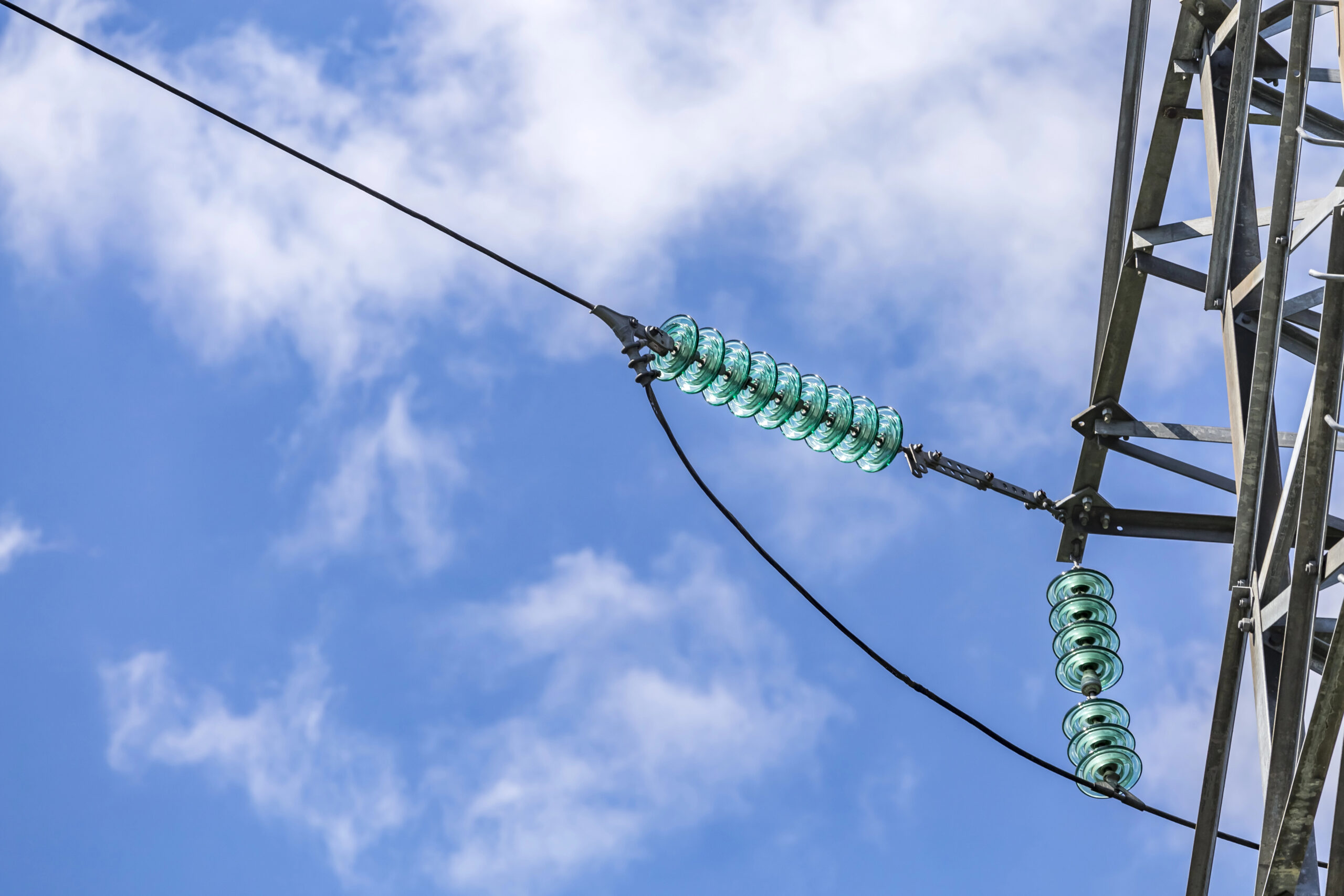
Validated measurement approach for insulator surfaces
How the Dropometer itself has been validated, and how the measurement fits IEC TS 62073.
Peer reviewed method
The Dropometer drop shape method is published in Review of Scientific Instruments and Colloids and Surfaces A. Contact angle was validated against a KRUSS DSA100E, with a published accuracy of 0.35°.
See the validation papersHow it fits IEC TS 62073
IEC TS 62073 describes three methods: contact angle (Method A, static and dynamic), surface tension (Method B) and the spray method (Method C). The Dropometer supports Method A, a technique to assess the hydrophobicity of a polymeric insulator surface, on samples in the lab. The standard notes that precise measurement is difficult on installed insulators, so field checks still use the spray method.
Read the IEC TS 62073 pageReport a correction
Spotted an issue in this summary? Send a correction request and our team will review it.
Correction Request
We work hard to keep this page accurate and up to date. If you spot an error (wrong revision/year, missing requirement, incorrect interpretation, or broken link), tell us and we'll review it.
Contact us to report a correctionReferences
1.
Kim, J., Chaudhury, M.K., Owen, M.J. Hydrophobicity loss and recovery of silicone HV insulation. IEEE Transactions on Dielectrics and Electrical Insulation 6(5):695 to 702, 1999. https://www.lehigh.edu/~mkc4/our%20papers/Kim_IEEE_1999.pdf
2.
Kim, J., Chaudhury, M.K., Owen, M.J. Modeling hydrophobic recovery of electrically discharged PDMS elastomers. Journal of Colloid and Interface Science 293:364 to 375, 2006. https://doi.org/10.1016/j.jcis.2005.06.068
3.
Meng et al. Characteristics of small molecule migration of silicone rubber insulator in electrical power systems. Polymers 14(13):2519, 2022. https://doi.org/10.3390/polym14132519
4.
Swift, D.A., Spellman, C., Haddad, A. Hydrophobicity transfer from silicone rubber to adhering pollutants and its effect on insulator performance. IEEE Transactions on Dielectrics and Electrical Insulation 13(4):820 to 829, 2006. https://doi.org/10.1109/TDEI.2006.1667741
5.
Thangabalan et al. IEEE Transactions on Dielectrics and Electrical Insulation 29(6):2089 to 2100, 2022. https://doi.org/10.1109/TDEI.2022.3214478
6.
Rowland et al. Aging of silicone rubber composite insulators on 400 kV transmission lines. IEEE Transactions on Dielectrics and Electrical Insulation 14(1):130 to 136, 2007. https://doi.org/10.1109/TDEI.2007.302881
7.
Shaik and Karuppaiyan. Energies 12(19):3769, 2019. https://doi.org/10.3390/en12193769
8.
Kokalis et al. Hydrophobicity classification of composite insulators using convolutional neural networks. CIGRE Science and Engineering 23, 2021. https://cse.cigre.org/cse-n023/hydrophobicity-classification-of-composite-insulators-using-convolutional-neural-networks
9.
Yang, Q., Wang, D. Application of convolutional neural network in intelligent classification of hydrophobicity of composite insulators. High Voltage Engineering 48(2):603 to 611, 2022. https://doi.org/10.13336/j.1003-6520.hve.20201765
10.
Yang, L. et al. A recognition method of the hydrophobicity class of composite insulators based on features optimization and experimental verification. Energies 11(4):765, 2018. https://doi.org/10.3390/en11040765
11.
Mavrikakis, N., Siderakis, K. Energies 19(10):2325, 2026. https://doi.org/10.3390/en19102325
12.
Gutman, I. et al. Condition assessment of line composite insulators: after service test programs and their practical application. CIGRE Science and Engineering 28, 2023. https://cse.cigre.org/cse-n028/condition-assessment-of-line-composite-insulators-after-service-test-programs-and-their-practical-application
13.
CIGRE Technical Brochure 919. Experience with and application guide for composite line insulators, 2023. https://electra.cigre.org/331-december-2023/technical-brochures/experience-with-and-application-guide-for-composite-line-insulators
14.
IEC TS 62073:2016. Guidance on the measurement of hydrophobicity of insulator surfaces. See our IEC TS 62073 page. https://webstore.iec.ch/publication/24150
15.
IEC TR 62039:2021. Selection guidelines for polymeric materials for outdoor use under HV stress. See our IEC TR 62039 page. https://webstore.iec.ch/en/publication/59945
16.
Chen, X. et al. Contact angle measurement with a smartphone. Review of Scientific Instruments 89(3):035117, 2018. https://pubs.aip.org/aip/rsi/article-abstract/89/3/035117/368179/Contact-angle-measurement-with-a-smartphone
17.
Surface tension measurement with a smartphone using a pendant drop. Colloids and Surfaces A: Physicochemical and Engineering Aspects. https://www.sciencedirect.com/science/article/abs/pii/S0927775717307744