
Contents
Functional Hydrophobicity

Membrane Surface and Fouling Characterization by Contact Angle for RO Membrane, Nanofiltration Membrane and Polymeric Membrane Performance

Membrane surface hydrophilicity affects how fast a membrane fouls, but the number you get depends on how you measure it. Measure water contact angle on pristine, fouled and cleaned membranes with a locked method, captive bubble where the membrane must stay wet, and read it alongside flux and roughness.
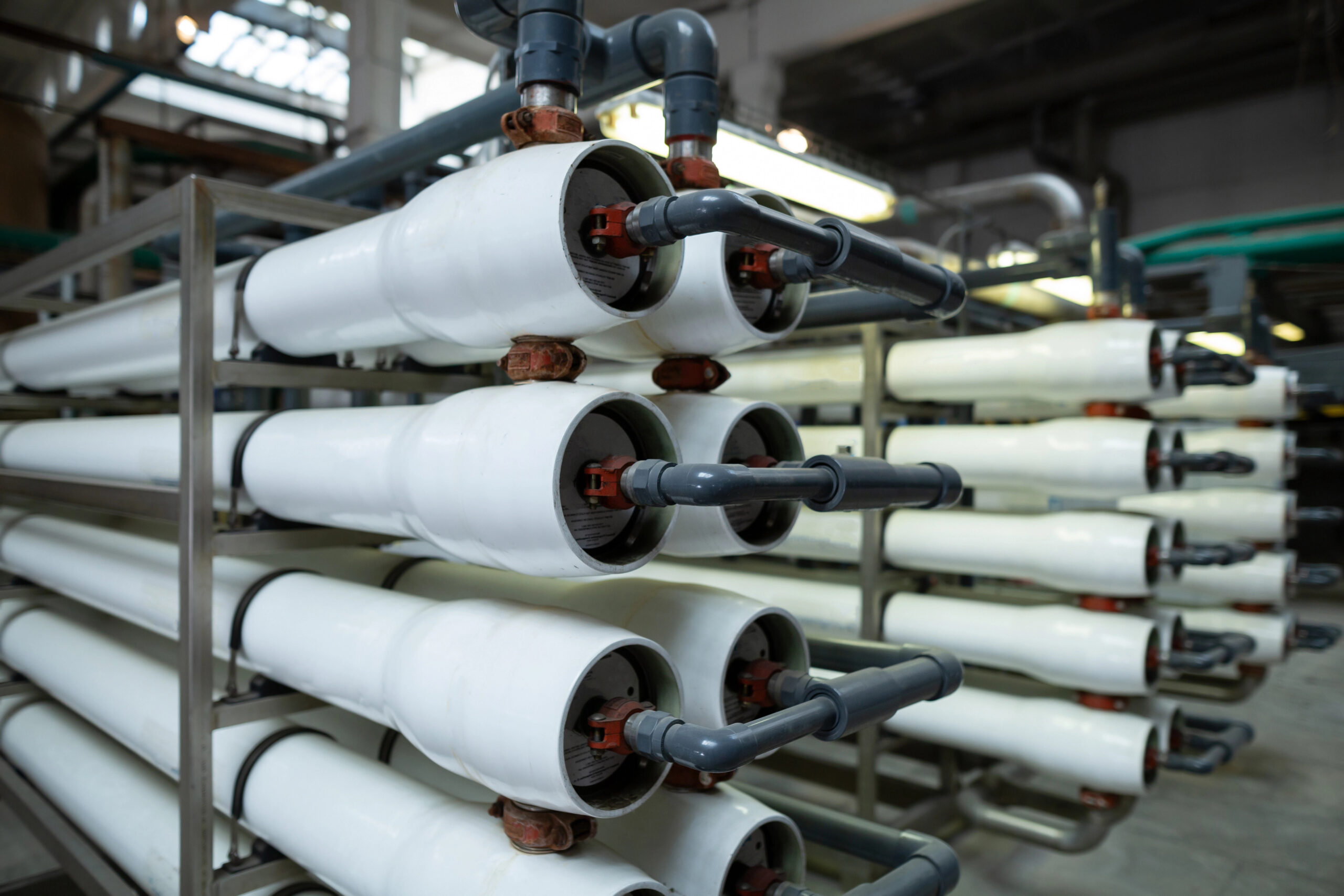

Who this is for: Membrane developers, water treatment and desalination engineers, and MBR and membrane process researchers.

Where it fits: Membrane material and modification screening, fouling layer characterization, and checks on membrane cleaning recovery.

What it does not do: It does not measure flux, rejection, pore size, zeta potential or which foulant is present.

Method
Sessile drop water contact angle; captive bubble with a liquid cell for hydrated membranes
Standard
No membrane specific contact angle standard; complements ASTM D4516 and ASTM D4194 performance data
Setup
About 2 minutes
Abhimanyu Photo
Written by
Abhimanyu Bhandankar
Holds an MBA from Schulich School of Business and a BE in IT. He joined Droplet Lab in July 2019 and now leads sales and marketing.
CEO at Droplet Lab
Read More

Droplet-Lab logo
Technical Review by
Droplet Lab Team
Droplet Lab builds precision instruments and software for surface science measurement, specialising in contact angle analysis and surface tension characterisation. Used by researchers across materials science, pharmaceuticals, coatings, and advanced manufacturing, Droplet Lab's Dropometer has contributed to studies published in peer-reviewed journals including Advanced Functional Materials (Impact Factor 19). The team combines instrument engineering with deep domain knowledge in wettability science with a focus on practical accuracy.
Read More

Abhimanyu Photo
Written By

Abhimanyu Bhandankar

CEO at Droplet Lab

Holds an MBA from Schulich School of Business and a BE in IT. He joined Droplet Lab in July 2019 and now leads sales and marketing.

Droplet-Lab logo
Reviewed By

Droplet Lab Team

Droplet Lab builds precision instruments and software for surface science measurement, specialising in contact angle analysis and surface tension characterisation. Used by researchers across materials science, pharmaceuticals, coatings, and advanced manufacturing, Droplet Lab's Dropometer has contributed to studies published in peer-reviewed journals including Advanced Functional Materials (Impact Factor 19). The team combines instrument engineering with deep domain knowledge in wettability science with a focus on practical accuracy.

Why it matters

Why membrane surface characterization matters

About 24%

of operating cost in Dutch full scale reverse osmosis plants was attributed to fouling, against about 11% in nanofiltration plants, across seven installations.

Jafari et al., Desalination 500:114865, 2021

48° to 30°

fall in water contact angle on one RO membrane after surfactant fouling, while another membrane's angle rose; fouling layers can shift the angle either way.

US Bureau of Reclamation, Report No. 57, 2000

15% to under 5%

drop in relative measurement error for sessile drop on an ion exchange membrane when a pressure plate held the sample flat; dry membranes gave inadequate results.

Ponomar et al., Membranes 12(8):765, 2022

Sources: Jafari M. et al., Cost of fouling in full scale reverse osmosis and nanofiltration installations in the Netherlands, Desalination, 2021; Childress A.E., Brant J.A., Characterization of the hydrophobicity of polymeric reverse osmosis and nanofiltration membranes, US Bureau of Reclamation Report No. 57, 2000; Ponomar M. et al., Sessile drop method: critical analysis and optimization, Membranes, 2022. Figures come from these sources, not from Droplet Lab measurements.

Quick reference

What this membrane surface check does and what it does not

A quick reference for membrane teams linking surface characterization and performance before reading further.

Evidence Box

Problem this solves

Membrane modifications and cleaning steps judged by eye or by flux alone, with no record of how the membrane surface itself changed.

Standards

No ISO or ASTM contact angle method exists for membranes; this check sits beside ASTM D4516 and ASTM D4194 performance data, with a locked in house method.

Peer reviewed method

The Dropometer drop shape method was validated against a KRUSS DSA100E in two peer reviewed papers, in Review of Scientific Instruments and Colloids and Surfaces A.

Customer case study

A Lakehead University membrane bioreactor lab added water contact angle to its fouling tests on pulp mill sludge and membranes, in three publications from 2021 to 2025.

Published research

Lakehead researchers found contact angles of used membranes fell by 20%, 24% and 39% against unused membranes as solids retention time rose (Separation and Purification Technology, 2025).

Honest limit

Contact angle is one indicator among several membrane properties. Roughness and charge can matter more for fouling.

Who this is for

What membrane question are you trying to answer?

Pick the card closest to your role. Each one points to the part of this page that answers it.

Membrane developer

You are making a modified membrane or new composite membrane meant to be more fouling resistant. Contact angle on pristine coupons, measured the same way every time, shows whether the modification changed the membrane surface as intended.

Compare wet with wet and dry with dry; drying changes porous membranes.

Plant or process engineer

You run a reverse osmosis, nanofiltration or ultrafiltration membrane system and need to understand fouling behavior and membrane cleaning. Contact angle on autopsied fouled membrane coupons, before and after cleaning, shows what the fouling layer did to the surface.

Fouling can raise or lower the angle; compare with the pristine membrane, not a fixed number.

MBR or wastewater researcher

You study fouling in membrane bioreactors and the sludge that causes it. Contact angle on sludge and membranes tracks surface changes with operating conditions, as the Lakehead group reported.

Report drop volume, drying and timing with every value.
Fit check

Is this the right check for your membrane work?

It measures how water meets the membrane surface. It does not measure separation performance.

Good fit if

You compare membrane material, coatings or membrane modification on an RO, NF or ultrafiltration membrane.
You characterize fouled and cleaned membranes from autopsies or lab runs.
You need hydrophobic membrane checks for membrane distillation.
You study MBR sludge and membrane surface properties.
You report water contact angle on a polyamide membrane, cellulose acetate membrane or other polymeric membrane.

Less relevant if

You need flux, rejection or salt passage data.
You need pore size, roughness or zeta potential directly.
You need to identify which membrane foulants are present.
You only have a sealed membrane module you cannot cut coupons from.
Summary

How to characterize membrane surfaces and fouling

The answer in under a minute.

Lock one method, sessile drop on dried coupons or captive bubble on wet ones, and measure pristine, fouled and cleaned membrane coupons the same way. Compare each with the pristine membrane rather than a fixed number, and read the result alongside flux decline, roughness and charge, because hydrophilicity is only one factor in fouling.

The Dropometer contact angle kit runs the measurement; our contact angle measurement guide and captive bubble method glossary entry explain the methods. A Lakehead University membrane bioreactor lab used it in its residual fouling characterization work, and we built a custom underwater cuvette for a membrane lab at GIST. Our utilities guide covers water treatment.

Expert Quote

Expert perspective on wetting

A surface can pin a drop at a high angle yet never let it roll. High repellency and easy roll-off are different properties, and a single contact angle won't tell you which one you have.

Dr. Alidad Amirfazli

Professor, Department of Mechanical Engineering, York University; Co-founder, Scientific Advisor, Droplet Lab

The problem

Why membrane fouling characterization is hard

Membrane fouling is the main operating problem in membrane technology. Organic fouling, colloidal fouling, scaling and biofouling build a fouling layer on the membrane surface and in the membrane pores, cut membrane flux and raise cleaning and energy costs, so fouling control drives plant operating cost; in Dutch full scale RO plants, fouling accounted for about 24% of operating cost. Membrane developers make polymeric membrane and thin film composite (TFC membrane) designs with more hydrophilic surfaces, because hydrophilic membranes tend to adsorb less organic material and clean more easily. Contact angle is the usual way to show that a modified membrane is more hydrophilic, and to compare a fouled membrane with the pristine membrane. The catch is that the number depends heavily on the method. Porous membranes absorb drops, dry membranes rearrange, and sessile drops evaporate; one report saw a 50% loss of drop volume in 10 minutes. Comparative studies found captive bubble more reproducible than sessile drop on each reverse osmosis membrane tested. And contact angle is not the whole story: membrane surface roughness dominated colloidal fouling in a classic study, and fouling can move the angle up or down. Without a locked method, membrane characterization results cannot be compared between labs, batches or papers.

Contact angles for the same membrane differ between papers or labs.
Readings drift as the drop soaks in or evaporates.
A modified membrane reads more hydrophilic but fouls just as fast.
Fouled membrane coupons read lower, not higher, than pristine ones.
Cleaned membranes do not return to the pristine reading.
Troubleshooting

Why membrane contact angle results mislead and what to do

Why:

  • Porous and hydrogel like layers collapse and rearrange when dried, so dry readings differ from wet ones.

How to detect:

  • Readings change with drying time or temperature.

Corrective action:

Lock the drying protocol, or measure hydrated membranes by captive bubble. Our captive bubble method entry explains the setup.

Why:

  • Water soaks into pores and evaporates from the drop, so the angle falls during the reading.

How to detect:

  • The angle drops steadily over the first seconds.

Corrective action:

  • Read at a fixed early time, for example 5 to 15 s, and keep drop volume fixed.

Why:

  • Thin membranes curl and wrinkle, which distorts the baseline.

How to detect:

  • Large spread between spots on one coupon.

Corrective action:

  • Hold coupons flat with a plate or frame; one study cut relative error from 15% to under 5% this way.

Why:

Roughness changes the apparent angle and drives colloidal fouling. Our experiment on Wenzel and Cassie Baxter wetting shows the effect.

How to detect:

  • Membranes with similar angles foul very differently.

Corrective action:

  • Measure roughness alongside contact angle and report both.

Why:

  • A foulant layer has its own wetting, so it can raise or lower the angle.

How to detect:

  • Fouled coupons read lower than pristine ones with hydrophilic foulants.

Corrective action:

  • Read the change with the likely fouling mechanism in mind, compare with cleaned coupons, and confirm with flux recovery.

Why:

Drop volume, timing and liquid purity change readings. Our guide to reproducible contact angle measurement covers fair comparisons.

How to detect:

  • Your reference membrane reads differently between sessions.

Corrective action:

  • Write the method down, measure a reference coupon every session, and report method details.

Not sure which method suits your membranes?

Send pristine and fouled coupons, and we will compare methods on a call.

Lab records

What a membrane characterization record contains

Each check produces a record you can file with the membrane sample or autopsy. These records can sit beside your flux, rejection and cleaning data.

Membrane identity

Membrane type, material, modification, batch and the active side tested.

History

Pristine, fouled with which feed and for how long, or cleaned with which protocol.

Method settings

Sessile drop or captive bubble, drying, drop or bubble volume and read time.

Readings

Contact angle at each spot, the median and spread, and the change against pristine.

Decision

Accept, reclean or reject, linked to flux recovery.

Drop images

Automatic edge and baseline detection gives the same reading from the same image, so a reviewer can recheck any result.

Measurements

What to measure on the membrane surface

Pristine

Water contact angle on the clean membrane (virgin membrane)

Why it matters: It shows the starting hydrophilicity of the membrane material or modification.

How to interpret: Compare membranes measured by the same method only; the USBR report placed the hydrophilic and hydrophobic dividing line near 50° by captive bubble.

When it is not enough: It does not predict fouling potential on its own.

Fouled

Contact angle on the fouled membrane

Why it matters: It shows how the fouling layer changed the surface.

How to interpret: A shift either way against pristine marks a foulant deposit.

When it is not enough: It does not identify the foulant.

Cleaned

Contact angle after cleaning

Why it matters: It shows whether membrane cleaning restored the surface.

How to interpret: Compare with pristine and with flux recovery; a gap suggests irreversible fouling or residue.

When it is not enough: Surface recovery does not guarantee flux recovery.

Method

Captive bubble against sessile drop

Why it matters: Hydrated membranes behave differently from dried ones.

How to interpret: Use captive bubble for RO and NF membranes that must stay wet; use sessile drop consistently for dried samples.

When it is not enough: Values from the two methods are not interchangeable.

Validation

Validated measurement approach for membrane surfaces

How the Dropometer itself has been validated, and where membrane researchers have used it.

Peer reviewed method

The Dropometer drop shape method is published in Review of Scientific Instruments and Colloids and Surfaces A. Contact angle was validated against a KRUSS DSA100E, with a published accuracy of 0.35°.

See the validation papers

Customer evidence in membrane bioreactors

Prof. Baoqiang Liao's group at Lakehead University turns pulp and paper mill sludge into biogas in a heated anaerobic membrane bioreactor, where membrane fouling decides how long the system can run. The group added Dropometer water contact angle to its fouling tests, measuring sludge and membranes with 3 µL drops, and reported the values in a PhD thesis and two journal papers.

Read the case study
QC Protocol

How to characterize pristine, fouled and cleaned membranes

Six steps for one membrane type. Repeat for each new material or feed.

1

Choose the method

Use captive bubble for hydrated RO and NF membranes, or sessile drop on coupons dried by a fixed protocol. Do not mix the two.

2

Prepare coupons

Cut flat coupons from the active area, mark the active surface of the membrane, and hold them flat.

4

Measure fouled membranes

Take coupons from the fouled membrane module at autopsy, rinse gently, and measure the same way.

5

Measure after cleaning

Clean with your protocol, rinse and measure again, then compare with pristine and with flux recovery.

We completed our gage R&R study on the unit and it performed very well.

Brandon Barbee

Corporate Quality Engineer, Zeus Industries, Polymer Manufacturing

Download the membrane surface and fouling SOP

A two page SOP you can adapt for your membranes, with the method lock, sample handling, gates against pristine membranes, a troubleshooting table and a record sheet.

Contact angle measurement with the Dropometer

Contact angle measurement with the Dropometer

Example output

Example fouling and cleaning log for an RO membrane

Example data only. Your values and gates will differ and must come from your own flux and cleaning results.

How to read this log

Example gate: cleaned membranes within 5° of pristine and at least 90% flux recovery. The organic fouling layer made the surface less hydrophilic; the protein layer made it more hydrophilic. After alkaline cleaning, the organic fouled coupon returned close to pristine; the acid cleaned coupon did not, matching its low flux recovery.

Example RO membrane fouling and cleaning log

Coupon State Contact angle (°) Change vs pristine (°) Flux recovery (%) Result
Reference Pristine 48 0 100 Reference
A Organic fouled 61 +13 62 Fouled
A After alkaline cleaning 50 +2 95 Accept
B Protein fouled 38 −10 70 Fouled
B After acid cleaning only 41 −7 78 Reclean

Example data, not customer data. Polyamide thin film composite RO membrane; captive bubble, 5 µL air bubbles, read at 10 s; fouled in a cross flow cell.

Signal order

The order to check signals in membrane characterization

Check these in order. Each one rules out a cause before you look at the next.

1

Method and sample state

Rules out drying and method differences.

2

Pristine reference

Confirms the reference reads as before.

3

Change after fouling

Shows how surface fouling changed the wetting.

4

Change after cleaning

Shows whether cleaning restored the surface.

5

Flux and roughness

Confirms performance; our chemicals guide covers wider process context.

FAQ

Common questions about membrane fouling characterization

Questions membrane developers and water treatment teams ask about contact angle.

For hydrated RO and NF membranes, captive bubble. Baek and colleagues (Desalination, 2012) found sessile drop results changed sharply with sample preparation, time and drop volume, while captive bubble was reproducible and closer to operating conditions. Use sessile drop consistently on dried samples if you must, and never mix methods. Our captive bubble method entry explains it.

Often, but not always. Gilron and colleagues found surface modified RO membranes adsorbed less organic material and cleaned more easily. But Vrijenhoek and colleagues found the initial colloidal fouling rate nearly perfectly correlated with roughness. For membrane biofouling, Lee and colleagues saw more bacteria attach to the more hydrophobic membranes in 3 hour tests, yet biofilm was similar by 48 hours. Measure contact angle with roughness and flux.

Because the foulant layer has its own wetting. In a US Bureau of Reclamation study, surfactant fouling lowered the angle on one membrane from about 48° to 30° and raised it on another from about 40° to 47°. Treat any change from pristine as evidence of a fouling layer, not as damage on its own.

Drops soak into porous membranes and evaporate; one report saw drop volume halve in 10 minutes. Ponomar and colleagues recommended reading between 5 and 15 seconds, and holding the membrane flat. Lock drop volume and read time for every sample.

Not a membrane specific one that we could find. ASTM D4516 standardizes RO performance data and ASTM D4194 covers operating characteristics of RO and NF devices, but neither specifies contact angle. Write and validate your own method, and report its details with every result.

Yes, as one signal. Measure pristine, fouled and cleaned coupons the same way. A cleaned membrane that reads close to pristine and recovers flux was cleaned well; one that stays far from pristine suggests irreversible fouling or cleaning residue. Confirm with flux recovery.

Yes. Membrane distillation needs a hydrophobic membrane that liquid water does not wet, so high contact angle and roll off both matter. Measure water and, where wetting by low surface tension feeds is a risk, a second liquid. Our sliding angle guide covers roll off.

One that does sessile drop with small drops and fixed timing, and captive bubble with a liquid cell for wet membranes. We built a custom underwater cuvette for a membrane lab at GIST. Our page on high voltage insulator hydrophobicity covers another polymer surface check.

Business impact

What changes when you characterize membrane surfaces

Typical changes in how teams work. Benchmarks are given only where a published source exists.

Before and with membrane surface characterization

Metric Before Dropometer With Dropometer Indicative Benchmark
Fouling cost Seen in operating cost Surface changes tracked alongside flux Fouling about 24% of RO plant operating cost (Jafari et al., 2021)
Method comparability Sessile drop at varying times Locked method, captive bubble for wet membranes Captive bubble more reproducible for RO membranes (Baek et al., 2012)
Cleaning checks Flux recovery only Surface recovery against pristine plus flux No published benchmark; track on your own membranes
Modification screening Flux trials on every candidate Contact angle screen before fouling resistance trials Hydrophilicity is one of several fouling factors (AlQasas and Johnson, 2024)

See the measurement on your own membranes

Send pristine and fouled coupons. We will show the comparison on a call.

Estimate saved membrane development work

Enter your own numbers. The result is an estimate, not a Droplet Lab claim.

Membrane development estimate

Estimate saved membrane development work.

Each Dropometer unit is US$5,000; the default models one unit.
Membrane material, casting and fouling test cost for one candidate.
Coupon preparation, contact angle, fouling run and analysis.
No published benchmark. Use your own estimate and start low if unsure.

Result

~0
Candidates saved per month
~0
Monthly savings
~0
Payback period
~0
First year net benefit

Monthly savings = materials saved + technician time saved from reduced iterations.

Limits

What contact angle cannot tell you about a membrane

Honest limits, so you know when to reach for another test.

Sessile drop and captive bubble values are not interchangeable.
Drying changes porous membranes; lock the protocol.
Drops soak in and evaporate; read at a fixed early time.
Roughness and charge can matter more than contact angle for fouling propensity.
It needs flat coupons; a wound module must be autopsied.
It does not identify the foulant.

Contact angle shows how water meets the membrane surface, and how fouling and cleaning change it. Flux, rejection, pore size, roughness, charge and foulant identity need their own characterization techniques.

How this page was created

Editorial and technical transparency notes for this page.

Transparency Details 4 checklist items
01

Drafting assistance

Drafted with Claude Opus 5.5 (Anthropic) using web search for sources, then edited by the Droplet Lab team.

02

Technical review

Reviewed and edited for technical accuracy by the Droplet Lab Team.

03

Verification steps

Standard identifiers, units, thresholds and key procedural claims are checked against cited sources before publication.

04

Updates

Reviewed every 12 months or when the underlying method changes.

Report a correction

Spotted an issue in this summary? Send a correction request and our team will review it.

Correction Request

We work hard to keep this page accurate and up to date. If you spot an error (wrong revision/year, missing requirement, incorrect interpretation, or broken link), tell us and we'll review it.

Contact us to report a correction
Sources

References

1.
Jafari, M. et al. Cost of fouling in full scale reverse osmosis and nanofiltration installations in the Netherlands. Desalination 500:114865, 2021. https://doi.org/10.1016/j.desal.2020.114865
2.
Vrijenhoek, E.M., Hong, S., Elimelech, M. Influence of membrane surface properties on initial rate of colloidal fouling of reverse osmosis and nanofiltration membranes. Journal of Membrane Science 188(1):115 to 128, 2001. https://doi.org/10.1016/S0376-7388(01)00376-3
3.
Baek, Y., Kang, J., Theato, P., Yoon, J. Measuring hydrophilicity of RO membranes by contact angles via sessile drop and captive bubble method: a comparative study. Desalination 303:23 to 28, 2012. https://doi.org/10.1016/j.desal.2012.07.006
4.
Ponomar, M. et al. Sessile drop method: critical analysis and optimization for measuring the contact angle of an ion exchange membrane surface. Membranes 12(8):765, 2022. https://doi.org/10.3390/membranes12080765
5.
Childress, A.E., Brant, J.A. Characterization of the hydrophobicity of polymeric reverse osmosis and nanofiltration membranes: implications to membrane fouling. US Bureau of Reclamation, Report No. 57, 2000. https://www.usbr.gov/research/dwpr/reportpdfs/report57.pdf
6.
Gilron, J., Belfer, S., Väisänen, P., Nyström, M. Effects of surface modification on antifouling and performance properties of reverse osmosis membranes. Desalination 140(2):167 to 179, 2001. https://doi.org/10.1016/S0011-9164(01)00366-6
7.
AlQasas, N., Johnson, D. Membranes 14(11):235, 2024. https://doi.org/10.3390/membranes14110235
8.
Lee, W. et al. Journal of Membrane Science 351(1 to 2):112 to 122, 2010. https://doi.org/10.1016/j.memsci.2010.01.035
9.
ASTM D4516. Standard practice for standardizing reverse osmosis performance data. https://store.astm.org/d4516-19a.html
10.
ASTM D4194. Standard test methods for operating characteristics of reverse osmosis and nanofiltration devices. https://store.astm.org/d4194-23.html
11.
Bokhary, A., Leitch, M., Liao, B. Membrane performance evaluation and residual fouling characterization in a thermophilic submerged AnMBR treating pulp and paper primary sludge at varying solids retention times. Separation and Purification Technology, 2025. See our analysis of this paper. https://dropletlab.com/validation/citations/analysis/membrane-performance-evaluation-and-residual-fouling-characterization-in-a-thermophilic-submerged-anmbr-treating-pulp-and-paper-primary-sludge-at-varying-solids-retention-times/
12.
Bokhary, A., Leitch, M., Liao, B.Q. Effect of organic loading rates on the membrane performance of a thermophilic submerged anaerobic membrane bioreactor for primary sludge treatment from a pulp and paper mill. Journal of Environmental Chemical Engineering, 2022. See our analysis of this paper. https://dropletlab.com/validation/citations/analysis/effect-of-organic-loading-rates-on-the-membrane-performance-of-a-thermophilic-submerged-anaerobic-membrane-bioreactor-for-primary-sludge-treatment-from-a-pulp-and-paper-mill/
13.
Chen, X. et al. Contact angle measurement with a smartphone. Review of Scientific Instruments 89(3):035117, 2018. https://pubs.aip.org/aip/rsi/article-abstract/89/3/035117/368179/Contact-angle-measurement-with-a-smartphone
14.
Surface tension measurement with a smartphone using a pendant drop. Colloids and Surfaces A: Physicochemical and Engineering Aspects. https://www.sciencedirect.com/science/article/abs/pii/S0927775717307744