
AATCC TM79-2025, Test Method for Absorbency of Textiles, from AATCC, the American Association of Textile Chemists and Colorists, published in the AATCC Technical Manual. It covers the water absorbency of yarns, fabrics and garments of any fibre and construction, including woven, knit and nonwoven (AATCC store listing).
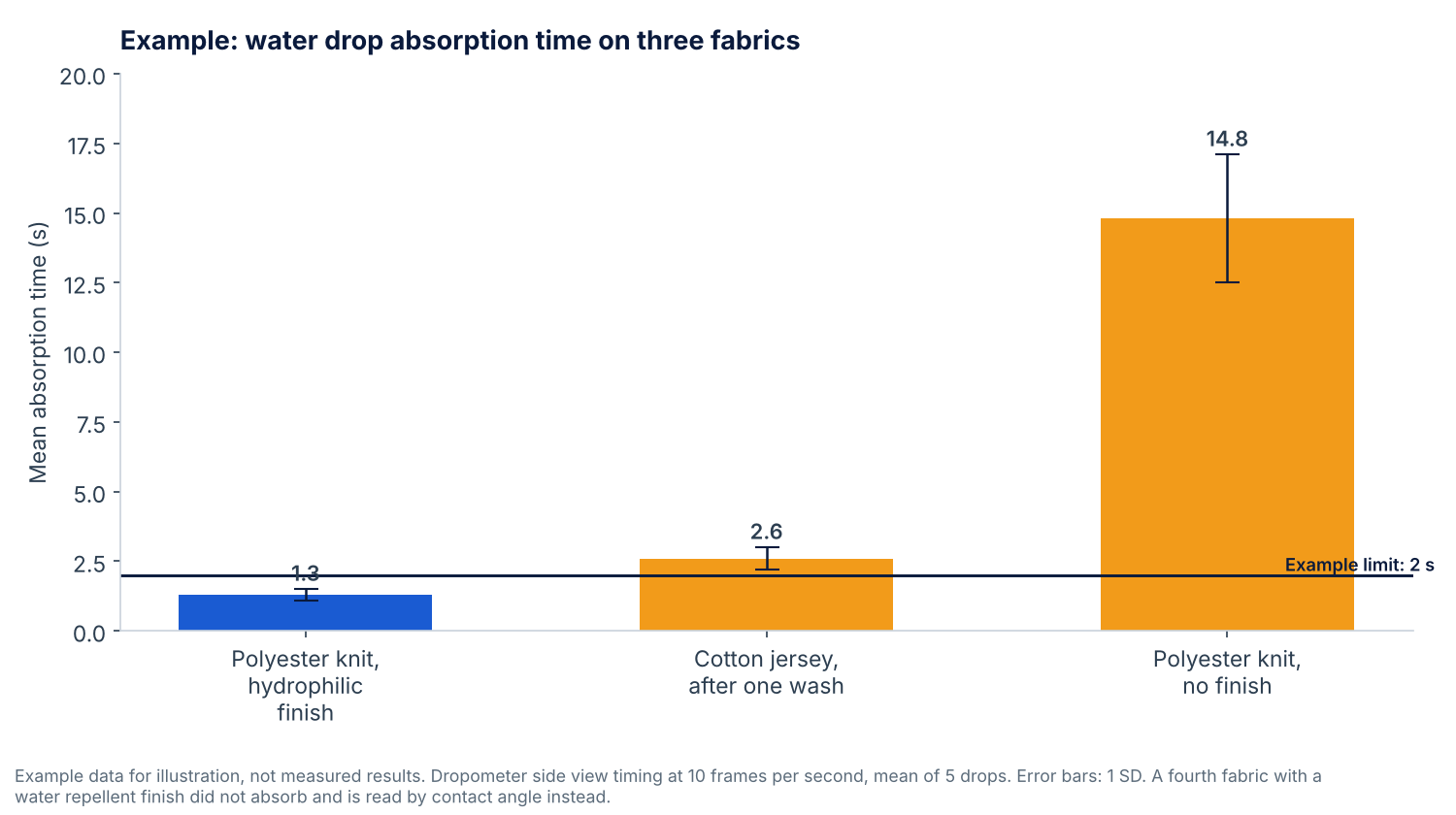
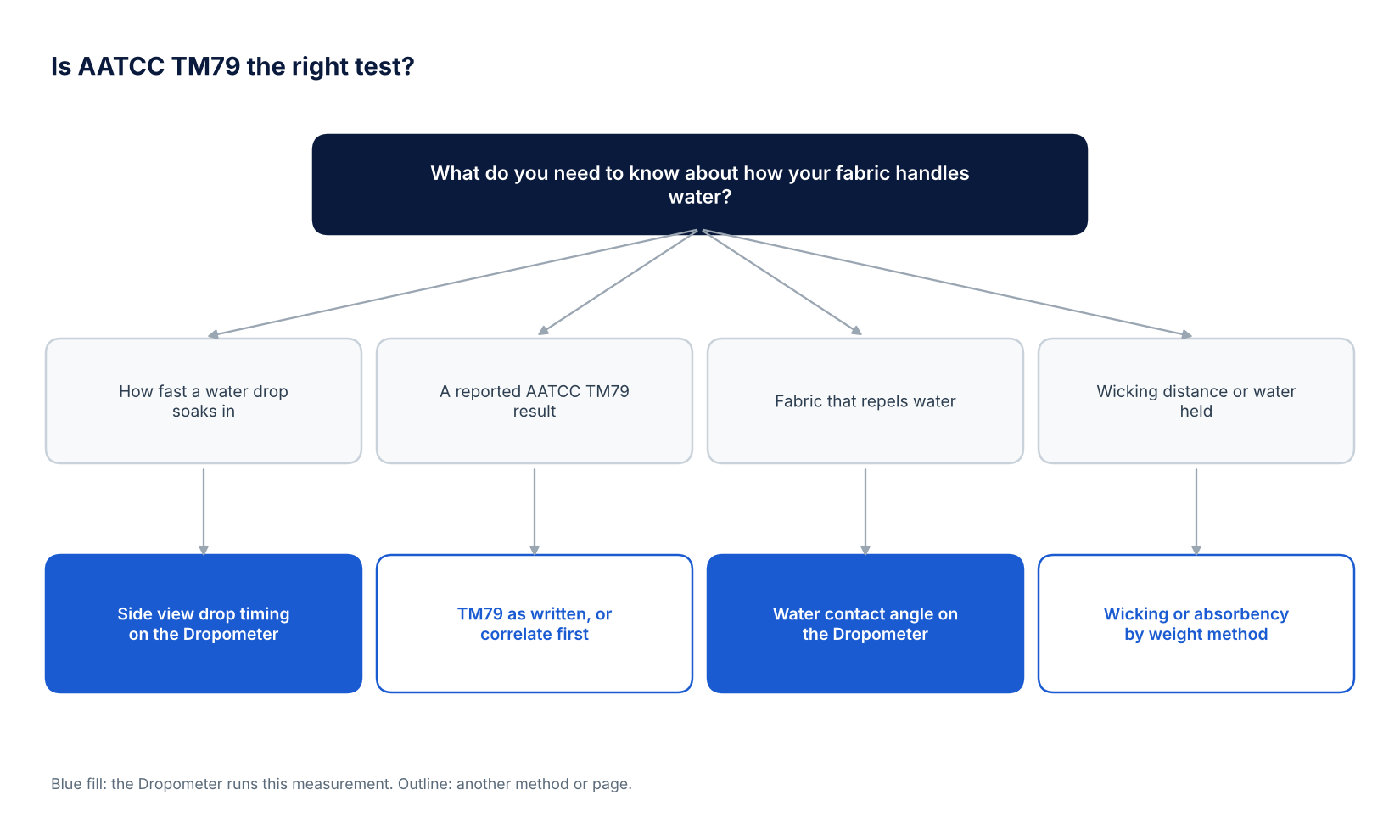
Partially compliant. The Dropometer gets the end result the standard is after, the time for a water drop to soak into fabric, by filming the drop from the side. Side view drop timing is an alternative method, not the specular reflection reading the standard specifies. If a contract or customer requires an AATCC TM79 result, run a correlation study on your own samples first.
Camera 10 frames per second, so times come in 0.1 s steps. Contact angle range 10° to 175°, accuracy ±0.35°, display resolution 0.01°, from the Dropometer product specification. Fabric holder available as an option.
The drop shape method is validated against a KRUSS DSA100E in two peer reviewed papers. See our validation publications.
A federal research lab's biomaterials and coatings team uses the Dropometer to measure contact angle on coated fabric. Read the case study. University researchers also used a Droplet Lab goniometer to measure water contact angles of 130.1° to 143.2° on electrospun polystyrene fibre mats (Macromolecular Rapid Communications, 2024). Read our analysis. Neither study ran AATCC TM79.
A wetting time shows how fast the fabric surface takes up one drop. It does not measure how far water wicks, how much the fabric holds, or how fast it dries. Those belong to wicking and moisture management tests. Pair it with the test your product claim needs.