

Contents

Surface tension tensiometer buyer's guide

Best Tensiometer for Teaching Labs

A teaching lab needs a surface tension method students can see, at a price that covers several benches. This guide ranks four options on 8 weighted criteria, from glassware to a camera based kit.

Scored 1 to 5 on 8 weighted criteria. Prices and specifications checked 25 October 2026. Made with Claude Opus 5.5 and reviewed by Droplet Lab.

Last reviewed 25 October 2026

Abhimanyu Photo
Written by
Abhimanyu Bhandankar
Holds an MBA from Schulich School of Business and a BE in IT. He joined Droplet Lab in July 2019 and now leads sales and marketing.
CEO at Droplet Lab
Read More
Gurdeep-Saini-Photo
Technical Review by
Gurdeep Singh Saini
Holds a BASc in Mechanical Engineering from Ryerson University (now Toronto Metropolitan University) and an MASc from York University. He develops the automatic edge and baseline detection behind the Dropometer's analysis.
COO at Droplet Lab
Read More
Abhimanyu Photo
Written By

Abhimanyu Bhandankar

CEO at Droplet Lab

Holds an MBA from Schulich School of Business and a BE in IT. He joined Droplet Lab in July 2019 and now leads sales and marketing.

Gurdeep-Saini-Photo
Reviewed By

Gurdeep Singh Saini

COO at Droplet Lab

Holds a BASc in Mechanical Engineering from Ryerson University (now Toronto Metropolitan University) and an MASc from York University. He develops the automatic edge and baseline detection behind the Dropometer's analysis.

The short answer

For teaching labs, the Dropometer education unit is our pick at US$999 per unit, or US$869 each for 10 or more. Students measure surface tension by pendant drop and contact angle, with lifetime software licences. OpenDrop is the runner up if your department can build and align its own camera rigs.

We make the education unit, so every weight and score is below. For a single demonstration, capillary rise glassware at US$370.47 shows the physics directly. Start with our surfactants and surface tension experiment.

The ranking

Four ways to teach surface tension, ranked on cost per bench, class time and what students learn.

Pick by situation

  • If you equip several benches and want ready experiments: Dropometer education unit. US$999, falling to US$869 each for 10 or more.
  • If your department builds its own rigs: OpenDrop. Free software with cameras you choose.
  • If you want one demonstration of the physics: KIMBLE capillary rise apparatus. US$370.47 from DWK.
  • If your course teaches the ring method: KRÜSS K6. A manual du Noüy ring tensiometer, quote only.

Also checked and not ranked: 3B Scientific sells surface tension experiment sets on price request, with parts priced separately. LD Didactic's break-away experiment shows no price and cannot be bought online. The Ossila goniometer (US$3,000) measures pendant drop surface tension but costs three times the education unit per bench. We found no surface tension product from PASCO or Vernier.

Dropometer education unit for teaching labs

Top pick

Dropometer education unit

US$999 per unit, US$869 each for 10 or more · checked 25 October 2026 · Education unit product page

4.06/ 5

The Dropometer education unit is a camera based kit built for classes. It ranks first on cost per bench, teaching materials and what students can measure. It loses on published accuracy: there is no accuracy figure for the education unit.

Where it wins

  • US$999 per unit; US$949 for 3 to 4, US$899 for 5 to 9, US$869 for 10 or more
  • Surface tension by pendant drop and contact angle
  • Lifetime software licences, no subscription
  • POGIL aligned classroom experiments
  • 4K Wi-Fi camera; students see the drop and the fit

Where it loses ground

  • No published accuracy figure for the education unit
  • No interfacial tension or sliding angle
  • 1 year warranty, shorter than the research Dropometer
  • A teaching kit, not a research instrument
DIY: camera and OpenDrop

Runner up

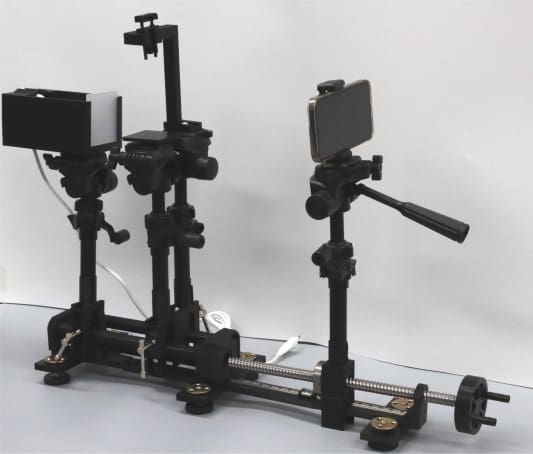
DIY: camera and OpenDrop

Free software (GPL); camera about US$20 to US$1,000 per the OpenDrop authors · checked 25 October 2026 · OpenDrop paper (camera cost)

3.26/ 5

OpenDrop is free pendant drop software, so the cost per bench is the camera and the rig. It teaches the method well. It loses on class time, because every rig is built, aligned and calibrated by your staff.

Where it wins

  • Free, open source software
  • Surface and interfacial tension and contact angle
  • Students can read the fitting code
  • Cameras from about US$20

Where it loses ground

  • Each rig is built and aligned by hand
  • No warranty or support
  • No published accuracy
  • Results vary with the rig
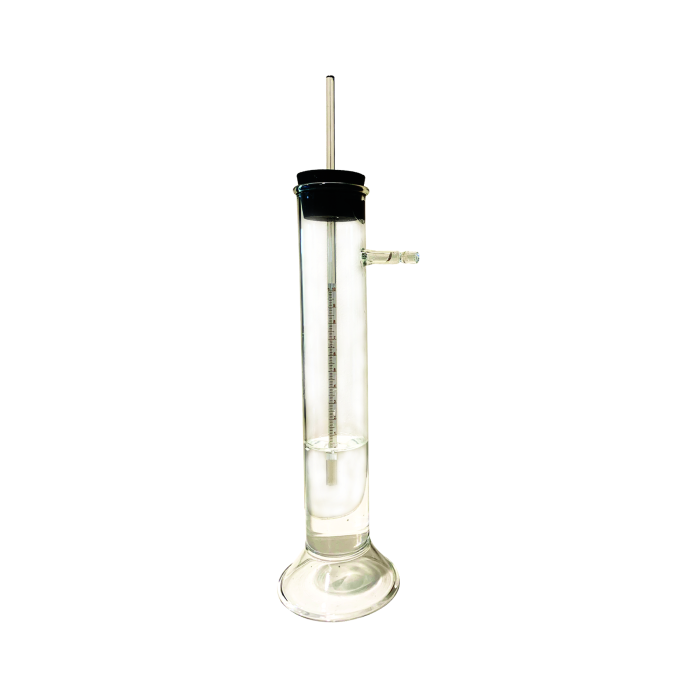
DWK KIMBLE Surface Tension Apparatus (capillary rise)

Third

DWK KIMBLE Surface Tension Apparatus (capillary rise)

US$370.47, made to order · checked 25 October 2026 · DWK KIMBLE product page

3.22/ 5

Capillary rise shows surface tension with a glass tube and a ruler. It is the cheapest bench on this page and the most direct view of the physics. It loses on scope and accuracy.

Where it wins

  • US$370.47 per apparatus
  • No power or software
  • Students calculate the result themselves

Where it loses ground

  • Surface tension only
  • No published accuracy; read by eye
  • Fragile glass; capillaries need careful cleaning
  • No saved data
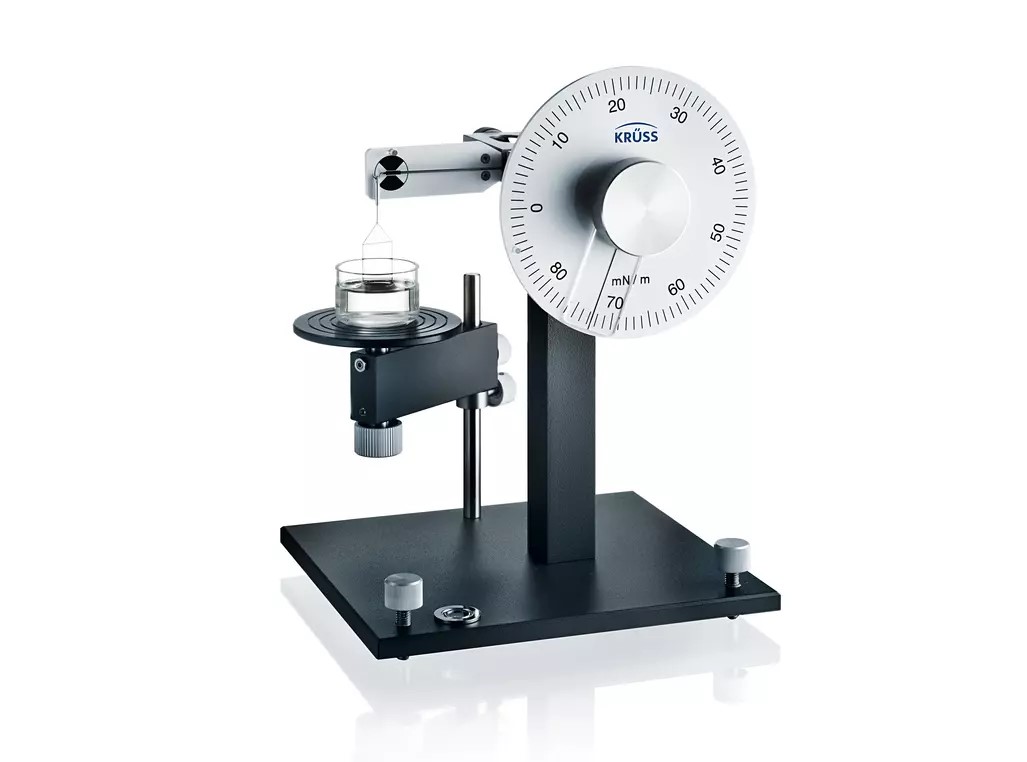
KRÜSS K6

Fourth

KRÜSS K6

Not published (quote only) · checked 25 October 2026 · KRÜSS K6 product page

2.53/ 5

The K6 is a manual du Noüy ring tensiometer: students lift a ring and read the force. It teaches the ring method named in ASTM D1331. It loses on cost per bench, because KRÜSS sells it by quote.

Where it wins

  • Manual ring method, range 1 to 90 mN/m
  • Resolution 0.5 mN/m
  • No software to install

Where it loses ground

  • Quote only
  • Rings need careful cleaning and handling
  • Surface tension by ring only
  • No saved data

How we arrived at these scores

Each option is scored from 1 to 5 on the same 8 criteria. A 3 means it meets what a university teaching lab equipping several benches needs; a 5 means it exceeds it. Weights reflect cost per station and class time and add to 100 percent. Multiply each score by its weight, add the rows and divide by 100: that is the headline score.

Weighted scorecard
CriterionWhat it measuresWeight (%)Dropometer education unitDIY: camera and OpenDropDWK KIMBLE Surface Tension Apparatus (capillary rise)KRÜSS K6Why these scores
Cost per benchPrice of one student station44.551.5KIMBLE US$370.47. OpenDrop free plus a camera and rig. Education unit US$999 to US$869. K6 quote only.
What students can measureMeasurements a class can run on one station4.5422.5Education unit: surface tension and contact angle. OpenDrop: surface and interfacial tension and contact angle. K6: ring surface tension. Capillary rise: surface tension only.
Setup and class timeStaff time before and during a lab session41.53.53.5The education unit is a finished kit with an app. OpenDrop rigs are built and aligned by staff. Glassware and rings need cleaning between groups.
Teaching materialsReady experiments and student guides52.522.5Droplet Lab publishes POGIL aligned experiments for the education unit. OpenDrop has software documentation. The others come without lab handouts.
Students see the methodHow clearly the physics shows44.554Capillary rise shows the liquid climbing. OpenDrop's fitting code is open. The education unit shows the drop and the fit on screen. The K6 shows the force on a dial.
Published accuracyAn accuracy or resolution figure from the maker221.52.5KRÜSS states 0.5 mN/m resolution for the K6. None of the four publishes an accuracy figure.
WarrantyWarranty length4111.5Education unit: 1 year. DWK, KRÜSS and OpenDrop publish none for these items.
Software and licencesLicence cost and lab computer needs4.54.533Lifetime licences on the education unit; OpenDrop is free (GPL). Glassware and the K6 need no software, and save no data.
Weighted total / 54.063.263.222.53

Side-by-side specification comparison

The specifications that decide a teaching lab purchase, from each maker's own pages and data sheets. Checked 25 October 2026.

SpecificationDropometer education unitOpenDrop (DIY)KIMBLE capillary riseKRÜSS K6
PriceUS$999 per unit; US$869 each for 10 or moreFree software; camera about US$20 to US$1,000US$370.47Quote only
MethodPendant drop and sessile dropPendant drop and sessile dropCapillary risedu Noüy ring
MeasuresSurface tension, contact angleSurface and interfacial tension, contact angleSurface tensionSurface tension
Range or resolutionNot publishedNot publishedTube graduated 0 to 10 cm1 to 90 mN/m, 0.5 mN/m
SoftwareApp with lifetime licencesFree (GPL)NoneNone
Warranty1 yearNoneNot publishedNot published

Verified on 25 October 2026

Sources: Dropometer education unit, OpenDrop (Huang et al., 2021), DWK KIMBLE apparatus, KRÜSS K6. All checked 25 October 2026.

When not to buy a Dropometer

  • You need one demonstration bench, not a class set. Capillary rise glassware costs US$370.47. KIMBLE apparatus
  • Your course teaches the ring method by name. Dropometer vs du Noüy ring
  • Your students need interfacial tension or research grade accuracy. The research Dropometer adds both at US$4,990. Under $5,000 guide
  • Your department already builds camera rigs and wants open code. OpenDrop

Expert perspective

Not all contact-angle measurements are created equal: the right method depends on the application. A sessile drop and a tilted plate can give very different, and equally correct, numbers.

Dr. Alidad AmirfazliCo-founder and Scientific Advisor, Droplet Lab, Professor of Mechanical Engineering, York University

Frequently Asked Questions

Which surface tension experiments suit a first year class?

Surfactants lowering the surface tension of water, the temperature effect, and a CMC curve. Our surface tension measurement guide gives the background. See our surfactant experiment, pendant drop technique experiment and CMC experiment.

Is the education unit the same as the research Dropometer?

No. The education unit measures surface tension by pendant drop and contact angle, with lifetime licences and a 1 year warranty. The research Dropometer (US$4,990) adds interfacial tension, surface free energy, a published accuracy figure and a 5 year warranty.

Can students practise drop analysis without an instrument?

Yes. Our free contact angle tool lets students analyse drop images, and our CMC reference values give results to compare against.

Which standards mention surface active agents?

ISO 4311 covers CMC by plate, stirrup or ring, and ISO 6889 is a standard method for surface active agents; see our ISO 6889 summary. Teaching labs rarely need to follow them, but they show students how industry reports results.

How do surfactants connect to real products?

Foams, sprays and detergents depend on surfactants at a surface. Our foam control use case, the agrochemical case study and a customer paper on polymer and surfactant mixtures make good reading for students. Our surfactant glossary entry explains the basics, and dynamic surface tension covers how fast they act.

How many units does a class need?

Plan one station for every three or four students, so each group measures rather than watches. Price per unit drops at 3, 5 and 10 units.

References

1.
Dropometer education unit, Droplet LabPrices by quantity, measurements, warranty; checked 25 October 2026
3.
OpenDrop documentationSupported cameras and measurements
4.
DWK Life Sciences KIMBLE Surface Tension ApparatusPrice and graduation; checked 25 October 2026
5.
KRÜSS K6Manual ring tensiometer; checked 25 October 2026
6.
3B Scientific surface tension experiment setPrice on request; checked 25 October 2026
7.
University of South Florida case study, Droplet LabEducation instrument in teaching labs

See it on your own samples

Book a 15-minute consult and we will plan a class set with you, or request a quote for several units.