

Contents

Surface tension tensiometer buyer's guide

Best Tensiometer for Surfactant and CMC Research

CMC work rewards automation: many concentrations, each measured once the surface has settled. This guide ranks three options, one per maker, on 10 weighted criteria, shows every score, and says when a smaller instrument is the better buy.

Scored 1 to 5 on 10 weighted criteria. Prices and specifications checked 25 October 2026. Made with Claude Opus 5.5 and reviewed by Droplet Lab.

Last reviewed 25 October 2026

Abhimanyu Photo
Written by
Abhimanyu Bhandankar
Holds an MBA from Schulich School of Business and a BE in IT. He joined Droplet Lab in July 2019 and now leads sales and marketing.
CEO at Droplet Lab
Read More
Gurdeep-Saini-Photo
Technical Review by
Gurdeep Singh Saini
Holds a BASc in Mechanical Engineering from Ryerson University (now Toronto Metropolitan University) and an MASc from York University. He develops the automatic edge and baseline detection behind the Dropometer's analysis.
COO at Droplet Lab
Read More
Abhimanyu Photo
Written By

Abhimanyu Bhandankar

CEO at Droplet Lab

Holds an MBA from Schulich School of Business and a BE in IT. He joined Droplet Lab in July 2019 and now leads sales and marketing.

Gurdeep-Saini-Photo
Reviewed By

Gurdeep Singh Saini

COO at Droplet Lab

Holds a BASc in Mechanical Engineering from Ryerson University (now Toronto Metropolitan University) and an MASc from York University. He develops the automatic edge and baseline detection behind the Dropometer's analysis.

The short answer

For surfactant and CMC research, buy an automated force tensiometer with a dosing unit, such as the KRÜSS Tensíío, DataPhysics DCAT 25 or Biolin Sigma CMC, all quote only, if you run full curves unattended. The Dropometer pendant drop tensiometer (US$4,990) is the runner up for labs with a capped budget or little sample.

We make the Dropometer. It has no automatic dosing, so you prepare and measure each concentration by hand. It adds interfacial tension and contact angle, and saves the drop image with every reading. New to the method? Read what the critical micelle concentration is and how CMC is measured by surface tension.

The ranking

Three options labs use for CMC curves, one per maker, from a fully automated force tensiometer to a pendant drop kit. Pick by situation

  • If you run full CMC curves unattended, at set temperatures: automated force tensiometer. Dosing and plate measurement run without you.
  • If your budget is capped or your surfactant is scarce: Dropometer. US$4,990, a few microlitres per point, published accuracy.
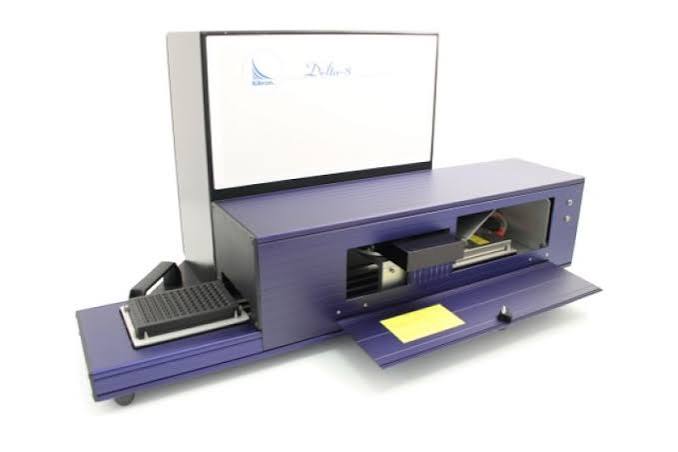
  • If you screen dozens of surfactants or formulations a week: Kibron Delta-8. 96 wells of 50 µL each, read in minutes.

Also checked and not ranked: Kibron's EZ-Pi Plus takes 0.5 to 3 mL samples and works with a 0 to 100 °C bath, but Kibron lists no CMC dosing for it; we rank one instrument per maker, and the Delta-8 is the Kibron pick for CMC. See Dropometer vs Kibron EZ-Pi Plus. Bubble pressure tensiometers such as the KRÜSS BP100, DataPhysics MBP 200 and SITA science line t100 measure dynamic surface tension from milliseconds, not CMC at equilibrium. The KRÜSS K20 has no dosing unit listed. CSC Scientific's manual du Noüy ring tensiometers show different prices on two of CSC's own pages, and its store marks them not available. Optical tensiometers such as the KRÜSS DSA25, Biolin Theta Flex and DataPhysics OCA measure pendant drops but are quote only and sold mainly for contact angle.

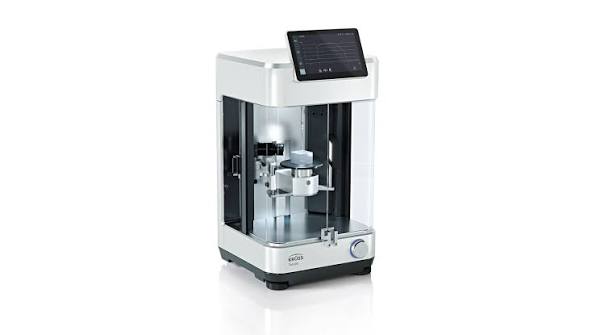
Automated force tensiometer with CMC dosing

Top pick

Automated force tensiometer with CMC dosing

Not published (quote only) · checked 25 October 2026 · KRÜSS Tensíío data sheet

3.95/ 5

An automated force tensiometer is the reference tool for CMC curves. It adds concentrate in steps, measures each point with a plate or ring, and finds the break in the curve in software. It scores highest on automation, method fit and temperature control, and lowest on cost because no maker publishes a price.

Where it wins

  • Fully automatic CMC: KRÜSS DS1120, DataPhysics LDU 25 and Biolin's two dispensers dose and measure each concentration
  • Plate and ring methods, the two named in ISO 4311 and ASTM D1331
  • Range of 1 to 2000 mN/m on all three models
  • Thermostats from −10 to 130 °C (KRÜSS, DataPhysics) and −20 to 200 °C (Biolin, optional vessel)
  • KRÜSS publishes ±0.15 mN/m accuracy for the Tensíío

Where it loses ground

  • Quote only; no maker publishes a new price
  • CMC software and dosing units are options to price separately
  • Sample volume is not stated by the makers; the probe needs a full vessel
  • Measures surface and interfacial tension only
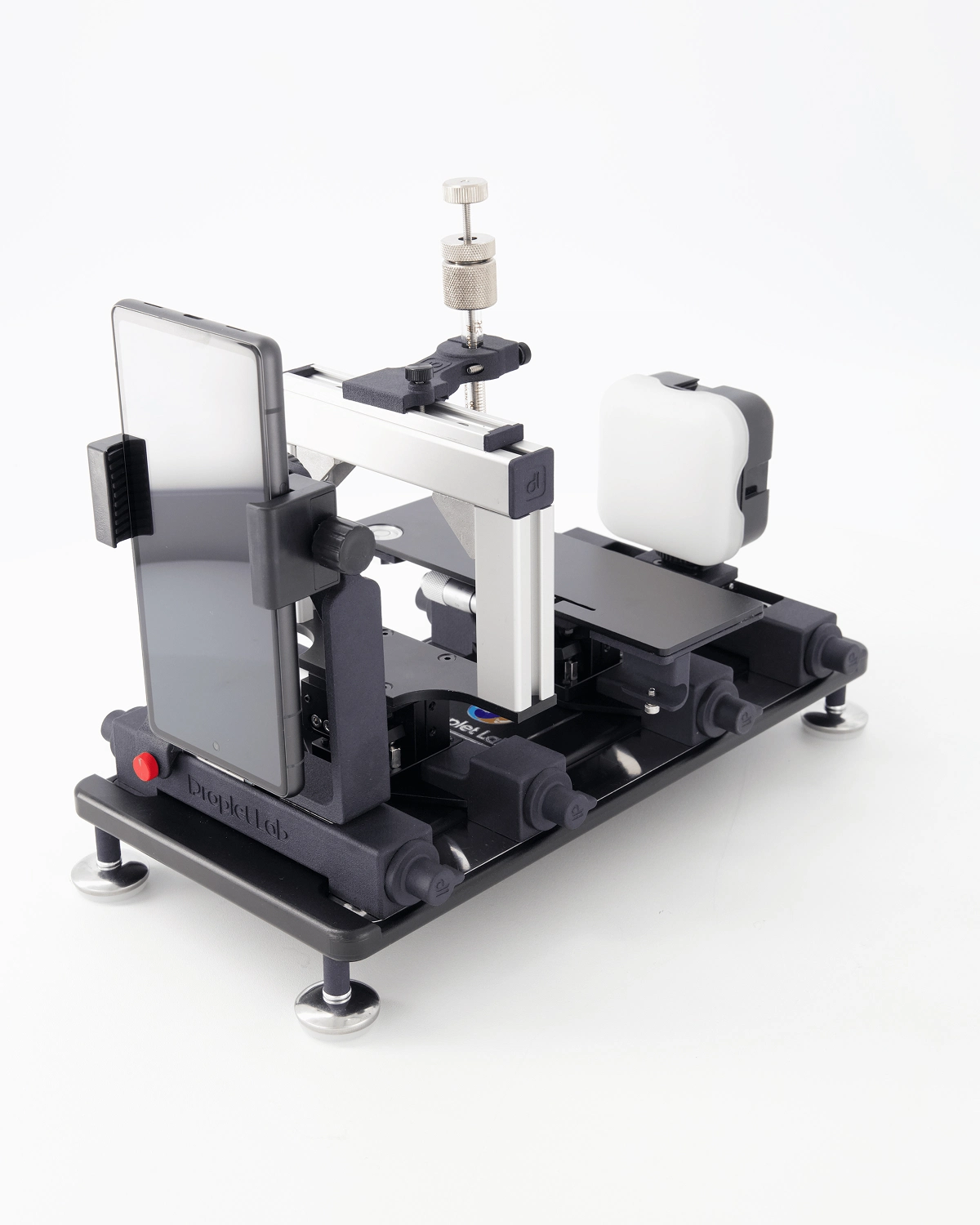
Dropometer pendant drop tensiometer: smartphone on a stage beside a pendant drop at a needle tip

Runner up

Dropometer

US$4,990 list price, base kit · checked 25 October 2026 · Droplet Lab quote configurator

3.54/ 5

The Dropometer pendant drop tensiometer measures surface tension from the shape of a hanging drop, with the tightest published accuracy on this page and a price you can budget against. It ranks second, behind automated force tensiometers, because every concentration is prepared and loaded by hand.

Where it wins

  • US$4,990 list price, the only published price on this page
  • Surface tension accuracy ±0.03 mN/m on its datasheet; drop shape method compared with a KRÜSS DSA100E in peer review
  • A few microlitres per drop; dynamic pendant mode follows a drop until it settles
  • Saves the drop image with every reading, so any point can be refitted later
  • Interfacial tension, contact angle and surface free energy in the same kit

Where it loses ground

  • No automatic dosing for CMC: each concentration is a separate drop
  • Pendant drop is not named in ISO 4311 or ASTM D1331
  • Range up to 75 mN/m
  • Room temperature in the base kit; temperature control is a built to order upgrade, ask for range and lead time
Kibron Delta-8

Third

Kibron Delta-8

Not published for the Delta-8 (quote only); Kibron automated systems from €6,000 · checked 25 October 2026 · Kibron price page

3.39/ 5

The Delta-8 reads surface tension in a 96 well plate with eight probes, so one plate can hold many dilution series. It wins on sample volume and throughput. It loses on temperature range and on a published accuracy figure.

Where it wins

  • 50 µL per well in a 96 well plate
  • Kibron states 96 points in minutes
  • Range 10 to 100 mN/m, resolution 0.01 mN/m
  • Built for surfactant screening; Kibron's CMC page names it

Where it loses ground

  • Precision 0.2 mN/m; no accuracy figure published
  • Runs at 18 to 30 °C
  • You prepare the dilution series in the plate
  • Surface tension only

How we arrived at these scores

Each option is scored from 1 to 5 on the same 10 criteria. A 3 means it meets what a CMC research lab needs; a 5 means it exceeds it. Weights reflect CMC work and add to 100 percent. Multiply each score by its weight, add the rows and divide by 100: that is the headline score. The automated force tensiometer column scores the KRÜSS Tensíío, DataPhysics DCAT 25 and Biolin Sigma CMC together because they share method, dosing and price status.

Weighted scorecard
CriterionWhat it measuresWeight (%)Automated force tensiometer with CMC dosingDropometerKibron Delta-8Why these scores
CMC automationHow much of a CMC curve the instrument runs without you524Tensíío, DCAT 25 and Sigma CMC dose and measure each concentration automatically. Delta-8 reads a 96 well plate you fill. The Dropometer needs each concentration prepared and measured by hand.
Fit for equilibrium surface tensionMethod suited to slow surfactants and named in the CMC standards53.53ISO 4311 and ASTM D1331 name the plate and the ring. Pendant drop can follow a drop until it settles but is not named in either standard. Delta-8 reads small wells quickly.
Published accuracy and validationAn accuracy figure from the maker or a peer reviewed comparison, not display resolution44.52.5Dropometer: ±0.03 mN/m on its datasheet and a peer reviewed comparison with a KRÜSS DSA100E. KRÜSS states ±0.15 mN/m for the Tensíío; DataPhysics and Biolin publish resolution only. Kibron states a precision of 0.2 mN/m for Delta-8.
Sample volumeHow little surfactant solution each point uses2.54.55Delta-8 uses 50 µL per well. A pendant drop uses a few microlitres from a 500 µL syringe. The force tensiometer makers do not state a volume; the probe needs a vessel deep enough to immerse it.
ThroughputConcentrations measured per working day425Kibron reads 96 points in minutes. Automated force tensiometers run full curves unattended. Manual instruments are limited by how fast you prepare and load each concentration.
Measurement scopeOther measurements from the same instrument34.52Force tensiometers add interfacial tension. Dropometer adds interfacial tension, contact angle and surface free energy. Kibron lists surface tension for the Delta-8.
Temperature controlRunning CMC curves at a set temperature532Thermostats on the force tensiometers reach −10 to 130 °C or wider. Delta-8 runs at 18 to 30 °C. The Dropometer runs at room temperature in the base kit; temperature control is a built to order upgrade with no published range yet.
Cost to buyPublished price you can budget against1.552Dropometer lists at US$4,990. The others are quote only; Kibron's price page says its automated systems start from €6,000, and no force tensiometer maker publishes a price.
Operator independenceThe same sample gives the same number whoever runs it4.53.54.5Automated dosing and plate reading remove most hand steps. Dropometer fits the drop contour automatically after you mark the needle contact point.
Records and recheckSaved curves and raw data you can recheck44.54All three keep results in software. The Dropometer also saves the drop image with each reading (TIFF, with CSV results), so a point can be refitted. The force tensiometer makers sell CMC software modules.
Weighted total / 53.953.543.39

Side-by-side specification comparison

The specifications that decide a CMC purchase, from each maker's own pages and data sheets. Checked 25 October 2026.

SpecificationAutomated force tensiometer (Tensíío, DCAT 25, Sigma CMC)DropometerKibron Delta-8
PriceQuote onlyUS$4,990 base kitQuote only
MethodWilhelmy plate, du Noüy ring, rodPendant drop (Young–Laplace)du Noüy-Padday, 8 probes
Automatic CMCYes, with dosing unit (DS1120, LDU 25, two dispensers)No; manual series96 well plate you fill
Surface tension range1 to 2000 mN/mUp to 75 mN/m10 to 100 mN/m
Resolution0.001 to 0.02 mN/m by model and sensor0.01 mN/m0.01 mN/m
Published accuracy±0.15 mN/m (Tensíío); not stated (DCAT, Sigma)±0.03 mN/m (datasheet)Not stated; precision 0.2 mN/m
Sample per pointNot statedA few µL per drop50 µL per well
Temperature−10 to 130 °C or wider with thermostatRoom temperature in the base kit; built to order upgrade, ask for range18 to 30 °C
Other measurementsInterfacial tensionInterfacial tension, contact angle, surface free energySurface tension only
Named in ISO 4311 / ASTM D1331Plate and ring: yesNoNo

Verified on 25 October 2026

Sources: KRÜSS Tensíío data sheet, DataPhysics DCAT comparison, Biolin Sigma CMC, Dropometer product page, Kibron Delta-8. All checked 25 October 2026. When not to buy a Dropometer

  • You need full CMC curves without hands on time. An automated force tensiometer doses and measures each point. KRÜSS Tensíío
  • You report to ISO 4311 or ASTM D1331, which name the plate and the ring, not pendant drop. Dropometer vs du Noüy ring
  • You screen dozens of surfactants a week on microlitre samples. Kibron CMC screening
  • You need CMC at set temperatures today. Our temperature control is a built to order upgrade, so ask for range and lead time first. Ask about temperature control

Expert perspective

Not all contact-angle measurements are created equal: the right method depends on the application. A sessile drop and a tilted plate can give very different, and equally correct, numbers.

Dr. Alidad AmirfazliCo-founder and Scientific Advisor, Droplet Lab, Professor of Mechanical Engineering, York University

Frequently Asked Questions

How do you find the CMC with a tensiometer?

Measure surface tension across a series of concentrations and plot it against the log of concentration. The tension falls steeply, then levels off; the CMC is the concentration at that break. NIST's reference compilation and ISO 4311 both describe this plot; our surface tension measurement guide covers the method. Try it with our CMC experiment and check values against our CMC reference table.

Should I use a plate, a ring or a pendant drop for CMC?

If you report to ISO 4311 or ASTM D1331, use the plate or the ring, which those standards name; our ASTM D1331 summary explains the methods. A pendant drop also gives equilibrium surface tension and uses far less sample. Choose by what your reviewers and standards expect.

Can a pendant drop tensiometer measure CMC?

Yes. You measure one drop per concentration and plot the results. A University of Waterloo group did this with Droplet Lab's pendant drop tensiometer, for example in a ChemEngineering paper on surfactants in polymer solutions. The trade off is time: each concentration is prepared and loaded by hand.

Is dynamic surface tension the same as CMC?

No. Dynamic surface tension describes how fast a surfactant reaches the surface, from milliseconds upward; bubble pressure tensiometers measure it, see our dynamic surface tension guide. CMC is an equilibrium property, so each surface needs to settle before you read it. Our reproducible surface tension guide covers how long to wait.

Do I need temperature control for CMC work?

CMC changes with temperature, so compare results at one temperature. Force tensiometers offer thermostats. The Dropometer runs at room temperature; its environment chamber is a built to order upgrade.

What else should I price besides the instrument?

Ask whether CMC software is a separate module, whether the dosing unit is included, and what plates, rings or probes cost to replace. Ask for the price in writing with a date, then compare totals rather than list prices. Our guide to surfactants covers the chemistry behind the curve.

References

4.
KRÜSS Tensíío technical dataRange, resolution, accuracy, temperature; checked 25 October 2026
5.
KRÜSS DS1120 dosing accessoryAutomatic CMC dosing; checked 25 October 2026
6.
DataPhysics Instruments DCAT comparison and accessoriesRange, resolution, LDU 25 dosing; checked 25 October 2026
7.
Biolin Scientific Sigma CMCRange, resolution, dispensers, temperature; checked 25 October 2026
8.
Kibron Delta-8 and CMC pagesVolume, range, precision, temperature; checked 25 October 2026
9.
Kibron EZ-Pi PlusVolume, range, accuracy, temperature; checked 25 October 2026
10.
Kibron tensiometer pricesAutomated systems from €6,000; checked 25 October 2026
11.
Dropometer product page and specifications, Droplet LabPrice, range, accuracy; checked 25 October 2026
12.
Droplet Lab validation papersPeer reviewed comparisons with a KRÜSS DSA100E

See it on your own samples

Book a 15-minute consult and we will measure a surfactant series like yours on a call, or configure a kit and get a price.