Best Surface Energy Analyzer for Production QC (Pre-treatment and Bonding)
Before bonding, printing or coating you need to know the surface is ready, on the part and in seconds. This guide ranks four ways to check it on 10 weighted criteria, shows every score, and says where our own instrument falls short.
Holds a BASc in Mechanical Engineering from Ryerson University (now Toronto Metropolitan University) and an MASc from York University. He develops the automatic edge and baseline detection behind the Dropometer's analysis.
Holds a BASc in Mechanical Engineering from Ryerson University (now Toronto Metropolitan University) and an MASc from York University. He develops the automatic edge and baseline detection behind the Dropometer's analysis.
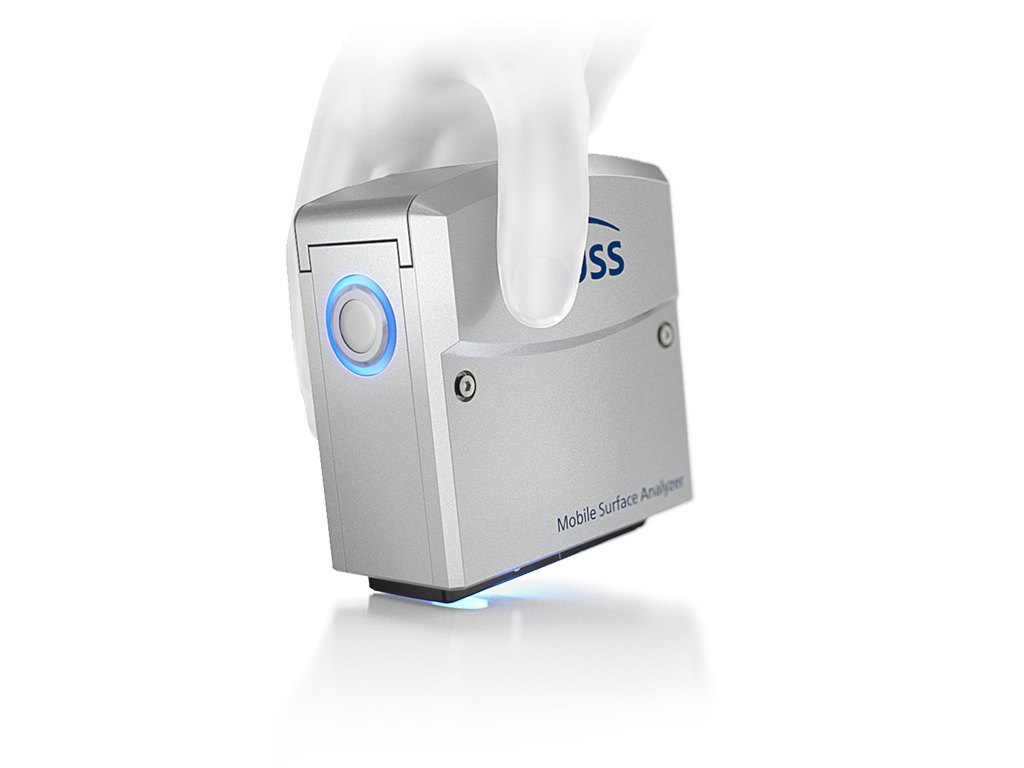
For production QC before bonding, the KRÜSS MSA One-Click SFE is our pick. It gives surface free energy from two liquids in about a second, on the part. It is quote only new. The Brighton Science Surface Analyst is the runner up for fast water contact angle checks by hand or on an automated line.
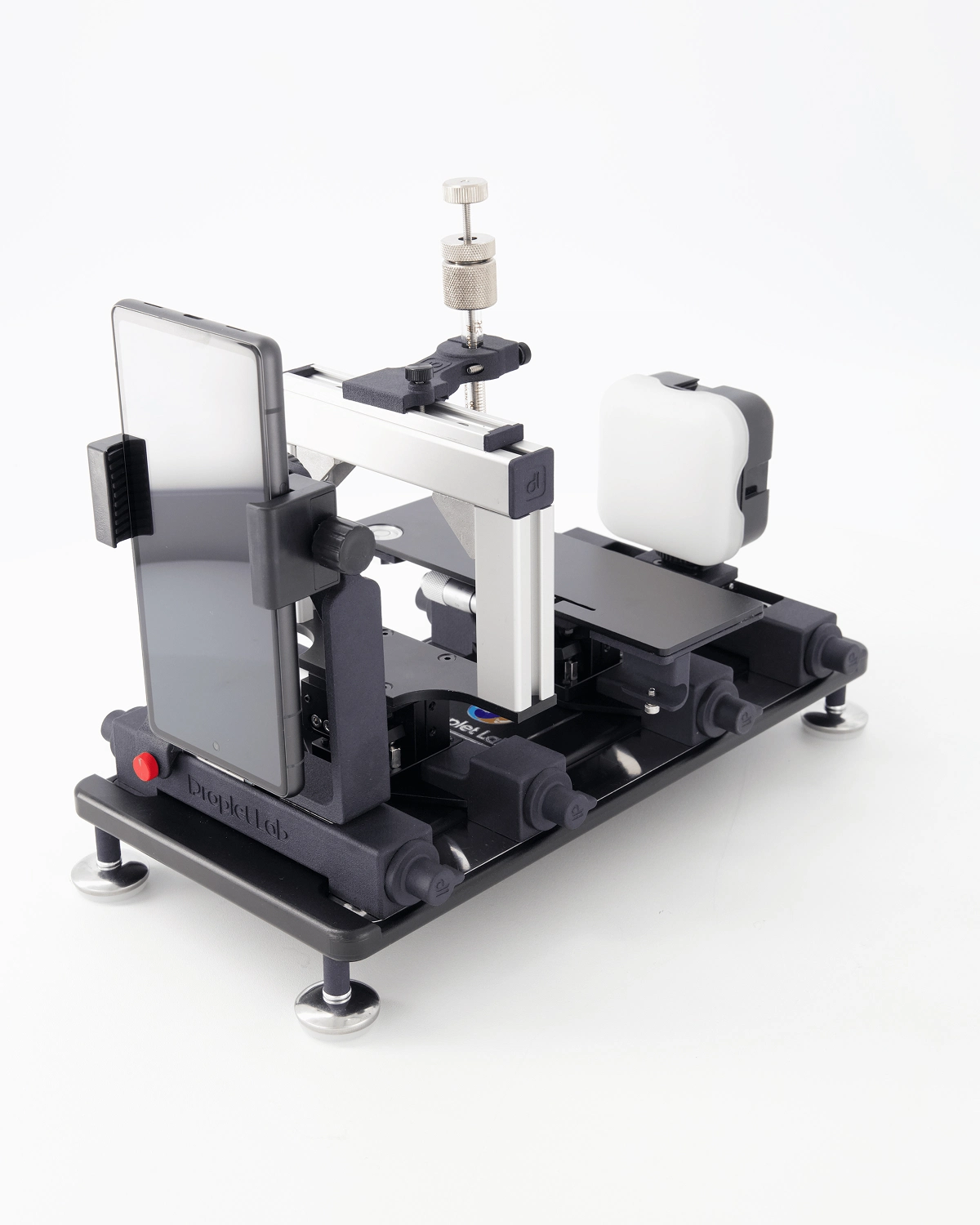
We make the Dropometer contact angle and surface energy kit (US$4,990). It ranks third: it is a tabletop kit, so parts come to its stage. It is the better buy for lab side checks, such as incoming material and adhesion failures, where accuracy and full surface energy matter more than speed. New to the topic? Read our surface energy measurement guide.
The ranking
Four ways to check a treated surface before it is bonded, printed or coated, from a two liquid mobile analyzer to dyne pens.
Pick by situation
If you need surface free energy on the part, in seconds:KRÜSS MSA One-Click SFE. Two liquids dosed at once, five surface energy models.
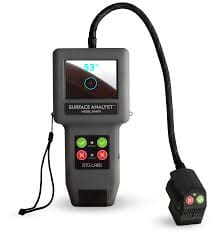
If you need fast pass or fail checks by hand or on an automated line:Brighton Science Surface Analyst. Water contact angle in under two seconds; the automated version runs over 5,000 inspections an hour.
If you check samples at the bench and need accuracy and full surface energy:Dropometer. US$4,990, 0.35° accuracy, three surface energy models in the app.
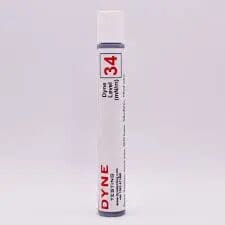
If your spec is a dyne level on polyethylene or polypropylene film:ACCU DYNE TEST pens. ASTM D2578 uses test solutions for that film.
Also checked and not ranked: the DataPhysics PCA 200 doses two liquids at once and runs on battery, but DataPhysics publishes no accuracy figure or price. The KRÜSS Ayríís measures water contact angle in 3D at 2° accuracy; its product page and data sheet differ on whether it reports surface energy. The PGX+ pocket goniometer is quote only from Industrial Physics; distributor Gardco lists it at US$17,750.
Top pick
KRÜSS MSA One-Click SFE
New units quote only; KRÜSS shop regular price €15,307 excluding VAT · checked 25 October 2026 · KRÜSS shop, MSA One-Click SFE
4.13/ 5
The MSA One-Click SFE doses water and diiodomethane at the same time and reports surface free energy in about a second. It wins on speed, surface energy detail and measuring on the part. It loses on cost to buy, because KRÜSS sells it by quote.
Where it wins
Surface free energy from two liquids dosed in parallel; KRÜSS says all steps run within a second
OWRK, Fowkes, Wu, Zisman and Equation of State models; also work of adhesion
0.8° accuracy stated by KRÜSS; 0.85 kg
Up to 1,000 drops per liquid on a full fill
ADVANCE software with an optional remote control API
Where it loses ground
Quote only new; the only figures are in the KRÜSS refurbished shop
Runs from a laptop over USB; no battery listed
No acid base surface energy model listed
Two fixed liquids; the MSA Flexible Liquid model is for other liquids
The Surface Analyst reads water contact angle in under two seconds with a pass or fail result. It wins on speed, portability and data links to the plant. It loses on surface energy detail and on a published accuracy figure.
Where it wins
Water contact angle in under two seconds, handheld
Automated Surface Analyst runs over 5,000 inspections an hour
Feeds an MES or the BConnect cloud platform
Brighton has helped develop ASTM D8597 since 2019 and says its devices are designed to meet it
The Dropometer contact angle and surface energy kit gives the most accurate contact angle on this page and full surface energy, at a published price. It ranks third because it is not handheld, so it suits bench checks near the line rather than readings on the part.
Where it wins
0.35° contact angle accuracy, validated against a KRÜSS DSA100E in peer review
Equation of State, Fowkes and van Oss-Chaudhury-Good surface energy in the app; OWRK through our free calculator
Zeus ran its own Gage R&R on the Dropometer and it passed
US$4,990 with a 5 year warranty and a lifetime software licence
Sets up in about 2 minutes; battery up to 8 hours
Where it loses ground
Not handheld: a 1 kg tabletop kit, so parts come to the stage
Base kit doses one liquid at a time by hand; two automatic droppers in sync are a custom option, US$7,990 as a kit
OWRK is not in the app
No MES link or audit trail; results export as CSV and TIFF
Dyne pens are the cheapest and fastest check: draw a line and see whether it beads. They win on cost and reach. They lose on accuracy, operator independence and records, because the result is a judgment by eye.
Where it wins
US$108.80 for 16 pens; US$149.60 for 22 pens from 30 to 72 dyn/cm
Works on any surface you can draw on
ASTM D2578 and ISO 8296 use test solutions for plastic film
Hundreds of tests per pen, per the maker
Where it loses ground
Read by eye in 2 dyn/cm steps
Six month shelf life; not returnable
The pen ink contains formamide and 2-ethoxyethanol; check the safety data sheet
ASTM D2578 covers polyethylene and polypropylene film; other surfaces need your own check
No polar and dispersive split
How we arrived at these scores
Each option is scored from 1 to 5 on the same 10 criteria. A 3 means it meets what a production QC team before bonding, printing or coating needs; a 5 means it exceeds it. Weights reflect checks on the production floor and add to 100 percent. Multiply each score by its weight, add the rows and divide by 100: that is the headline score.
Weighted scorecard
Criterion
What it measures
Weight (%)
KRÜSS MSA One-Click SFE
Brighton Science Surface Analyst
Dropometer
ACCU DYNE TEST pens
Why these scores
Speed per reading
Time from placing the instrument to a result an operator can act on
5
5
3
4
KRÜSS says all steps run within a second. Brighton says under two seconds. A dyne line reads in seconds. The Dropometer places a drop for each liquid; two automatic droppers in sync, a custom option, dose both liquids together.
Measures on the part
Reading large, curved or installed parts where they are, without cutting a sample
4.5
5
1.5
5
The MSA sits on the part but runs from a laptop over USB. Brighton is handheld, with an automated version for the line. Pens work on any surface. The Dropometer is a 1 kg tabletop kit, so samples come to its stage.
Surface energy detail
Surface free energy with polar and dispersive parts, not only a pass or fail number
5
1.5
4
2
MSA: OWRK, Fowkes, Wu, Zisman and Equation of State from two liquids. Dropometer: Equation of State, Fowkes and van Oss-Chaudhury-Good in the app; OWRK through our free calculator. Brighton measures water contact angle only. Pens give a wetting tension step.
Published accuracy
Accuracy measured or stated by the maker, not display resolution
4
2
5
1.5
Dropometer: 0.35° against a KRÜSS DSA100E in peer review. MSA: 0.8° stated by KRÜSS. Brighton publishes no accuracy figure. Pens are read by eye in 2 dyn/cm steps.
Operator independence
The same surface gives the same reading whoever measures it
4.5
4.5
4
1.5
MSA and Brighton dose and read automatically. The Dropometer detects the edge and baseline automatically; dosing is by hand in the base kit or by automatic droppers. Zeus ran its own Gage R&R on the Dropometer and it passed. Pen results depend on who judges the line.
Data and traceability
Stored results linked to a part, line or batch
4
5
3.5
1
Brighton feeds an MES or its BConnect subscription. KRÜSS offers ADVANCE software with an optional remote control API. The Dropometer stores results with the image and exports CSV. Pens leave a paper record only.
Cost to buy
Published price you can budget against
2
2
3.5
5
Pens: US$108.80 for 16. Dropometer: US$7,990 for the two automatic dropper setup scored for speed (base kit US$4,990). Brighton: quote only. MSA One-Click SFE: quote only new; the KRÜSS shop shows a regular price of €15,307 excluding VAT beside a sold out refurbished unit.
Consumables and shelf life
What you keep buying, and what expires
3.5
3
4.5
3
MSA uses liquid cartridges for up to 1,000 drops per liquid. Brighton sells parts and calibration through its store, and BConnect is a subscription. The Dropometer uses lab liquids and syringes. Pens last six months and are not returnable.
Standard named for the method
A test standard your customer or auditor will recognise
3
5
3
4
Brighton says its devices are designed to meet ASTM D8597-24 for portable goniometers. ASTM D2578 and ISO 8296 use test solutions on plastic film. MSA and Dropometer measure contact angle by sessile drop; we do not claim compliance here.
Setup and moving between lines
Carrying the instrument between stations and getting ready to measure
4
5
3.5
5
Brighton and pens move with the operator. The MSA weighs 0.85 kg plus a laptop. The Dropometer sets up in about 2 minutes and runs on battery for up to 8 hours.
Weighted total / 5
4.13
3.74
3.46
3.16
Side-by-side specification comparison
The specifications that decide a production QC purchase, from each maker's own pages and data sheets. Checked 25 October 2026.
Your customer specifies a dyne level on polyethylene or polypropylene film. ASTM D2578 summary
You need every reading logged to a part number in your MES. Brighton BConnect
Expert perspective
“
Not all contact-angle measurements are created equal: the right method depends on the application. A sessile drop and a tilted plate can give very different, and equally correct, numbers.
Dr. Alidad AmirfazliCo-founder and Scientific Advisor, Droplet Lab, Professor of Mechanical Engineering, York University
Head-to-head comparisons
The full comparison for each option, and the method question behind them.
Is water contact angle enough, or do I need surface free energy?
Water contact angle shows whether cleaning or treatment worked, and it is fast. Surface free energy, from two or more liquids, splits the polar and dispersive parts that decide how a given adhesive or ink wets. Use water angle for pass or fail at the line and surface energy when you set limits or chase a failure. See work of adhesion.
Can a contact angle instrument replace dyne pens?
It gives a measured number instead of a judgment by eye, and it records an image. ASTM D2578 still names test solutions for polyethylene and polypropylene film. We are collecting our own side by side data before making a replacement claim. Our Dropometer vs dyne pens comparison covers the differences.
Which surface energy models does the Dropometer calculate?
The app calculates Equation of State, Fowkes and van Oss-Chaudhury-Good (acid base). OWRK is not in the app: enter your contact angles in our free contact angle to surface energy calculator.
How quickly should I measure after plasma or corona treatment?
Treatment effects can fade with time and handling, so measure as close to bonding as your process allows and record the time since treatment. Our plasma treatment verification guide shows a before and after workflow.
Is the Dropometer handheld?
No. It is a 1 kg tabletop kit that runs on battery for up to 8 hours and sets up in about 2 minutes. Samples or cut coupons come to its stage. Fabric and custom holders are available as add-ons.
What dyne level do I need for good adhesion?
Your adhesive, ink or coating supplier sets the target for your materials. A dyne level alone does not show the polar and dispersive balance. Our article Beyond 38 dynes explains what surface energy adds.
Where can I see contact angle before and after plasma treatment?