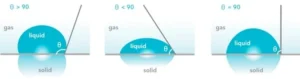
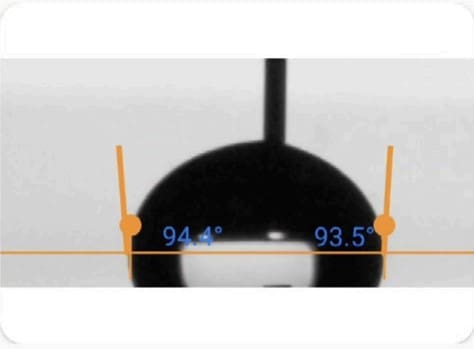
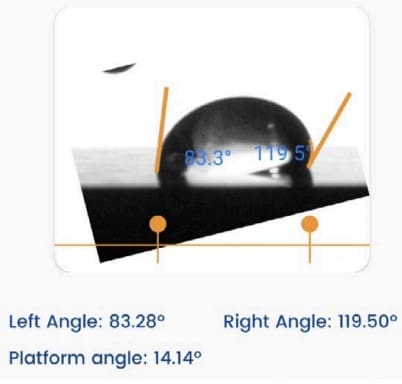
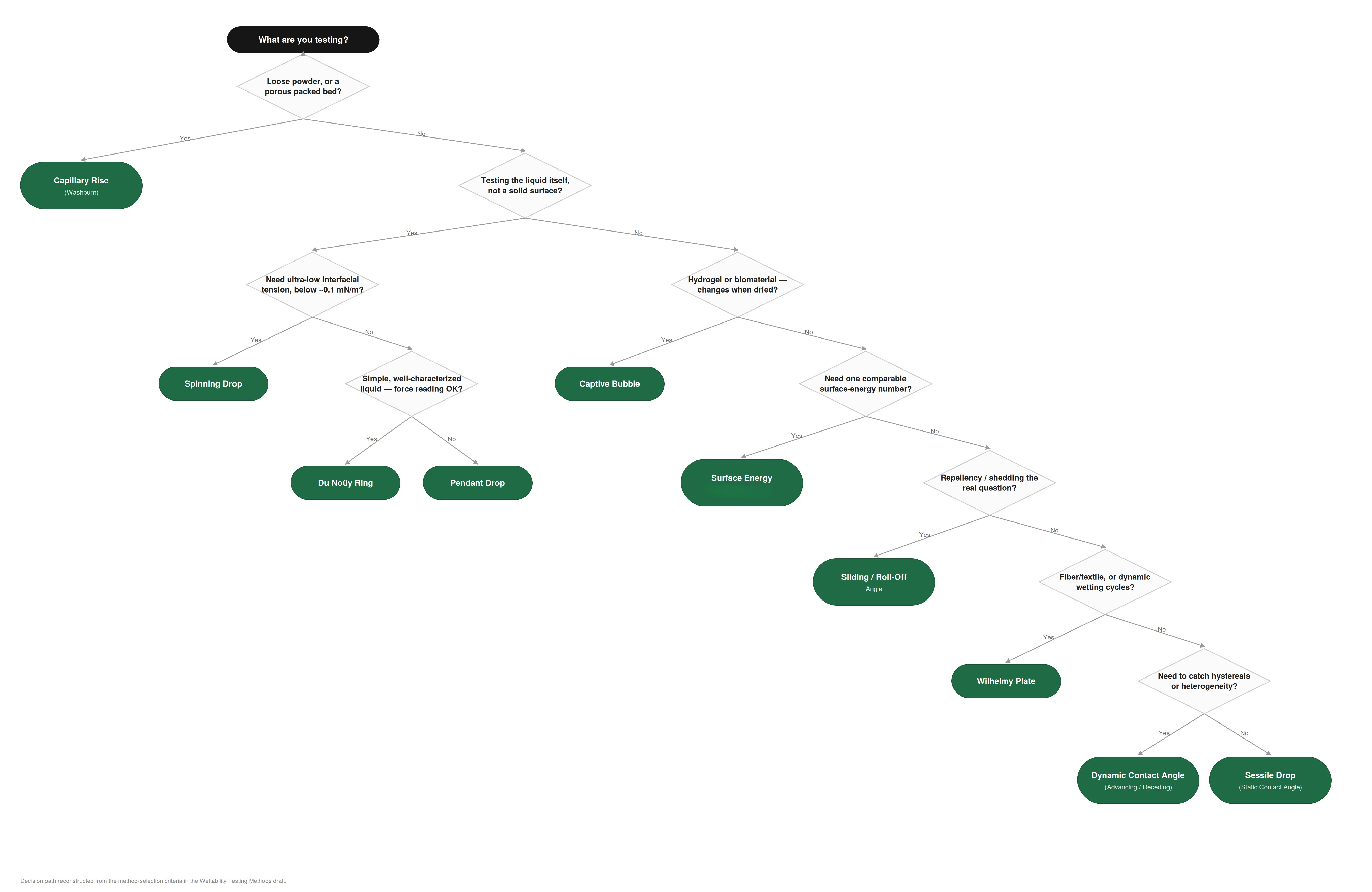
| Sessile drop (static contact angle) | Equilibrium angle at the solid-liquid-vapor line | Fast QC screening, batch-to-batch comparison | Fast, simple, decades of published reference data | A single time-point reading can miss real surface heterogeneity |
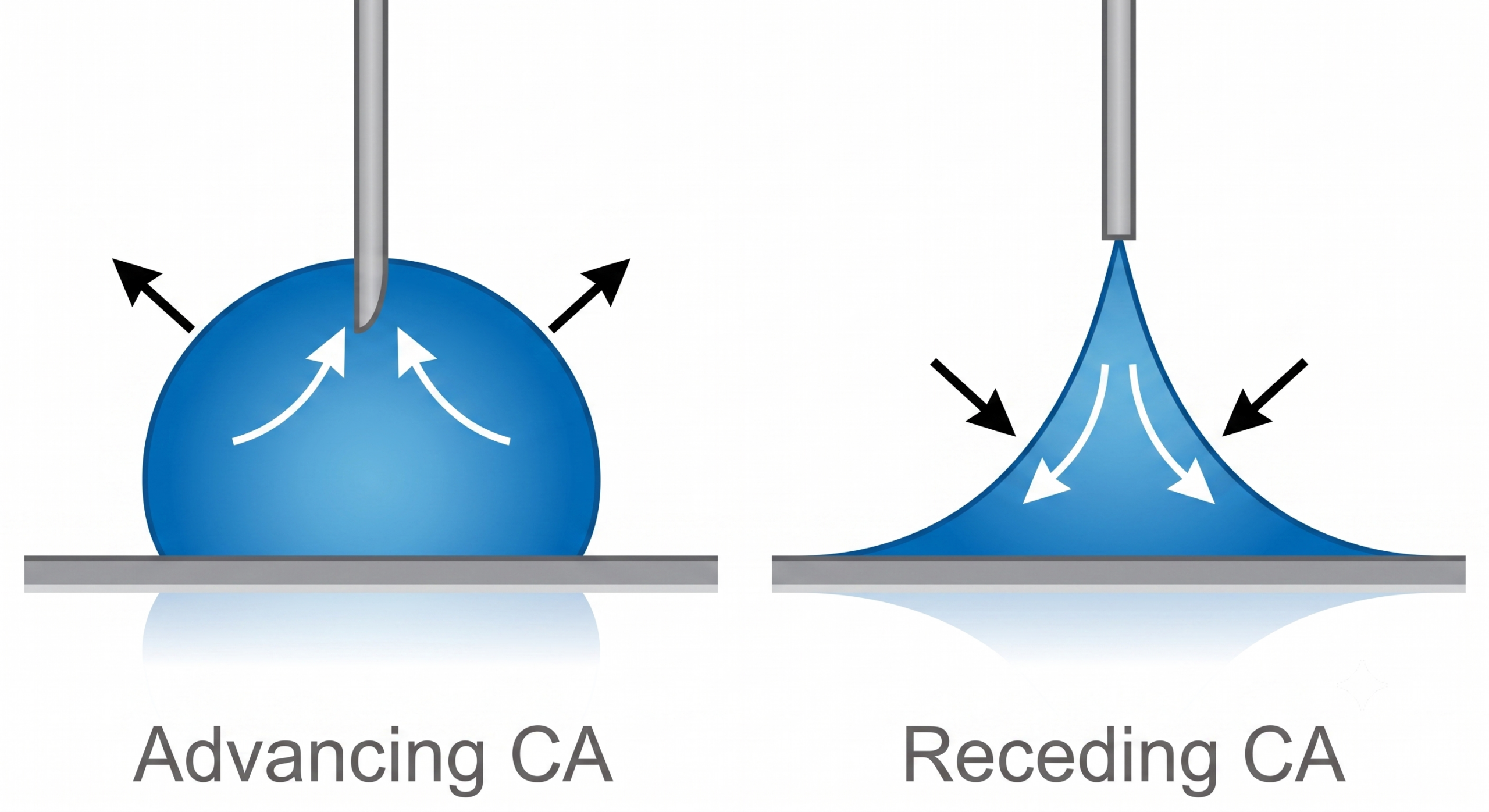
| Dynamic contact angle (advancing/receding) | Angle as liquid volume increases or decreases | Detecting surface heterogeneity, roughness, contamination | Reveals hysteresis that static measurement can’t see | Slower per sample; needs precise, controlled liquid dispensing |
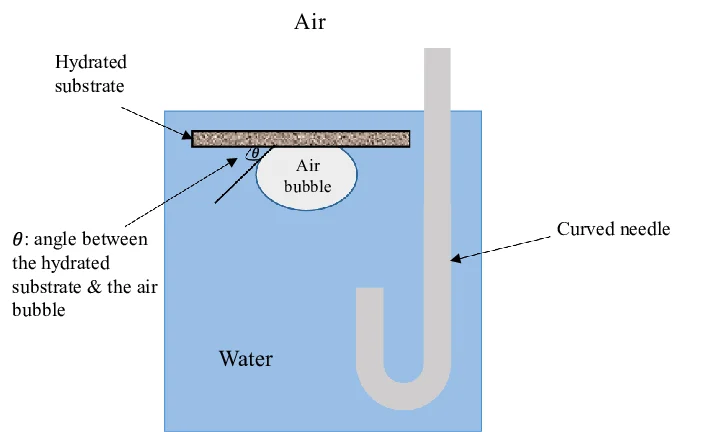
| Captive bubble | Contact angle with the sample fully submerged | Hydrogels, biomaterials, anything that changes when dried | Avoids evaporation and drying artifacts | Needs an immersion cell; impractical for routine production QC |
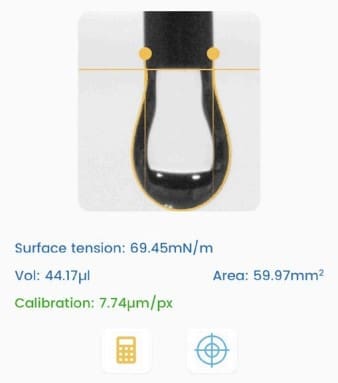
| Pendant drop | Surface or interfacial tension from droplet shape | Liquid/formulation work, interfacial tension between two liquids | One setup handles both surface and interfacial tension | Sensitive to needle geometry and vibration |
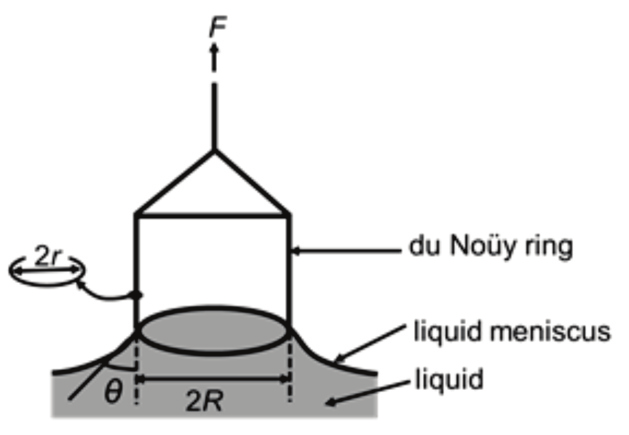
| Du Noüy ring | Surface tension from force to detach a ring | Simple, well-characterized liquids (paints, inks) | Long-established, easy to interpret | Needs careful ring cleaning/calibration; weaker on viscous or fast-evaporating liquids |
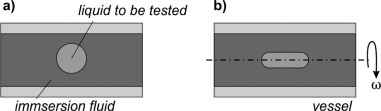
| Spinning drop | Ultra-low interfacial tension | Surfactant/EOR systems below ~0.1 mN/m | Only practical method at that sensitivity | Specialized, higher-cost equipment; narrow use case |
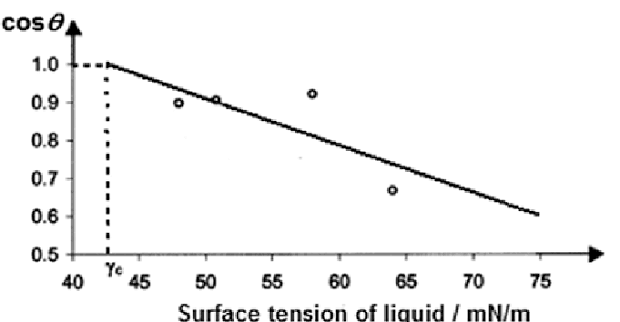
| Surface energy calculation (Zisman / OWRK / acid-base) | Solid surface energy, from multi-liquid contact angle data | Comparing surface treatments, predicting adhesion/coating compatibility | Produces one comparable number instead of several angles | Result depends on liquid choice and model — must be stated |
| Sliding / roll-off angle | Tilt angle at which a droplet starts moving | Anti-icing, self-cleaning, water-repellent finishes | Directly measures real-world shedding behavior | Meaningless on mid-range wetting surfaces; droplet may never move |
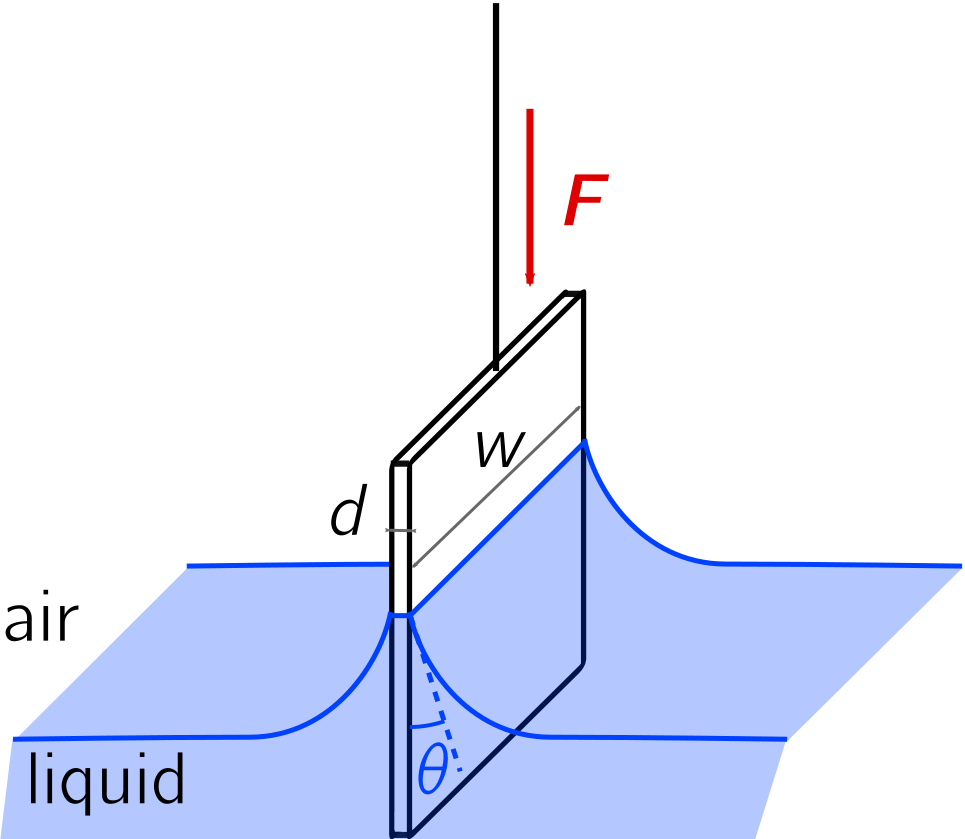
| Wilhelmy plate | Wetting force through an immersion/withdrawal cycle | Fibers, textiles, coating durability over repeated wetting | Captures time-dependent dynamic wetting other methods miss | More sample prep (thin strips/plates); more complex data interpretation |
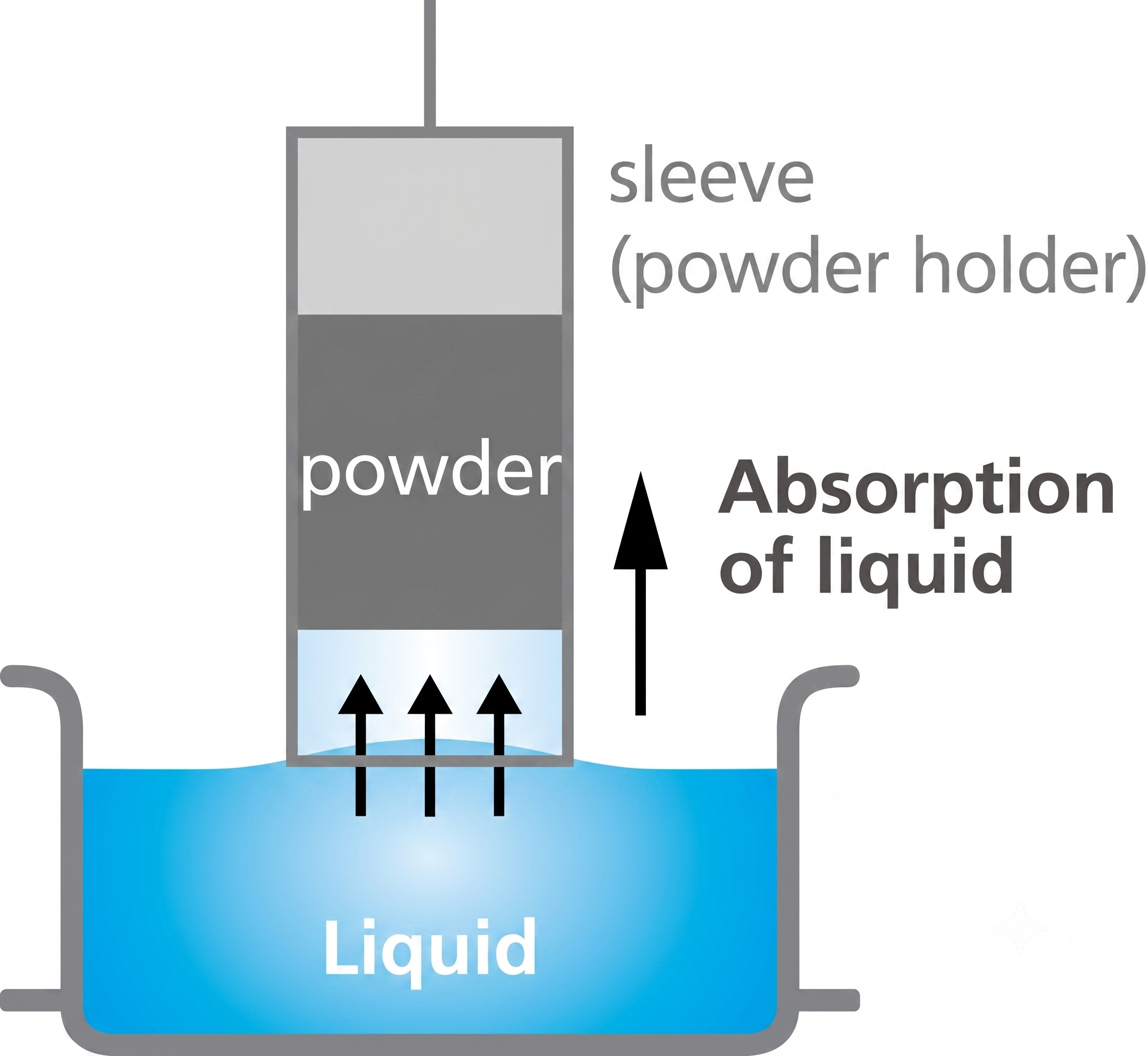
| Capillary rise (Washburn) | Wetting rate through a packed powder bed or porous solid | Pharmaceutical powders, paper, porous coatings, textiles | Only practical direct method for powders and porous solids | Requires dedicated packed-bed instrumentation, separate from droplet systems |