Ski Wax Testing for Fluorine Free Glide Wax: Measure Hydrophobic Wettability and Droplet Roll Off on the Ski Running Surface to Improve Wax Composition and Gliding Ability
Since the FIS ban on fluorinated wax, every glide wax has to earn its water repellency without fluorine. Measure water contact angle and roll off on the waxed ski base at the snow temperatures you design for, then confirm glide on snow.
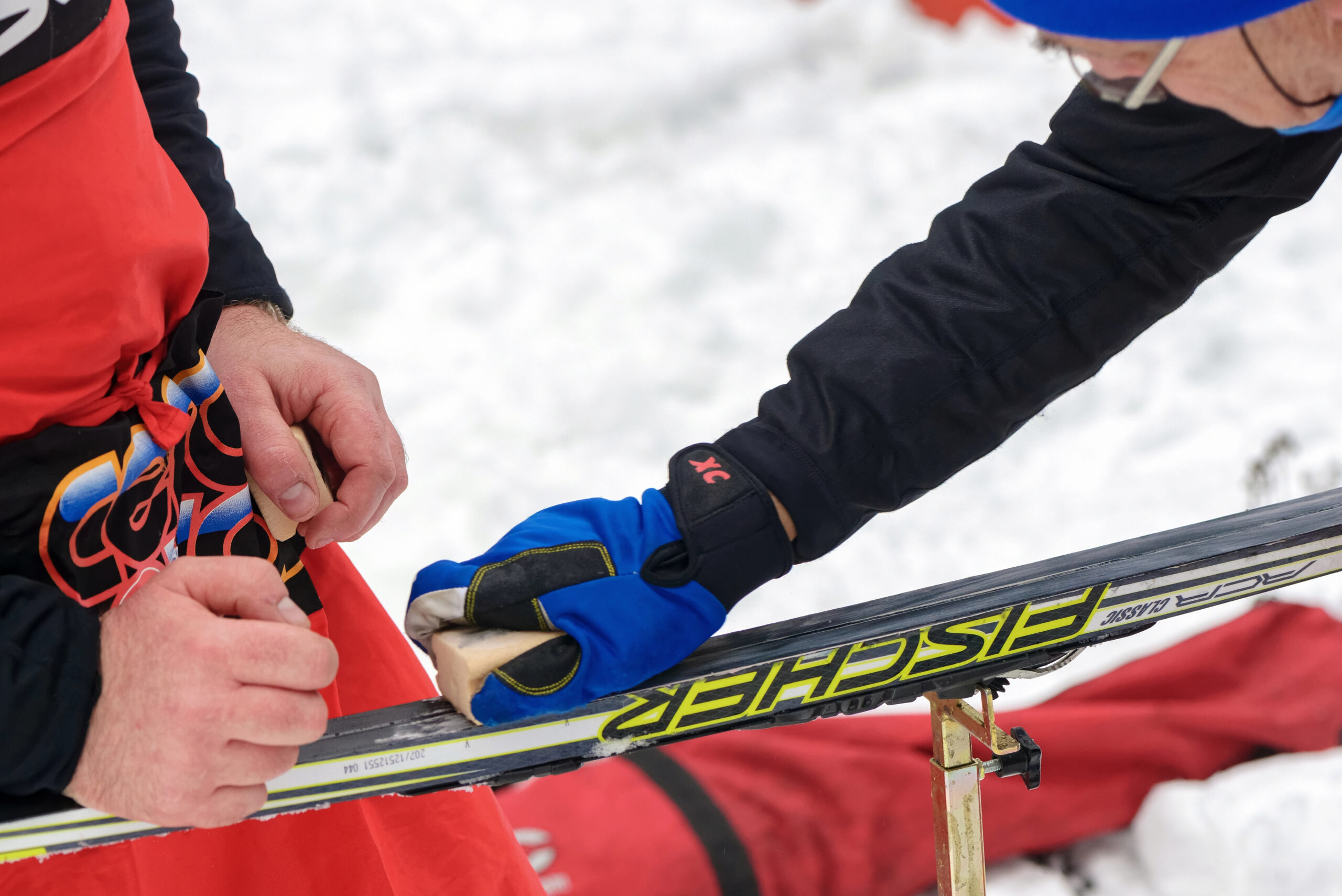
Who this is for: Ski wax developers, ski base and ski makers, race service teams and university labs working on glide wax and ski running surfaces.
Where it fits: Wax composition screening, temperature range checks and batch comparisons, before glide tests on snow.
What it does not do: It does not measure friction or glide on snow, and it does not detect fluorine.
Droplet Lab Team
Droplet Lab builds precision instruments and software for surface science measurement, specialising in contact angle analysis and surface tension characterisation. Used by researchers across materials science, pharmaceuticals, coatings, and advanced manufacturing, Droplet Lab's Dropometer has contributed to studies published in peer-reviewed journals including Advanced Functional Materials (Impact Factor 19). The team combines instrument engineering with deep domain knowledge in wettability science with a focus on practical accuracy.
Why ski wax hydrophobicity matters now
0.005 to 0.035
coefficient of friction of skis on snow, from hard snow to fresh cold snow; a thin water film under a large area of the ski is detrimental.
Almqvist et al., Frontiers in Sports and Active Living, 2022
24% to 57%
more friction on dry snow after silicone oil treatments, even though they raised the contact angle on the UHMWPE ski base.
Buene et al., Frontiers in Sports and Active Living, 2022
Sources: FIS, Fluor ban implementation, Alpine, October 2023; Almqvist A. et al., A scientific perspective on reducing ski snow friction to improve performance in Olympic cross country skiing, the biathlon and Nordic combined, 2022; Buene A.F. et al., Effect of polydimethylsiloxane oil lubrication on the friction of cross country UHMWPE ski bases on snow, 2022. Figures come from these sources, not from Droplet Lab measurements.
What this ski wax check does and what it does not
A quick reference for wax and ski teams checking fit before reading further.
Evidence Box
Fluorine free glide wax candidates that look water repellent at room temperature but behave differently on cold or wet snow.
Fully compliant with ISO 19403-6 for dynamic contact angle; partially compliant with ISO 19403-7 roll off, up to 60° tilt.
The Dropometer drop shape method was validated against a KRUSS DSA100E in two peer reviewed papers, in Review of Scientific Instruments and Colloids and Surfaces A.
A University of Utah polymers lab measured four commercial low fluorinated glide waxes at 2 °C and room temperature; the two rated for the coldest snow were less water repellent in the cold.
RISE researchers rented a portable Dropometer to measure bio based ski wax prototypes below zero, using ethylene glycol at −5 °C.
Higher contact angle does not always mean better glide. Confirm with friction or glide tests on snow.
What ski wax question are you trying to answer?
Pick the card closest to your role. Each one points to the part of this page that answers it.
Wax formulator
You are replacing fluorinated additives with paraffins, natural resins, silicones or bio based ingredients. Contact angle and roll off on a waxed ski base rank each wax composition in an afternoon, before costly glide tests on snow.
Ski and ski base maker
Your sintered UHMWPE ski base material and its grind change how wax behaves. Measuring waxed and unwaxed skis on the same base shows what the base and structure contribute.
Race service or test team
You choose wax for alpine or cross-country skis and the day's snow conditions. A quick hydrophobicity check on test skis helps you compare candidates and keep records alongside your glide tests.
Is this the right test for your glide wax program?
It measures how water meets the waxed ski base. It does not measure glide.
Good fit if
Less relevant if
How to test ski wax hydrophobicity
The answer in under a minute.
Wax a ski base sample the way skiers do, then measure water contact angle and roll off angle at room temperature and at a sub zero test temperature. Rank wax compositions on both numbers, retest after wear, and confirm the best candidates with glide tests on snow, because contact angle alone does not predict friction.
The Dropometer contact angle kit with its tilt stage runs both checks; our sliding angle measurement guide and contact angle measurement guide explain the methods. A University of Utah polymers lab used it on low fluorinated waxes, a Utah thesis on ski wax and friction linked performance most strongly to wax hydrophobicity, and RISE used a portable unit for bio based ski wax prototypes. Our consumer products guide covers the wider context.
Expert perspective on roll off
A surface can pin a drop at a high angle yet never let it roll. High repellency and easy roll-off are different properties, and a single contact angle won't tell you which one you have.
Why fluorine free ski wax is hard to get right
Reducing the friction between the running surface and the snow is the goal of every glide wax. A ski glides on a thin layer of meltwater made by friction between the ski running surface and the snow. Too little water and the ski drags on dry snow; too much, spread under a large area of the ski, and capillary drag slows it down. Glide wax, a lubricant and thin coating, is applied to the ski base, usually ultra-high molecular weight polyethylene (UHMWPE), to give a low coefficient of friction, resist dirt absorption and keep water droplets from wetting the base. For decades fluorinated waxes did that best, because fluorine gives very low surface energy. FIS has now banned fluorinated wax in all disciplines and levels from the 2023/24 season, and professional waxers were exposed to fluorinated compounds while applying them. Wax makers can no longer fluorinate a wax to get water repellency, so they now rely on paraffins, natural resins, silicones, graphite and bio based ingredients, and every new wax composition has to be ranked for water repellency at the temperatures it is sold for. The catch is that higher hydrophobicity does not guarantee better glide: in one study, silicone oils raised the contact angle on the ski base but increased friction on dry snow. Teams need a fast, repeatable surface test that comes before, not instead of, glide tests on snow.
Why a glide wax underperforms and what to check
Why:
- Without fluorine, the wax surface has higher surface energy, so water wets it more.
How to detect:
- Lower water contact angle than your reference wax on the same ski base.
Corrective action:
- Adjust the paraffin, resin or additive blend, then remeasure at the target temperature.
Why:
- Wax hardness and surface structure change with temperature, so room temperature readings can mislead.
How to detect:
- Readings at a sub zero test temperature differ from room temperature results.
Corrective action:
- Measure at the snow temperatures the wax is rated for; use ethylene glycol below zero, where water would freeze.
Why:
A high contact angle can still come with high contact angle hysteresis, so water adhesion holds the drop. Our contact angle hysteresis glossary entry explains why.How to detect:
- High sliding angle, or drops that do not move by 60° tilt.
Corrective action:
Change the additive or application, and check roll off as well as contact angle. Our experiment on sliding angle on hydrophobic surfaces shows the method.Why:
- Some fluorine free waxes easily wear from the base under shear from the snow, so performance falls over a session.
How to detect:
- Readings fall after a set distance or abrasion cycle.
Corrective action:
- Test after controlled wear, and adjust hardness or the hot glide wax treatment.
Why:
- Base material, structure and surface asperities change the apparent contact angle and roll off.
How to detect:
- The same wax reads differently on different bases or grinds.
Corrective action:
- Fix one base and grind for wax comparisons, and test each base separately.
Why:
- Kuzmin and Tinnsten found all waxed skis absorbed more dirt than unwaxed ones, which can reduce glide.
How to detect:
Readings change after skiing on dirty snow. Our guide to reproducible sliding angle measurement covers fair comparisons.Corrective action:
- Clean the base the same way before each test, and compare dirt pick up between waxes in field tests.
Not sure why your fluorine free wax glides worse?
Bring a waxed ski base sample and your reference wax to a call, and we will compare them on screen.
What a ski wax test record contains
Each check produces a record you can file with the wax batch or test. These records can sit beside your glide and friction test results.
Wax identity
Wax composition, batch, and whether it is fluorine free.
Base and application
Ski base material, grind, waxing method and hot glide wax treatment.
Method settings
Probe liquid, drop volume, temperature, tilt rate and drops per sample.
Readings
Contact angle and sliding angle, median and spread, fresh and after wear.
Decision
Take to glide test, adjust or drop, linked to the snow test result.
Drop images
Automatic edge and baseline detection gives the same reading from the same image, so a reviewer can recheck any result.
What to measure on the ski running surface
Water contact angle on the waxed base
Why it matters: It shows how strongly the top surface of the wax repels water.
How to interpret: Compare with a reference wax on the same base; thresholds are set per base and wax family from your own glide tests.
When it is not enough: It does not predict friction on its own.
Sliding angle on a tilt stage
Why it matters: It shows whether droplets leave the base or pin.
How to interpret: Lower is better roll off; drops that do not slide by 60° are recorded as 60° or more.
When it is not enough: Drop size changes the reading; keep it fixed.
Contact angle at sub zero temperature
Why it matters: Wax behaves differently in the cold, where it is used.
How to interpret: Use ethylene glycol below zero and compare waxes at the same temperature.
When it is not enough: Lab cold is not the same as snow.
Readings after wear
Why it matters: Glide properties fade as wax wears.
How to interpret: Compare the decline with the reference wax.
When it is not enough: Lab abrasion does not match skiing exactly.
Validated measurement approach for ski wax testing
How the Dropometer itself has been validated, and where ski wax researchers have used it.
Peer reviewed method
The Dropometer drop shape method is published in Review of Scientific Instruments and Colloids and Surfaces A. Contact angle was validated against a KRUSS DSA100E, with a published accuracy of 0.35°.
See the validation papersCustomer evidence on low fluorinated waxes
Prof. Jeffrey Bates's experimental polymers lab at the University of Utah ordered a Dropometer in 2021. After fluorinated waxes were banned, it measured four commercial low fluorinated glide waxes at 2 °C and room temperature, and found the two waxes rated for the coldest snow were less water repellent in the cold.
Read the case studyHow to test glide wax hydrophobicity and roll off
Six steps for one ski base and one wax family. Repeat for each new base or temperature range.
Prepare the base
Use one ski base material and grind, cleaned the same way, for all wax comparisons.
Wax the samples
Apply each wax with your standard hot waxing, cooling, scraping and brushing.
Lock the method
Fix probe liquid, drop volume, test temperatures, tilt rate and drops per sample. Our measurement method selector helps choose between methods.
Measure at room temperature and in the cold
Measure contact angle and sliding angle at room temperature, then at the sub zero test temperature with ethylene glycol.
Retest after wear
Repeat after a set abrasion or distance, and check readings against our Droplet Lab reference measurements dataset.
Confirm on snow
Take the best candidates to glide or friction tests on snow. Our guide to the best contact angle goniometer for industrial QA covers batch testing.
We completed our gage R&R study on the unit and it performed very well.
Brandon Barbee
Corporate Quality Engineer, Zeus Industries, Polymer Manufacturing
Download the ski wax hydrophobicity SOP
A two page SOP you can adapt for your waxes and bases, with the method lock, temperatures, gates against a reference wax, a troubleshooting table and a record sheet.
Sliding angle measurement with the Dropometer
Example glide wax screen on a UHMWPE ski base
Example data only. Your values and gates will differ and must come from your own reference waxes and glide tests.
Example gates against the reference wax: water contact angle within 5° and sliding angle no more than 5° higher. The bio based prototype matches the reference at room temperature but falls behind in the cold. The silicone additive reads highest but pins drops, so it goes to a glide test with caution. The unwaxed base shows what the wax adds.
Example glide wax screen
| Sample | Water contact angle at 23 °C (°) | Ethylene glycol contact angle at −5 °C (°) | Water sliding angle (°) | Result |
|---|---|---|---|---|
| Reference fluorine free hydrocarbon wax | 104 | 88 | 22 | Reference |
| Bio based prototype | 103 | 79 | 24 | Adjust for cold |
| Paraffin plus graphite | 101 | 86 | 26 | Glide test |
| Paraffin plus silicone additive | 110 | 90 | 38 | Glide test, check pinning |
| Unwaxed ski base | 92 | 74 | 45 | Information |
Example data, not customer data. Sintered UHMWPE base, one grind; water at 23 °C and ethylene glycol at −5 °C; 20 µL drops for sliding angle.
The order to check signals when a wax glides poorly
Check these in order. Each one rules out a cause before you look at the next.
Base and waxing
Rules out base, grind and application differences.
Contact angle
Shows whether the wax repels water as well as the reference.
Sliding angle
Shows whether drops roll or pin; our sliding angle guide explains the test.
Cold readings
Shows how the wax behaves at the snow temperature.
Glide test
Confirms gliding performance on snow, which decides.
Common questions about ski wax hydrophobicity
Questions wax makers, ski makers and test teams ask about glide wax and the ski running surface.
No. Hydrophobic waxes help by repelling meltwater, but Buene and colleagues found silicone oil treatments raised the contact angle on UHMWPE ski bases yet increased friction on dry snow by 24% to 57%. Use contact angle and roll off to shortlist waxes, then decide with glide tests on snow, which show what the skier actually feels.
Contact angle shows how strongly the base repels water; sliding angle shows whether water droplets leave the running surface of skis or stick. A wax can have a high contact angle and still pin drops. The Dropometer's snap in tilt stage measures roll off up to 60°, partially compliant with ISO 19403-7.
Water freezes, so labs use a liquid that stays liquid, such as ethylene glycol. RISE researchers rented a portable Dropometer to measure bio based wax prototypes at −5 °C. Compare waxes at the same temperature and liquid, and treat lab cold as a guide to cold snow, not a copy of it.
FIS rules now state that fluorinated wax or tuning products containing fluorine are prohibited for all FIS disciplines and levels, fully from the 2023/24 season, with infrared testing at events. Wax makers must now reach water repellency without fluorine, which makes hydrophobicity testing of each new wax composition more important.
Yes. Most race bases are sintered UHMWPE, and the base material, grind and surface asperities change both contact angle and roll off. Rohm and colleagues studied how the bearing ratio of UHMWPE ski bases affects friction on snow. Compare waxes on one base and grind, and test waxed and unwaxed skis.
No. A fluorine free wax and a fluorinated one can read close on water. Events test with infrared spectroscopy, and labs use chemical analysis. Use contact angle to show how a wax performs, not what it contains.
Kuzmin and Tinnsten found all waxed skis absorbed more dirt than unwaxed skis, whatever wax was used, and dirt can reduce gliding ability. Clean the ski base the same way before each lab test, and compare dirt pick up in field tests.
ISO 19403-6 covers dynamic contact angle, where the Dropometer is fully compliant, and ISO 19403-7 covers roll off on a tilt stage, where it is partially compliant up to 60°. There is no dedicated ski wax standard for hydrophobicity; most teams judge skiing performance with their own glide test protocols.
What changes when you measure ski wax hydrophobicity
Typical changes in how teams work. Benchmarks are given only where a published source exists.
Before and with ski wax hydrophobicity checks
| Metric | Before Dropometer | With Dropometer | Indicative Benchmark |
|---|---|---|---|
| Wax screening | Glide tests on every candidate | Contact angle and roll off first, glide tests on the best | No published benchmark; track on your own waxes |
| Cold performance | Room temperature only | Readings at sub zero test temperature | Coldest rated waxes less repellent in the cold (University of Utah) |
| Glide prediction | Contact angle alone | Contact angle, roll off and glide test together | Silicone oils raised contact angle but added 24% to 57% friction on dry snow (Buene et al., 2022) |
| Fluorine free transition | Fluorinated reference | Fluorine free candidates ranked by numbers | FIS fluor ban in all disciplines from 2023/24 |
See the test on your own wax
Send a waxed ski base sample and your reference. We will show the comparison on a call.
Estimate saved wax development work
Enter your own numbers. The result is an estimate, not a Droplet Lab claim.
Ski wax development estimate
Estimate saved wax development and glide test work.
Result
Monthly savings = materials saved + technician time saved from reduced iterations.
What contact angle cannot tell you about glide
Honest limits, so you know when to reach for another test.
Contact angle and sliding angle show how the waxed ski base meets water. Glide, coefficient of friction, hardness, melting point, dirt absorption and fluorine content need their own tests.
Standards, evidence and related repellency workflows
These pages cover the standards, the ski wax research and related roll off tests.
Standard
ISO 19403-7
Roll off angle on a tilt stage.
Standard
ISO 19403-6
Dynamic contact angle measurement.
Case study
University of Utah
Low fluorinated ski waxes measured at two temperatures.
Published paper
Ski wax and friction at the ski snow interface
A Utah thesis linking performance to wax hydrophobicity.
Published paper
Bio based ski wax prototypes
RISE report with sub zero contact angle and roll off.
Published paper
Low fluorinated Nordic glide waxes
Hydrophobicity against each wax's rated temperature.
Instrument
Dropometer
Contact angle and sliding angle in one kit.
Related use case
Functional hydrophobicity and self cleaning
All hydrophobicity use cases in one place.
Related use case
PFAS free reformulation
Replacing fluorinated finishes without losing repellency.
Related use case
Solar panel self cleaning
Roll off and anti soiling checks on glass.
How this page was created
Editorial and technical transparency notes for this page.
Drafting assistance
Drafted with Claude Opus 5.5 (Anthropic) using web search for sources, then edited by the Droplet Lab team.
Technical review
Reviewed and edited for technical accuracy by the Droplet Lab Team.
Verification steps
Standard identifiers, units, thresholds and key procedural claims are checked against cited sources before publication.
Updates
Reviewed every 12 months or when the underlying method changes.
Report a correction
Spotted an issue in this summary? Send a correction request and our team will review it.
Correction Request
We work hard to keep this page accurate and up to date. If you spot an error (wrong revision/year, missing requirement, incorrect interpretation, or broken link), tell us and we'll review it.
Contact us to report a correction